

Key Takeaways
Damp patches near pipes are caused by slow leaks, failed seals, or condensation, and acting quickly limits damage to your home.
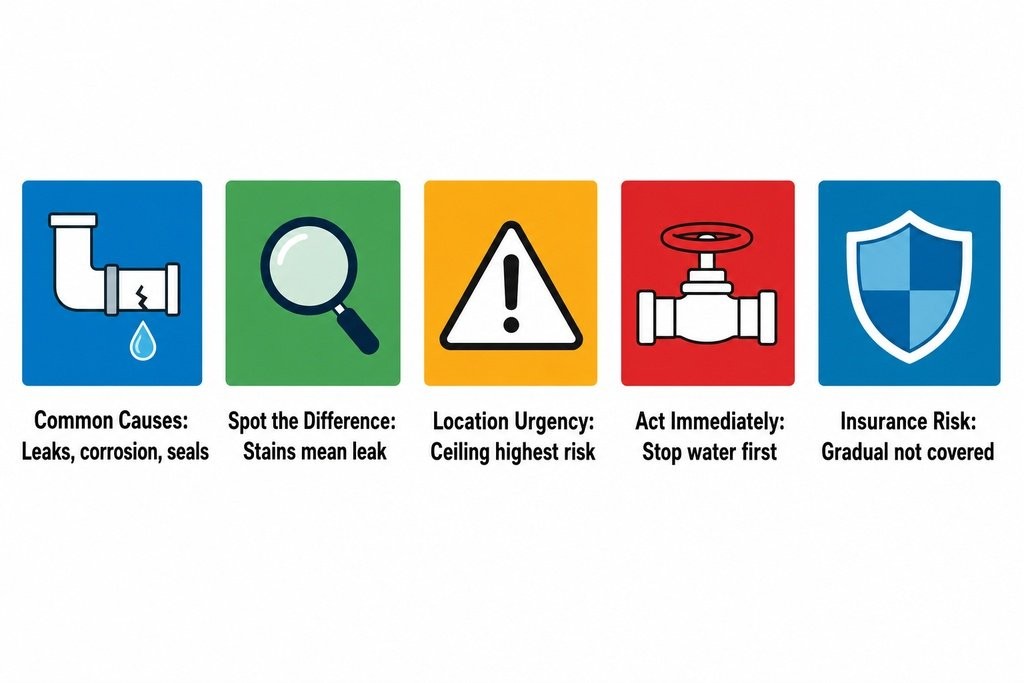
- Damp near pipes most commonly comes from slow leaks at corroded fittings, failed joint seals, or damaged pipe sections hidden inside walls, often spreading far beyond the original fault.
- Condensation leaves a fine, even coating of moisture that clears as temperatures drop, while an active leak causes expanding brown or yellowish stains, soft plaster, and persistent musty odour.
- Where the damp appears matters: a wet ceiling around plumbing is a high priority concern due to risk of structural damage, while wall patches in kitchens or bathrooms are serious but more manageable when caught early.
- Before a plumber arrives, turn off the water at the nearest isolation valve, ventilate the area, photograph the damage, and move belongings clear of the wet zone without disturbing pipework.
- Even a minor drip can progress to mould growth and rotting timber if left alone, and home insurers typically cover sudden escape of water rather than gradual damage, so prompt action protects both your home and your claim.
Noticing a damp patch on your wall or ceiling is unsettling, especially when you cannot immediately pinpoint the cause. Moisture around pipework can have several origins, and knowing how to read the signs helps you respond with confidence rather than guesswork. This guide walks you through the causes, the warning signs, and the right course of action for homeowners in Guildford and the surrounding areas.
Damp near pipes is far more common than most people expect. According to the National Center for Biotechnology Information (NCBI), almost all buildings experience excessive moisture, leaks, or flooding at some point. That means the damp patch you are looking at is rarely a freak event. It is a familiar problem with identifiable causes and practical solutions.
What Causes Damp Patches Near Pipes?
Damp patches near pipework typically stem from condensation forming on cold surfaces, slow leaks from damaged or corroded fittings, failed pipe seals, or joints that have weakened over time. Each of these behaves differently and leaves its own kind of mark on your walls, ceilings, and floors.
Leaking or damaged pipes, including those hidden inside walls, are consistently identified as one of the most common causes of damp patches in homes. Many of these issues develop gradually, meaning the visible damage you see today has often been building for weeks or even months beneath the surface.
Old pipes with damaged seals, corroded water pipes inside walls, holes in pipes, and leaking pipe joints due to poor workmanship are all documented causes of drainage water being absorbed into walls, as noted by the IOSR Journal of Engineering. Construction materials like brick, plaster, and concrete contain tiny interconnected voids that draw moisture inward through capillary action, so even a minor fault can spread dampness well beyond the original source.

Condensation or a Leak: How to Tell the Difference
One of the most practical questions to ask when you spot moisture on a wall is whether you are looking at condensation or an active leak. The two can look similar at first glance, but they behave very differently over time.
What Pipe Condensation Looks Like
Condensation on pipes forms when warm, humid air contacts a cold surface. This typically occurs on cold-water supply pipes during warmer months, or in poorly ventilated spaces like under-sink cupboards and utility rooms. Signs of condensation include a fine, even coating of water droplets across the pipe surface, moisture that disappears during cooler parts of the day, no permanent staining or softening of nearby plaster, and the same diffuse, undiscoloured pattern each time you wipe the surface dry. If all of these apply, condensation is most likely the culprit.
Warning Signs of an Active Leak
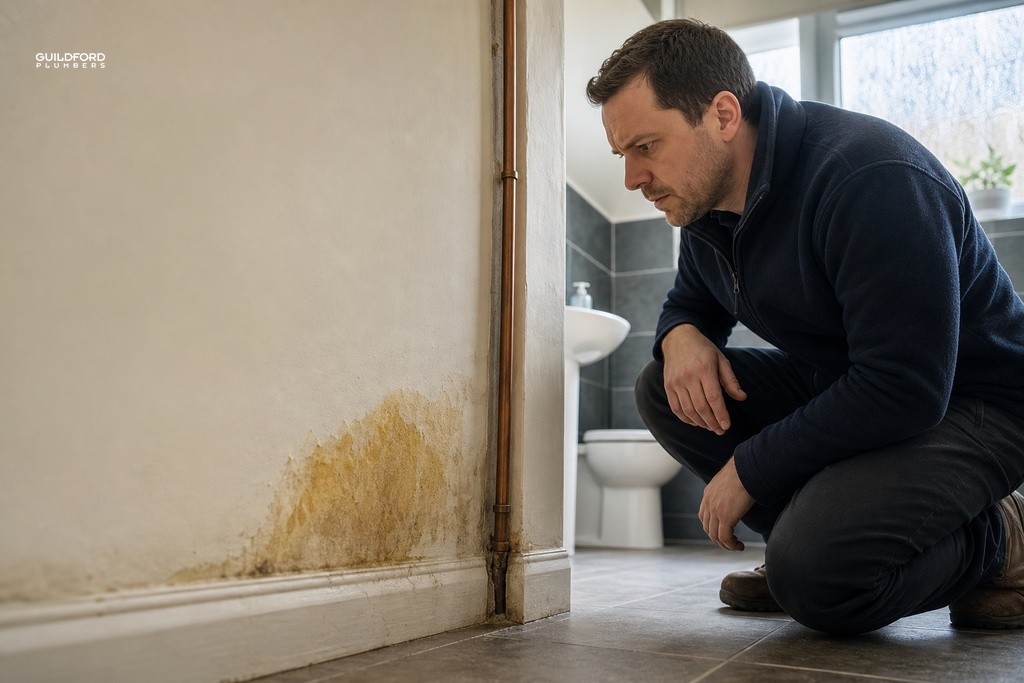
An active leak tells a different story. Brown, yellowish, or rust-coloured stains that expand over time, soft or bubbling plaster beside a pipe run, moisture marks near fittings that return quickly after drying, a musty smell in areas with no obvious ventilation issue, and a wet patch with a defined, growing edge located directly beside a joint or fitting all point to a leak rather than condensation.
Cracked pipes can result from root ingress, corrosion of metal pipes, and underground movement, as identified by NCBI Bookshelf research on damp buildings. If any of these signs are present, treat it as a leak until a plumber confirms otherwise.
| Feature | Condensation | Active Leak |
|---|---|---|
| Appearance | Fine, even coating of water droplets | Brown, yellowish, or rust-coloured stains |
| Pattern | Diffuse, undiscoloured, spreads evenly | Defined, growing edge near a joint or fitting |
| Behaviour over time | Disappears as temperatures drop | Returns quickly after drying; expands |
| Effect on plaster | No permanent softening or staining | Soft, bubbling, or crumbling plaster |
| Smell | No persistent odour | Musty smell with no clear ventilation cause |
| Recommended action | Improve ventilation; insulate pipes | Treat as a leak; call a plumber |
Reading the Location: Walls, Ceilings, and Floors
Where the damp appears gives you important clues about its source and how urgently you need to act.
Walls in kitchens or bathrooms are often connected to a supply pipe, waste pipe, or a failed seal around a fitting. These situations are serious but generally manageable if caught early. A wet ceiling around plumbing is a higher-priority concern, since water pooling above a ceiling can compromise the structural integrity of the plaster and, in some cases, the joists above it. Floor-level damp near a pipe chase or boiler may point to a slow drip that has been pooling beneath the surface for some time.
The location also helps estimate how much of the system may be affected. Damp patches caused by pipe leaks tend to be localised and well-defined, often appearing near bathrooms, kitchens, or areas with known pipework. If the wet patch is spreading across a large section of wall or ceiling with no clear pattern, the source may be higher up in the pipe run and worth tracing carefully.
| Location of Damp | Likely Source | Urgency |
|---|---|---|
| Kitchen or bathroom wall | Supply pipe, waste pipe, or failed fitting seal | Medium — manageable if caught early |
| Ceiling around plumbing | Water pooling above from a pipe above the ceiling | High — risk to plaster integrity and joists |
| Floor near pipe chase or boiler | Slow drip pooling beneath the surface | Medium-high — may have been building for some time |
| Large spread across wall or ceiling | Source higher up in the pipe run | High — requires careful tracing of the full pipe run |
Risks of Leaving Damp Untreated
It can be tempting to monitor a small damp patch and hope it resolves itself, but moisture damage rarely stays contained. Even the tiniest of drips from an old or damaged plumbing system can result in a much larger patch of damp, according to the IOSR Journal of Engineering. Left unchecked, the damage can progress from surface staining to softened plaster, then to rotting timber and compromised insulation, and ultimately to mould growth. This is a genuine health concern, particularly for those with respiratory conditions.
There is also a financial dimension worth keeping in mind. Ageas Insurance notes that insurers generally only cover sudden damage rather than damage occurring over time or due to lack of maintenance. That said, escape of water from a hidden pipe may still constitute an insurable event depending on your policy. Acting promptly not only limits physical damage but may also preserve your options when it comes to making a claim.
What You Can Do Right Now Before Help Arrives
If you suspect an active leak, take these steps right away to limit damage while you wait for a plumber:
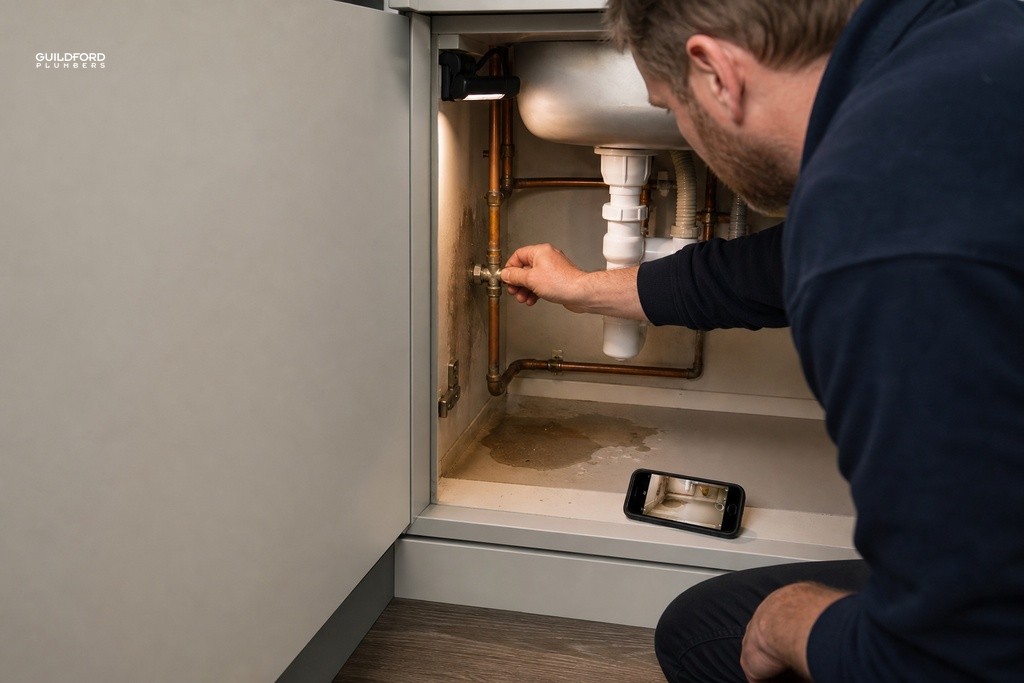
- Turn off the water at the main stopcock or the isolation valve closest to the suspected leak.
- Open windows and doors in the affected area to ventilate and begin drying the space naturally.
- Take clear photographs of the damp patch, any staining, and surrounding pipe fittings for your records and any potential insurance claim.
- Move furniture, rugs, or belongings away from the wet area to prevent secondary damage.
Do not attempt to open walls, dismantle pipe joints, or probe inside a ceiling void without the right tools and qualifications. Disturbing damaged pipework without understanding the full layout of the system can worsen the situation and may complicate the repair for the plumber who follows.
When to Call a Plumber in Guildford and What to Expect
Call a plumber promptly if the moisture mark is growing, returning after drying, or accompanied by brown staining, soft plaster, or a persistent smell. Hidden leaks often require specialist leak detection equipment, because the point where water enters a damp wall near pipework is frequently not directly above or beside where it becomes visible. A qualified plumber will carry out a thorough assessment of the pipe run, check pressure levels, inspect accessible fittings, and use diagnostic tools to locate the source with minimal disruption to your walls.
It is also worth understanding that the early signs of a hidden water leak are often subtle, which is why a professional assessment matters when your own inspection is inconclusive. One related issue that sometimes accompanies hidden leaks is a noticeable drop in household water pressure. If you want to explore that further, the question of why water pressure suddenly drops is covered in its own dedicated guide. For any situation where the damp is near a gas appliance, a flue, or a section of pipework that may carry gas, only a Gas Safe registered engineer should carry out the investigation. Guildford Plumbers is fully Gas Safe registered, which means any suspected damp in those areas can be assessed safely and legally.
How Guildford Plumbers Approaches Leak and Damp Investigations
When Guildford Plumbers attends a damp and leak investigation, the process begins with a structured visual and pressure assessment rather than jumping straight to opening walls. Our team checks the most likely failure points first: pipe joints, seals around fittings, visible corrosion on older pipework, and the condition of any accessible connections in the affected area. This methodical approach means we locate the problem accurately before any repair work begins, saving time and limiting disruption to your home.
With over 12 years of experience handling leak detection and damp investigations across Guildford and the surrounding areas, our team has developed a reliable instinct for where hidden faults tend to hide in the types of homes common to this region. We offer 24/7 emergency availability because we know that a damp patch does not wait for a convenient moment to become urgent. Whether you have spotted a wet ceiling around plumbing late on a weekend evening or noticed moisture marks beside fittings that have been quietly spreading for weeks, we respond quickly so the investigation and repair can begin before the damage goes any further. Reach out to Guildford Plumbers today and let us help you get your home dry, safe, and back to normal as soon as possible.
Frequently Asked Questions Related to Damp Patches Near Pipes
What is the most common cause of damp patches near pipes?
The most common cause is a slow leak from a damaged fitting, corroded pipe, or failed joint seal. Because these leaks develop gradually, the visible damp patch is often much larger than the actual fault, and the source can be some distance from where the moisture first appears.
How do I know if a damp patch is from condensation or a pipe leak?
Condensation produces a fine, even coating of moisture that disappears as temperatures change and leaves no permanent staining. A pipe leak typically causes expanding brown or yellowish stains, soft plaster, and moisture that returns quickly after drying. These signs point clearly to an active fault.
Is a small damp patch near a pipe something I can leave for a while?
It is not advisable. Even a minor drip can gradually soften plaster, rot nearby timber, and encourage mould growth. Addressing the problem early is almost always less disruptive and less costly than waiting until the damage has spread further.
Can I fix a damp patch near a pipe myself?
You can take immediate steps like turning off the water supply and drying out the area, but locating and repairing the underlying fault typically requires a qualified plumber. Attempting to open walls or dismantle joints without the right tools and knowledge can worsen the problem.
Will my home insurance cover damp patches caused by pipe leaks?
Coverage depends on your specific policy. Insurers generally cover sudden and unexpected damage, such as escape of water from a hidden pipe, but not damage that developed gradually due to lack of maintenance. Documenting the issue promptly with photographs supports any potential claim.
When should I call a plumber for damp near pipes?
Call a plumber if the damp patch is growing, returns after drying, or is accompanied by brown staining, a musty smell, or soft plaster. These signs indicate an active leak that requires professional leak detection equipment to locate accurately.