
Key Takeaways
A seasonal air conditioner maintenance checklist helps Guildford homeowners avoid costly breakdowns, improve energy efficiency, and know when to call a certified local engineer.
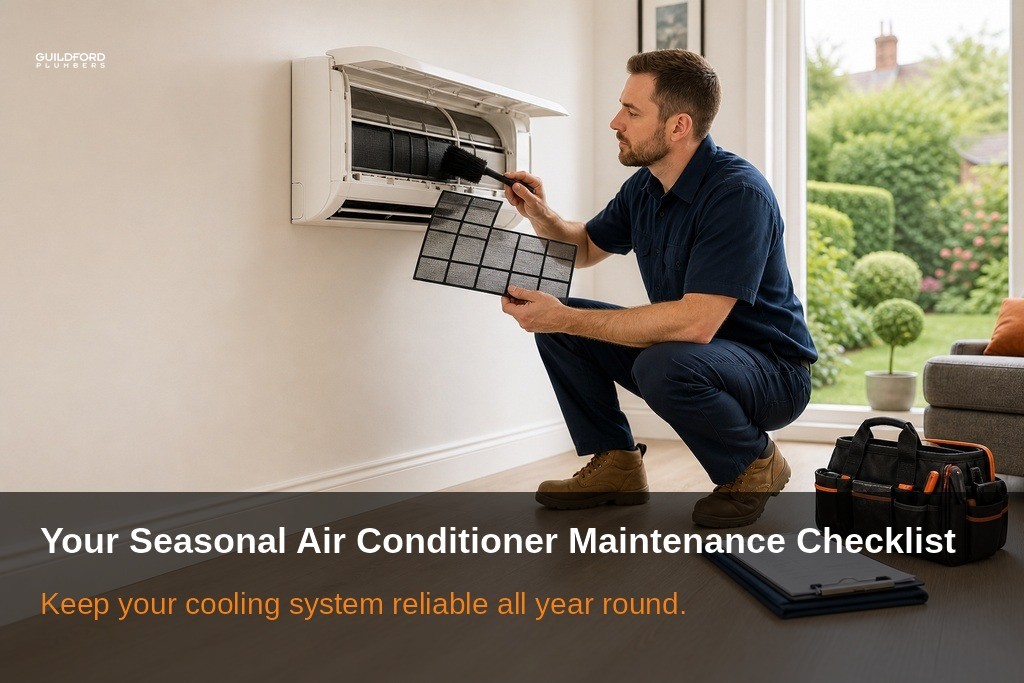
- Check and clean your filters every season. A blocked filter can reduce airflow significantly, making your system work harder and pushing up energy bills.
- Inspect the outdoor unit each spring by clearing debris and ensuring at least 60 centimetres of space around it for proper airflow.
- Flush the condensate drain line regularly during summer to prevent blockages that can cause water damage inside your home.
- Any work involving refrigerant must be carried out by an F-Gas certified engineer. This is a legal requirement in the UK, not optional.
- Book a professional service each autumn before heating season demand rises. Catching faults early is far less costly than emergency repairs in summer.
Keeping your cooling system in good shape does not have to be complicated, but it does require consistency. A clear air conditioner maintenance checklist gives you a practical framework to follow through each season, helping you avoid unexpected failures that always seem to strike on the hottest day of the year. Whether you have a split unit in the bedroom, a portable AC in the living room, or a heat pump that handles both heating and cooling, regular upkeep makes a measurable difference to performance and lifespan.
This guide covers what to check and when, what you can safely handle yourself, and when it makes sense to call in a qualified professional. If you are based in Guildford or the surrounding areas, including Merrow, Burpham, Stoughton, or further afield across Surrey, you will also find practical notes on where local plumbing and heating expertise can support your AC care beyond what a typical DIY approach covers.
Why Preventative AC Maintenance Matters
Most homeowners do not think about their air conditioner until it stops working. According to a Warner Service report, only 42% of homeowners call a professional for routine maintenance, meaning the majority are running systems that are quietly degrading without any intervention. The consequences tend to arrive at the worst possible moment: a heatwave, a busy weekend, or right before guests arrive.
The energy case for preventative maintenance is equally compelling. Research from NIST Technical Note 1848 found that improper installation and maintenance can increase HVAC energy use by 30% or more compared with properly maintained systems. Treating maintenance as a routine part of homeownership, rather than a reaction to failure, protects both your comfort and your budget over the long term.

How UK Homes Differ from Warmer Climates
Air conditioning in Britain occupies an interesting middle ground. Unlike homes in southern Europe or the United States, where cooling systems run hard for months at a time, most UK properties use their AC units for a much shorter season. That shorter period of use does not reduce the need for upkeep. In some ways it increases it, because systems that sit dormant through autumn and winter can develop faults that only become obvious once the heat arrives.
The types of systems found in British homes vary considerably: split units fixed to walls, portable units moved room to room, and heat pumps with a cooling function all require slightly different care. There is also an important regulatory dimension. The UK’s F-Gas regulations govern the handling of refrigerant gases, meaning any work involving refrigerant lines or top-ups must be carried out by an F-Gas certified engineer. This is a legal requirement that protects both householders and the environment, and knowing this boundary between owner tasks and certified work is central to responsible AC care.
Seasonal AC Maintenance at a Glance
Each season calls for a distinct set of actions. The following summary gives you a quick reference before the detailed steps that follow.
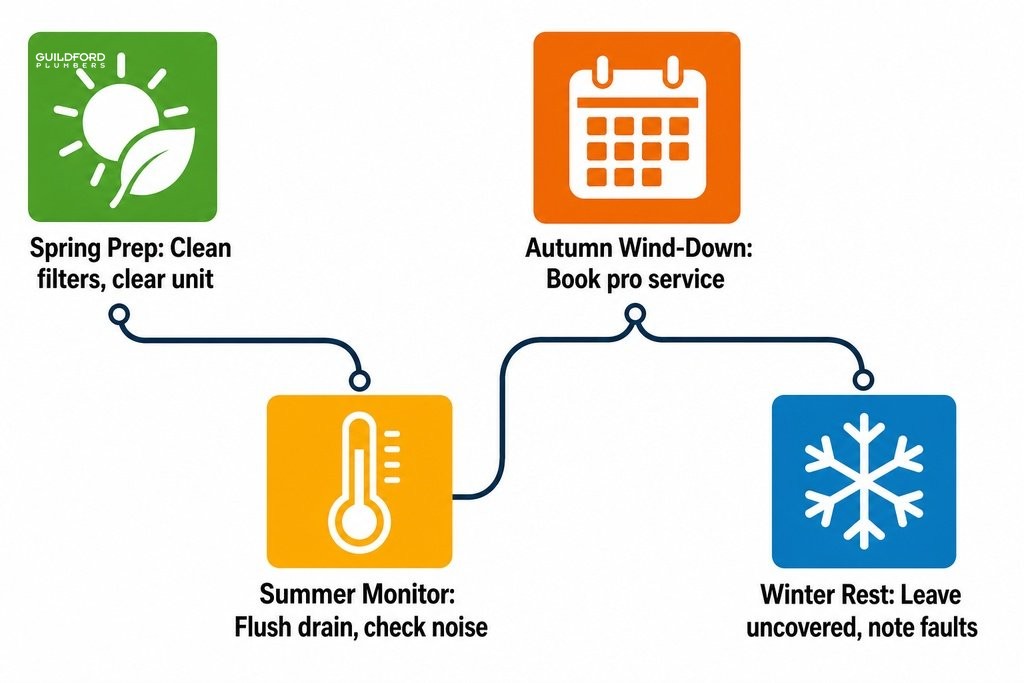
- Spring: Clean or replace filters, inspect the outdoor unit, clear debris, check airflow.
- Summer: Monitor performance and unusual noises, keep vents clear, flush the condensate drain.
- Autumn: Run a final visual check, clean and store portable units, book a professional service.
- Winter: Leave fixed outdoor units uncovered and note any issues for your next service appointment.
| Season | Key Tasks | Who Handles It |
|---|---|---|
| Spring | Clean or replace filters, inspect outdoor unit, clear debris, check airflow | Homeowner / Engineer |
| Summer | Monitor performance and noises, keep vents clear, flush condensate drain | Homeowner |
| Autumn | Visual check, clean and store portable units, book professional service | Homeowner / Engineer |
| Winter | Leave outdoor units uncovered, note issues for next service appointment | Homeowner |
Spring Checklist: Before the Cooling Season Begins
Spring is the ideal moment to work through your AC checklist before temperatures climb. Systems that have been unused through the colder months need attention before they are switched on, and catching problems now is far cheaper and less stressful than discovering them mid-summer.
Checking and Cleaning Your AC Filters
Filters are the starting point of any air conditioner cleaning routine. A blocked or dirty filter is one of the most common and easily preventable causes of reduced efficiency. Here is how to check yours:
- Locate the filter panel on your indoor unit or return air grille.
- Slide the filter out and hold it up to the light.
- If you cannot see light through it clearly, it needs cleaning or replacing.
- Rinse reusable filters with warm water and leave them to dry fully before reinserting. Replace disposable filters entirely.
Research summarised by WorkTrek found that post-cleaning HVAC systems deliver 10 to 46% more airflow compared to uncleaned systems, which gives a clear sense of how much difference this single task makes.
Inspecting the Outdoor Unit
The outdoor condenser unit takes the brunt of UK weather through winter and deserves a thorough look each spring. In Guildford and the wider Surrey area, where autumn leaf fall and seasonal moss growth can be significant, this inspection is particularly worthwhile.
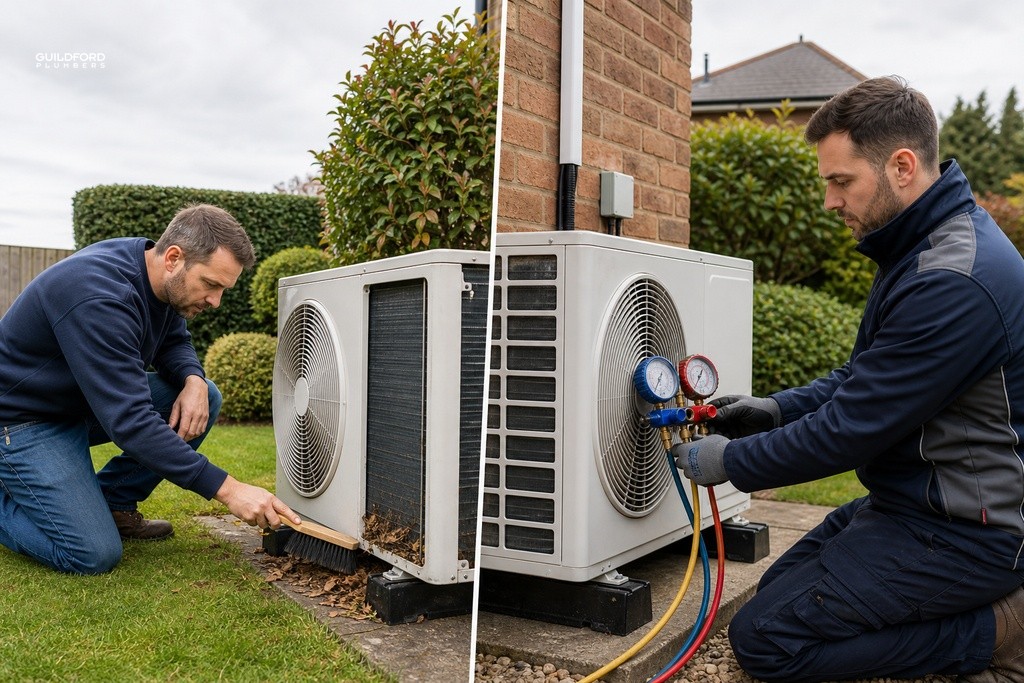
- Clear away leaves, moss, or debris from around the base and between the fins.
- Ensure at least 60 centimetres of clear space around the unit on all sides.
- Look for visible damage to the casing, bent fins, or signs of pest activity.
- Avoid spraying water directly into electrical components or attempting to straighten fins yourself.
Note anything unusual and raise it with an engineer at your next service visit rather than attempting repairs independently.

Summer: Keeping Your System Running During Peak Use
Once the cooling season is underway, the goal shifts from preparation to monitoring. The most useful summer maintenance steps are largely observational. Pay attention to how your system sounds and how consistently it cools.
Listen for unusual noises. Rattling, grinding, or gurgling are not normal and usually indicate a component that needs attention. Keep vents clear. Furniture, curtains, and other obstructions force the system to work harder and increase wear on moving parts. Flush the condensate drain. This small pipe carries moisture away from the indoor unit and can become blocked with algae or debris. A blockage causes water to back up, leading to damp issues that can become expensive to resolve. Flushing the line with a diluted cleaning solution every few weeks during peak use is a simple step many homeowners overlook.
Autumn: Winding Down After the Cooling Season
The end of the cooling season is not the time to switch the unit off and forget about it. Autumn is one of the most productive points in your maintenance calendar, and a few focused tasks now will protect your system through the months ahead.
- Run a final visual check: inspect the evaporator coils for dust build-up and clear debris from the outdoor unit.
- Note any performance issues from the summer, such as reduced output, unusual noises, or inconsistent temperatures, so you can brief an engineer efficiently.
- Clean and thoroughly dry portable units before storing them somewhere dry to prevent mould growth.
- Do not cover fixed outdoor units: manufacturers generally advise against this, as covers can trap moisture and encourage pests.
Booking a professional service in autumn is also good timing. Engineers tend to be less busy than during the heating season, making it easier to secure a convenient appointment.
What You Can Do Yourself Versus When to Call an Engineer
There is a clear line between what homeowners can safely do and what requires professional certification. Understanding this boundary helps you maintain your system responsibly without taking unnecessary risks.
Tasks you can handle yourself:
- Cleaning or replacing filters
- Clearing debris from the outdoor unit
- Checking airflow and keeping vents clear
- Flushing the condensate drain
Tasks that require a qualified engineer:
- Any work involving electrical components
- Refrigerant handling or top-ups (F-Gas certification is legally required in the UK)
- Internal coil servicing
- Diagnosing and repairing faults with moving parts or controls
| Task | Homeowner | Qualified Engineer Required |
|---|---|---|
| Cleaning or replacing filters | Yes | No |
| Clearing debris from outdoor unit | Yes | No |
| Checking airflow and keeping vents clear | Yes | No |
| Flushing the condensate drain | Yes | No |
| Electrical component work | No | Yes |
| Refrigerant handling or top-ups | No | Yes (F-Gas certified) |
| Internal coil servicing | No | Yes |
| Diagnosing faults with moving parts or controls | No | Yes |
The U.S. Department of Energy, Energy Saver puts it plainly: “Regular maintenance of your air conditioner’s filters, coils, fins, and refrigerant lines is essential for efficient and effective performance. Neglecting maintenance leads to a decline in performance and increased energy use.” For the more technical elements on that list, working with a qualified engineer is the responsible approach. A professional service visit is an investment, but it is considerably less expensive than an emergency repair or a premature system replacement.
How Often Should an Air Conditioner Be Serviced?
Most systems benefit from at least one professional check per year, with homeowners handling filter inspections and basic cleaning in between. A study published on ResearchGate found that if an air conditioner is installed correctly and major installation problems are resolved, it should perform efficiently for years with only minor routine maintenance. Consistency matters more than intensity: a little attention each season is far more effective than a single annual overhaul.
AC Maintenance Support for Guildford and Surrey Homeowners
At Guildford Plumbers, we support Air Conditioning Services Guildford customers in the practical areas where plumbing and HVAC systems overlap. Condensate drain blockages are a prime example: they are a drainage issue we resolve quickly and without fuss, and they are among the more common causes of water damage linked to cooling systems. We also assist with installation checks, pipe connections to indoor units, and identifying whether moisture or damp issues near an AC unit have a plumbing-related cause.
Whether you are in central Guildford or in the surrounding Surrey villages and suburbs, our team understands local properties and the specific demands they place on heating and cooling systems. If you want straightforward advice and reliable local support from a team that knows the area well, get in touch today and let us keep your home’s essential systems running as they should, whatever the season brings.
Frequently Asked Questions About Air Conditioner Maintenance
How often should I clean or replace my AC filters?
For most UK homes, checking filters every four to six weeks during active use is a sensible habit. Reusable filters can be rinsed and dried; disposable ones should be replaced when visibly blocked. Homes with pets or high dust levels may need more frequent attention. A clean filter is one of the most impactful things you can do yourself to maintain efficiency.
Can I cover my outdoor AC unit during winter?
Most manufacturers advise against covering fixed outdoor units, as covers can trap moisture and attract pests. The units are built to withstand UK weather year-round. A light clean and visual inspection in autumn is all that is typically needed. Portable units should be stored indoors after being thoroughly cleaned and dried.
What does F-Gas certification mean and why does it matter?
F-Gas certification is a UK legal requirement for engineers who handle refrigerant gases used in air conditioning systems. Refrigerant work carried out by uncertified individuals is illegal and can be environmentally harmful. If your system needs a refrigerant top-up or has a suspected leak, you must use a certified engineer. This is not a task for DIY.
What are the signs that my air conditioner needs professional attention?
Key warning signs include unusual noises such as rattling or grinding, a noticeable drop in cooling output, water leaking from the indoor unit, and the system cycling on and off more frequently than usual. If any of these occur during the cooling season, stop using the unit and contact a qualified engineer promptly.
How does condensate drain blockage affect my home?
The condensate drain removes moisture collected by the indoor unit. When blocked with algae or debris, water backs up and can overflow into walls, ceilings, or flooring. Flushing the line with a diluted cleaning solution during peak summer use helps prevent this. If a blockage has already caused damp or water damage, a plumber can assess and resolve the drainage issue.
Is one professional AC service per year enough?
For most residential systems in the UK, one annual professional service combined with regular filter checks and homeowner inspections is generally sufficient. Systems used more intensively, or those that showed performance issues during the previous season, may benefit from a mid-season check. Your engineer can advise based on the age and condition of your unit.