

Key Takeaways
Recognising the early signs of a hidden water leak, such as rising bills, damp patches, and musty odours, helps homeowners act before serious structural damage sets in.
- An unexplained rise in your water bill is often the earliest sign of a hidden leak, appearing long before any visible damage reaches the surface.
- Musty smells near walls, peeling paint, soft flooring, and unexplained damp patches are physical clues that sustained moisture may be escaping from concealed pipework.
- Two or more warning signs appearing together carry far more weight than any single clue on its own and should prompt prompt action.
- A simple water meter test carried out at home can confirm whether water is flowing when no fixtures are in use, giving you a reliable reason to call a professional.
- Avoid opening walls or floors yourself if you suspect a hidden leak; document what you observe and contact an experienced local plumber to carry out a proper assessment.
Most homeowners only discover a water leak once the damage is already visible. By that point, walls may be saturated, floors may have warped, and repair costs have climbed significantly. Learning to recognise the early signs of a hidden water leak gives you a real advantage, letting you act before a slow drip turns into a serious structural problem. The challenge is that most leaks stay completely out of sight for a long time, developing quietly behind plasterboard, under concrete, or inside ceiling voids where no one thinks to look.
This guide is written for homeowners who want to understand what their home might be trying to tell them. Rather than waiting for an obvious flood or stain, you can learn to read the subtler hidden pipe leak clues that point toward a concealed pipe issue, and know when it is time to call in a professional.
Why Hidden Leaks Are Harder to Catch Than You Think
Modern homes route pipework through some of the least accessible spaces imaginable. Supply and waste pipes run behind tiled walls in bathrooms, beneath timber floors in kitchens, and under concrete slabs in extensions or ground floors. When a joint fails or a pipe develops a pinhole, water escapes somewhere you simply cannot see. By the time any visible evidence reaches a surface you can observe, the moisture may have already been spreading for weeks or longer.
Hidden leaks can go undetected for a long time because the early symptoms are easy to dismiss or misread. A slight rise in your water bill might seem like seasonal variation. A faint smell near a wall might be put down to poor ventilation. The key is connecting those individual observations and recognising them as a pattern, so you are not caught off guard when the damage finally breaks through.

What Are the Early Signs of a Hidden Water Leak?
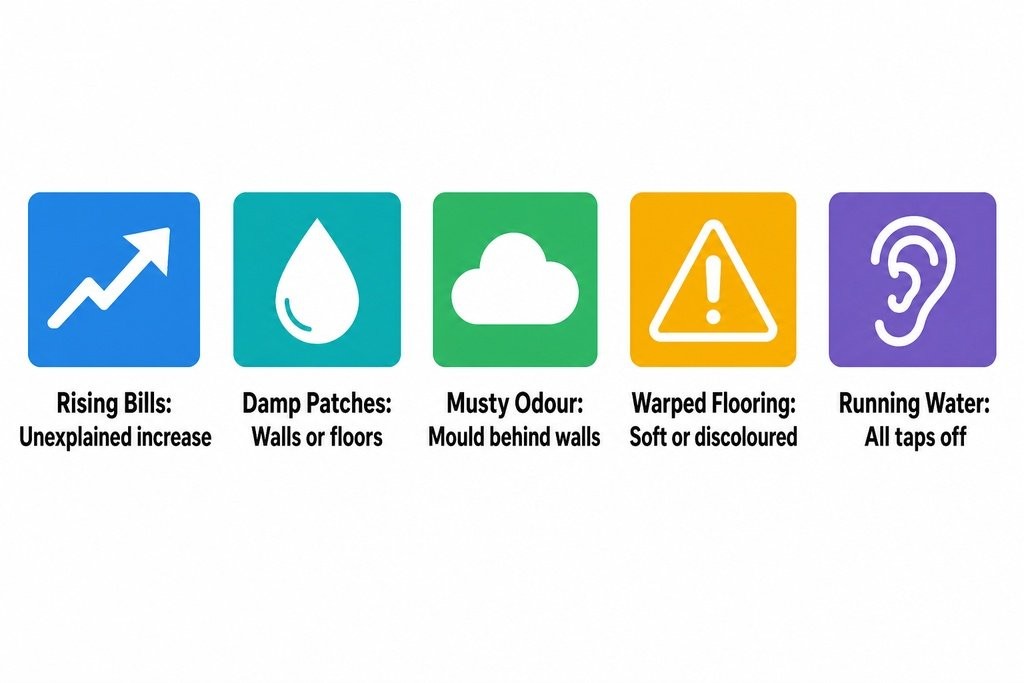
The most widely recognised early sign of a hidden water leak is an unexplained increase in your water bill. If your usage habits have not changed but your bill keeps creeping up, that gap often points to water escaping somewhere in your system. Alongside rising bills, unexplained damp patches or wet spots on walls, ceilings, or floors with no obvious source are a primary warning sign. Peeling or bubbling paint, warped skirting boards, and soft or discoloured flooring are all physical consequences of sustained moisture working its way through building materials over time.
What makes these signs easy to miss is that each one has a plausible innocent explanation on its own. Paint peels in older homes. Skirting boards can swell in humid weather. It is the combination of clues, or their persistence over several weeks, that should raise genuine concern. Thinking about these symptoms in the broader context of common plumbing problems at home helps you treat them with the seriousness they deserve rather than brushing them aside.
| Warning Sign | Where It Typically Appears | What It May Indicate |
|---|---|---|
| Unexplained rise in water bill | Noticed on monthly billing | Water escaping somewhere in the supply system |
| Damp patches or wet spots | Walls, ceilings, or floors | Sustained moisture migrating through building materials |
| Peeling or bubbling paint | Walls near plumbing fixtures | Moisture trapped behind or within the wall surface |
| Warped or soft flooring | Kitchens, bathrooms, utility rooms | Long-term water contact weakening the subfloor |
| Musty or earthy odour | Walls, corners, or floor cavities | Mould or mildew growth in a concealed damp space |
| Sound of running water (taps off) | Walls, under floors | Active flow within pipework when no fixture is in use |
What a Musty Smell from Walls Usually Means
A persistent musty or earthy odour coming from a wall, corner, or floor cavity is one of the earliest signals of trapped moisture behind a surface. This smell is produced by mould and mildew beginning to grow in damp conditions, and it often appears before any visible staining or discolouration. If the smell returns repeatedly after cleaning or airing out the room, there is a reasonable chance moisture is entering from inside the structure rather than from the surface.
Pay particular attention to rooms where pipework runs behind walls, such as rooms that share a wall with a bathroom, kitchen, or utility space. A smell in an area with no obvious reason for dampness is worth taking seriously.
Water Leak Warning Signs in Unexpected Places
Not every leak announces itself in the most obvious rooms. Cupboards under kitchen sinks are a common location for slow drips that go unnoticed because the space is rarely inspected closely. Airing cupboards housing hot water cylinders can develop condensation or pooling at the base without anyone noticing until flooring materials begin to soften. Basements, utility rooms, and understairs storage areas are similarly overlooked spaces where leaks quietly develop over months. What causes damp patches near pipes in these locations is often a failed compression fitting, a corroded joint, or a deteriorating pipe section that has simply reached the end of its service life.
How to Read Multiple Clues Together
A single sign rarely tells the whole story, but two or more warning signs appearing together carry much more weight. If you notice a musty smell near a wall and your water bill has risen without explanation, that combination is significantly more telling than either observation alone. Similarly, if you can hear the faint sound of running or dripping water when all taps and appliances are switched off, and you have also noticed soft flooring nearby, those two signals together point strongly toward a hidden leak that needs investigation.
Context also helps you assess urgency. A slow seep behind a wall may cause gradual damage over months, while a more active leak behind a tiled surface can saturate insulation and framing relatively quickly. If the signs you are observing are multiplying or intensifying over a short period, that is a strong reason to act promptly rather than continue monitoring.
How to Do a Simple Water Meter Leak Test
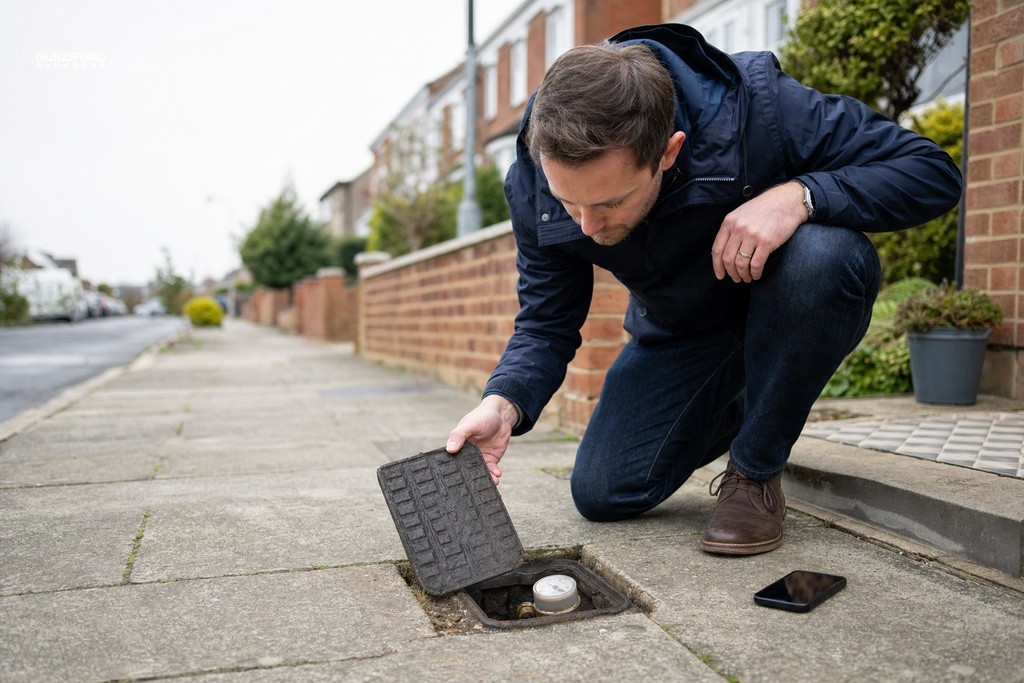
Before calling a plumber, there is one straightforward test you can carry out yourself to confirm whether a hidden leak is likely. If your water meter continues to move when all taps and appliances are turned off, that is a reliable indicator that water is escaping somewhere in the system.
Steps to check your meter:
- Turn off every tap, appliance, and water-using device in the home, including dishwashers and washing machines.
- Locate your water meter, typically found under a cover near the pavement at the front of the property, and note the current reading.
- Wait at least one hour without using any water in the home.
- Return to the meter and check whether the reading has changed or whether the flow indicator (a small dial or star on the meter face) has moved.
| Step | Action | What It Tells You |
|---|---|---|
| 1 | Turn off all taps, appliances, and water-using devices | Ensures no legitimate water draw can affect the reading |
| 2 | Locate the water meter and note the current reading | Gives you a baseline to compare against |
| 3 | Wait at least one hour without using any water | Allows enough time for even a slow leak to register |
| 4 | Return to the meter and check for any change in reading or movement of the flow indicator | Movement confirms water has been flowing, which may indicate a hidden leak |
If the meter has moved during that period, water has been flowing somewhere without your knowledge. This result is a strong enough signal to warrant contacting a professional for a proper leak detection assessment. The water meter leak test does not tell you where the leak is, but it does confirm that one is likely present.
When Hidden Leaks Become a Serious Risk
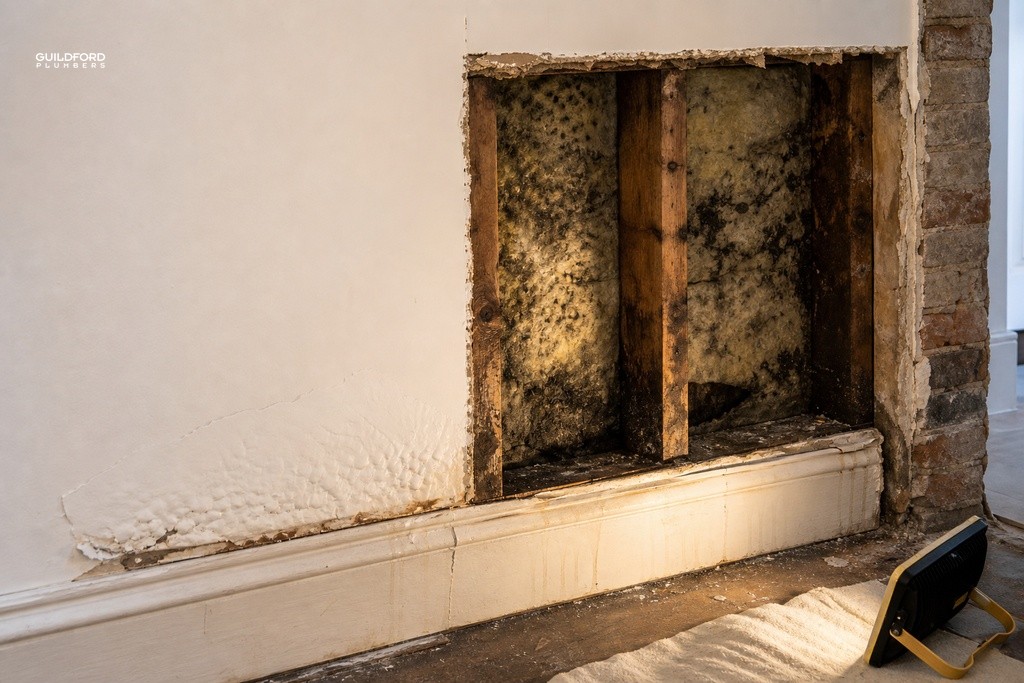
Left unaddressed, a concealed water leak does not simply stay contained. Over time, sustained moisture causes structural consequences including warped floorboards, softened plasterboard, and damage to load-bearing timbers. Mould growth can affect air quality inside the home and add remediation costs on top of the plumbing repair itself. Catching a leak early and arranging prompt repair is generally the most cost-effective way to limit property damage and keep overall repair costs manageable.
Older properties in and around Guildford can be particularly vulnerable. Homes with ageing pipework, solid masonry walls, or original cast-iron or lead supply lines tend to be more susceptible to both corrosion and sustained moisture damage. Solid walls absorb and hold water differently from modern cavity construction, meaning the damage can be more advanced internally than the surface appearance suggests. Understanding why water pressure suddenly drops in older systems is also relevant here, since reduced pressure across multiple fixtures can be a sign that a supply pipe has been compromised.
What to Do When You Suspect a Hidden Leak in Guildford
If your observations and the meter test point toward a likely hidden leak, take a few practical steps before a plumber arrives. If you suspect an active and significant leak, locate your main stopcock and turn off the water supply to prevent further damage. Avoid opening up walls or floors yourself to try to find the source. Disturbing the structure without knowing where the pipe runs can cause additional harm and complicate the professional assessment. Document what you have observed: where unexplained damp patches have appeared, when the smell started, and any changes in your water bill. This information helps a plumber narrow down the likely source quickly.
At Guildford Plumbers, our leak detection service is designed to locate the problem without unnecessary disruption to your home. Using professional methods including acoustic listening equipment and thermal assessment, we trace the source of hidden leaks accurately before any opening up of walls or floors is needed. With over 12 years of experience handling leak detection across Guildford and the surrounding areas, our team works efficiently and cleanly, minimising the footprint of the investigation while giving you a clear picture of what is happening inside your walls.
What to Verify Before Work Begins
Not every plumber has specific experience in hidden leak detection. General repairs and leak tracing are different skill sets, so it is worth confirming that the person you are hiring has handled comparable work before. Ask directly about their experience with concealed leaks and what methods they use to locate them without unnecessary damage to your property.
Check reviews from local customers in Guildford who have used the service for leak detection specifically, not just general plumbing jobs. Response time matters too. If a leak is active, a plumber who can attend promptly reduces the window for further damage. Before any work begins, make sure pricing is explained clearly. A trustworthy plumber will give you a transparent picture of how costs are structured before you commit, so there are no surprises once the job is underway.
If you have spotted any of the early signs of a hidden water leak described in this guide and want a straightforward assessment from an experienced local team, get in touch with Guildford Plumbers today. We are available around the clock, we respond quickly, and we will give you honest answers about what your home needs.
Frequently Asked Questions About Hidden Water Leaks
What is the most common early sign of a hidden water leak?
An unexplained increase in your water bill is usually the earliest sign. If your usage habits have not changed but costs keep rising, water is likely escaping somewhere in the system, often long before any visible damage appears.
How can I tell if a musty smell is caused by a hidden leak?
A musty smell is more likely linked to a hidden leak if it returns repeatedly after cleaning or airing the room, especially near walls that back onto a bathroom, kitchen, or utility space. Mould appearing in a well-ventilated area is another indicator that moisture may be coming from inside the structure.
Does a hidden water leak always cause visible water damage?
Not immediately. Hidden leaks can remain active for weeks or months before moisture reaches a visible surface. Soft flooring, peeling paint, or warped skirting boards are often the first physical signs, and they may appear well after the leak has started.
How accurate is the water meter leak test?
The meter test is a reliable way to confirm that water is flowing somewhere when it should not be. It does not pinpoint the location, but a reading that changes during a one-hour no-use period is a strong enough signal to justify calling a professional for a proper leak detection assessment.
When should I call a plumber rather than investigating a suspected leak myself?
Contact a plumber as soon as the meter test confirms movement, or when two or more warning signs appear together. Avoid opening walls or floors yourself, as this can complicate the professional assessment and risk additional structural damage.