Key Takeaways
Catching common plumbing problems at home early prevents costly damage, and Guildford Plumbers explains what to watch for and when to call a professional.
- Dripping taps, running toilets, slow drains, and low water pressure are the most frequent everyday plumbing faults and each one signals a real underlying issue worth addressing promptly.
- Hidden leaks are easy to miss; unexplained rises in your water bill, water stains on walls or ceilings, and soft patches on flooring near pipes are all warning signs that warrant a professional leak detection check.
- Burst pipes, sewage backups, and loss of hot water in cold weather are genuine emergencies. Turn off your stopcock immediately and call an emergency plumber without delay.
- Simple maintenance habits such as annual boiler servicing, using a drain guard, and knowing where your stopcock is located can prevent the majority of unexpected plumbing repairs.
- Always verify a plumber is Gas Safe registered before hiring, and insist on transparent pricing and written quotes before any work begins.
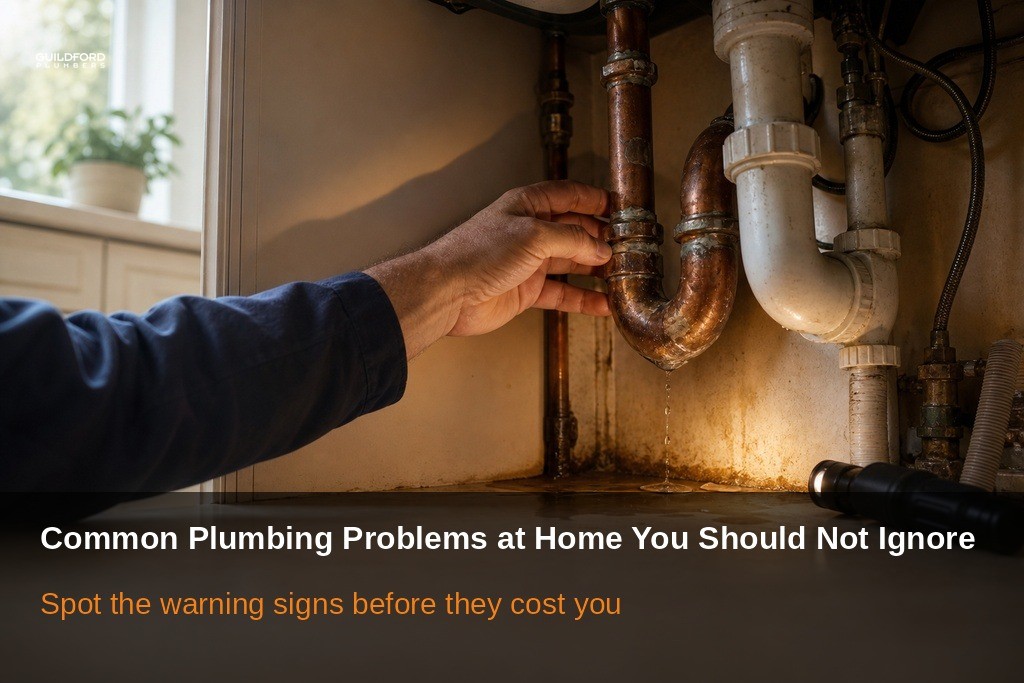
Every home develops plumbing quirks over time, and it can be tempting to put them on the back burner when life gets busy. But common plumbing problems at home have a habit of growing from minor nuisances into expensive emergencies, often in ways that are not immediately visible. A slow-draining sink, a tap that will not quite stop dripping, or a toilet that keeps running after flushing might feel like low-priority issues, but each one is your home giving you an early warning. For homeowners in Guildford and the surrounding areas, acting on these signals early is one of the smartest financial decisions you can make.
This guide walks through the faults you are most likely to encounter, explains what is behind them in plain language, and helps you understand when to handle things yourself and when to call in a qualified local plumber. Whether you are dealing with something that appeared overnight or a problem that has been quietly worsening for months, the information here will help you respond with confidence.
Why Catching Plumbing Faults Early Saves You Money
The real cost of house plumbing issues rarely shows up on day one. A hairline crack in a pipe joint, a slow leak behind a bathroom wall, or a partially blocked drain may seem harmless at first. Left unattended, however, each of these can lead to structural water damage, warped flooring, mould growth behind walls, or a burst pipe that causes flooding across multiple rooms. Research published on ResearchGate confirms that plumbing defects in residential buildings, when unnoticed for extended periods, can lead to major structural damage and significant repair costs, while early identification is key to affordable remediation.
The financial stakes become clearer when you look at specific fault types. According to a study from Virginia Tech’s Department of Agricultural and Applied Economics, 33% of survey respondents who experienced pinhole leaks spent at least $500 repairing the resulting damage to plumbing materials alone. Beyond the money, more than 75% of those affected reported at least a moderate level of stress. These are not rare edge cases; they are outcomes that play out in homes every year when small issues are left unaddressed. Treating early intervention as a cost-saving habit, rather than an optional extra, is one of the most practical steps a homeowner can take.

What Are the Most Common Plumbing Problems at Home?
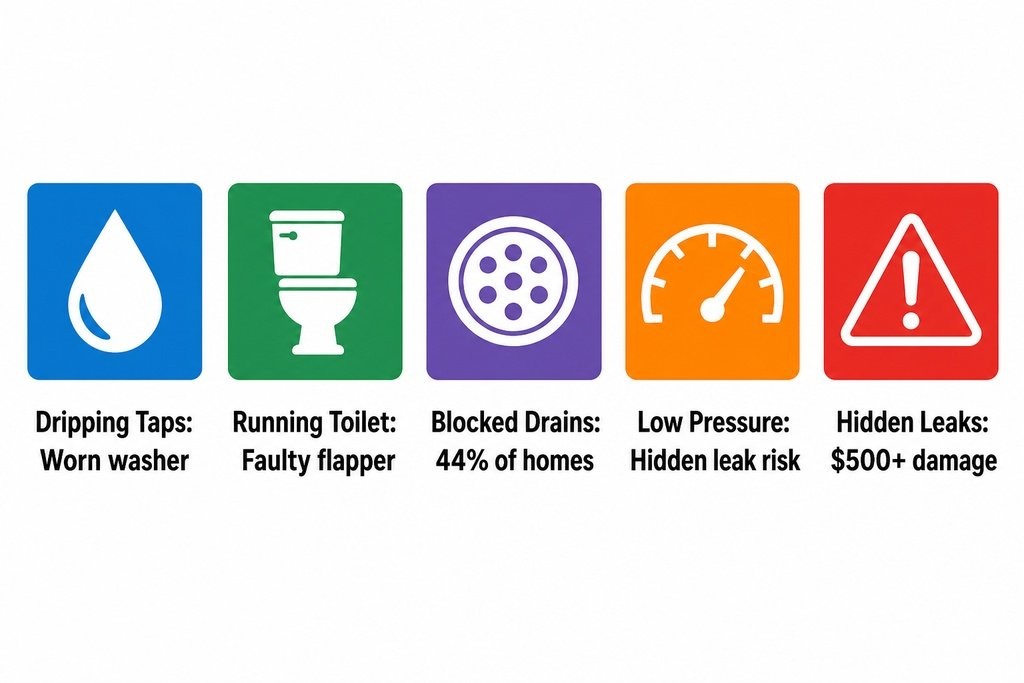
The most frequently reported everyday plumbing faults come down to a familiar shortlist. Dripping taps are usually caused by a worn washer or O-ring that has deteriorated through years of use. Running toilets are typically the result of a faulty flapper valve or a float set too high, allowing water to trickle constantly into the bowl. Low water pressure can point to a blocked aerator or a more significant issue further into the pipe system. Slow-draining sinks and baths are often a sign of partial blockages caused by hair, soap residue, or grease accumulation.
Each of these faults has a root cause worth understanding. Dripping taps waste far more water than most people realise, and the constant moisture can gradually corrode surrounding fixtures. Low water pressure is a recognised symptom of underlying home water system problems, including pipe blockages or supply issues that may not be visible from the surface. According to Google Consumer Surveys, 44% of homeowners frequently deal with blocked drains, confirming just how widespread this everyday problem is. A survey cited in residential plumbing research also found that clogged pipes and drains were the most common plumbing issue experienced by homeowners at 35%, reinforcing that drainage faults deserve more attention than they typically receive.
| Fault | Typical Cause | Risk if Left Unaddressed | Action Required |
|---|---|---|---|
| Dripping tap | Worn washer or O-ring | Ongoing water waste, fixture corrosion | Replace washer or O-ring |
| Running toilet | Faulty flapper valve or float set too high | Continuous water waste, worsening cistern fault | Repair or replace flapper valve |
| Low water pressure | Blocked aerator, sediment in pipes, or hidden leak | Indicates deeper supply or pipe issue | Investigate with a plumber |
| Slow-draining sink or bath | Hair, soap residue, or grease accumulation | Full blockage, potential overflow | Clear drain; use a drain guard going forward |
Leaking Pipes and Typical Pipe Problems
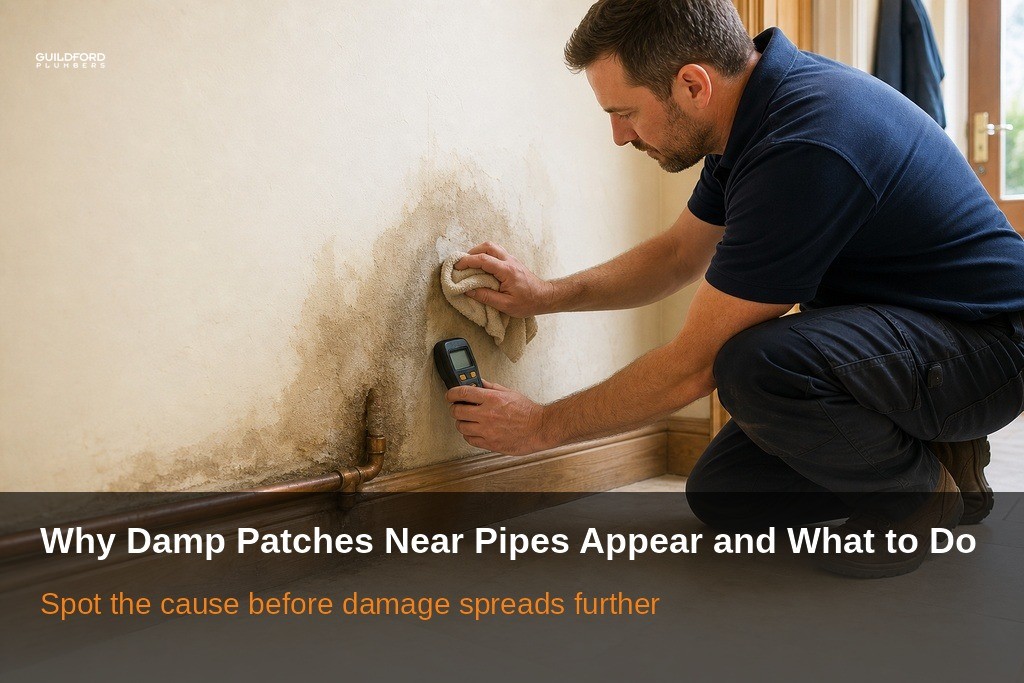
Typical pipe problems tend to occur at joints, bends, and areas where pipes pass through walls or floors, precisely because these are the points of greatest mechanical stress and where installation quality matters most. A leak behind a wall may go undetected for weeks, announcing itself only through a damp patch, a musty smell, or paint that begins to bubble and peel.
The International Journal of Engineering Research and Technology notes that the risk of leakage in residential plumbing increases with the number of pipe joints, and that poor installation or unskilled labour is a primary root cause of many recurring faults. Even a minor leak, if left unchecked, creates the warm and damp conditions that encourage mould to take hold inside wall cavities, which then becomes a health concern as much as a structural one.
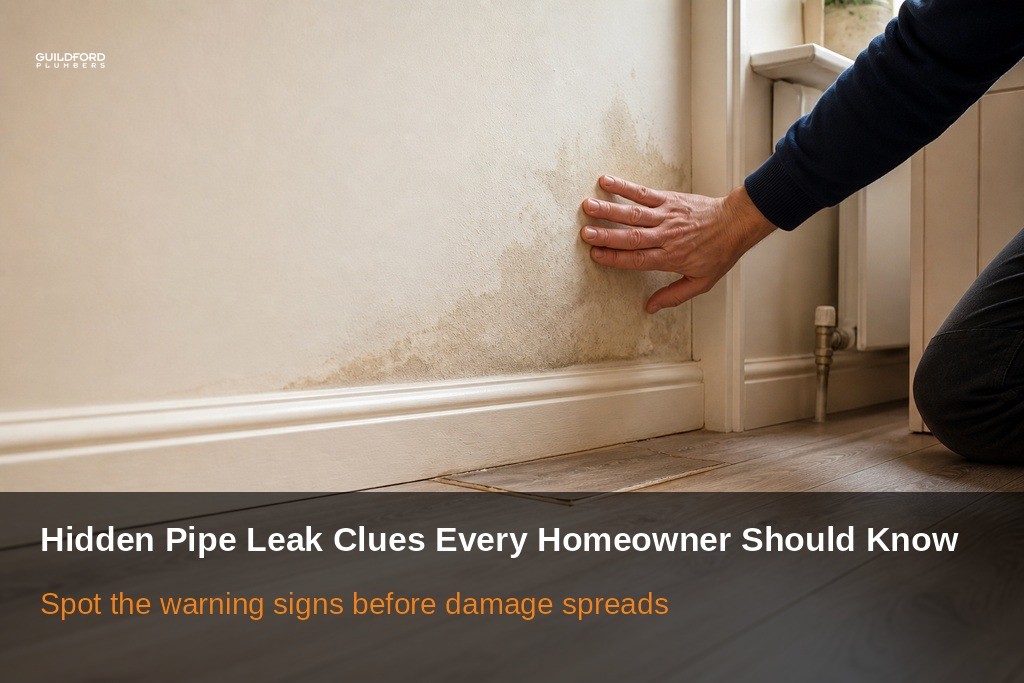
Unexplained increases in your water bill, water stains on ceilings or walls, and soft or discoloured patches on flooring near pipes are among the early signs of a hidden water leak that you should treat as a prompt to act rather than a reason to wait. If you notice any of them, it is worth having a professional carry out a leak detection check before the damage spreads further.
Common Bathroom Plumbing Faults in Guildford Homes
The bathroom is where the majority of plumbing faults in a home tend to cluster. Faulty showers with weak or inconsistent water pressure are often caused by a blocked showerhead, a failing cartridge, or sediment build-up within the supply line. Blocked bathroom drains, where hair and soap residue accumulate over time, can go from slow to fully blocked within weeks. Broken faucets and toilets were experienced by 28.2% of homeowners in a 2018 study cited in residential plumbing research, making them the second most common residential plumbing problem.
Toilet cistern issues deserve particular mention because they are easy to dismiss. A toilet that refills slowly, makes a hissing sound after flushing, or continues to run intermittently is wasting water around the clock. Homeowners often let these faults continue because the toilet still flushes, but the ongoing water waste and the risk of the fault worsening make it worth addressing promptly. Our companion piece on toilet problems homeowners should not ignore covers the full range of cistern and flush faults in detail. If you are unsure what is causing issues at your taps or basin, the topic of tap and sink problems explained is covered separately to give those faults the focused treatment they deserve.
Home Water System Problems That Are Easy to Miss
Not every home water system problem announces itself loudly. Water hammer, the sharp banging sound when a tap is turned off quickly, is caused by a pressure surge travelling through the pipes and, left unaddressed, puts repeated stress on pipe joints and fittings. Discoloured water with a brown or rust-coloured tinge can indicate corrosion inside older pipes and warrants investigation. Fluctuating hot water temperature is a sign that your boiler or hot water cylinder may not be operating correctly, or that there is an issue with a thermostatic mixing valve or scale build-up within the system.
These symptoms often point to systemic issues rather than isolated faults. Research from the U.S. Environmental Protection Agency notes that water quality within premise plumbing is influenced by multiple factors, including water treatment changes and seasonal variation, meaning what seems like a minor discolouration could signal something more significant. If you have also noticed cold radiators, unusual boiler behaviour, or inconsistent heating, these could be heating and radiator warning signs worth investigating alongside your water system.
When Does a Plumbing Issue Become a Genuine Emergency?
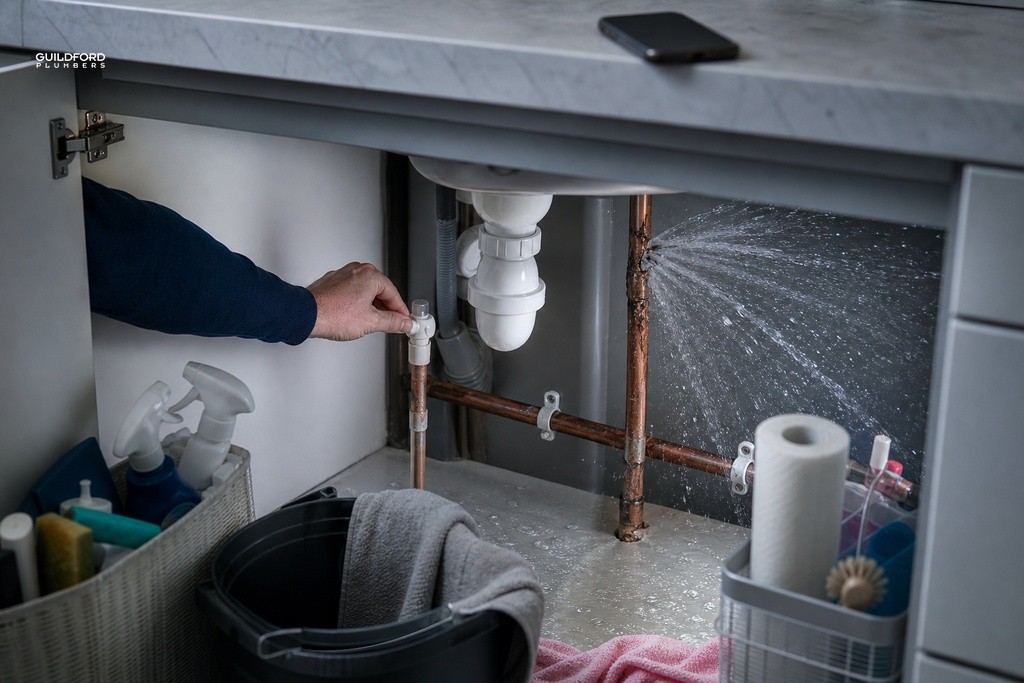
Some faults can be monitored for a short time; others demand an immediate call to a professional. A burst pipe can release large volumes of water within minutes, damaging ceilings, floors, electrics, and belongings all at once. A sewage backup is both a hygiene hazard and a sign of a serious blockage or drain failure that will not resolve on its own. A complete loss of hot water in winter is a comfort issue that can quickly become a safety concern, particularly during the colder months in Guildford.
At Guildford Plumbers, our 24/7 emergency service exists for exactly these situations, and having a number you can call at any hour is worth knowing before something goes wrong.
While waiting for help to arrive, knowing where your stopcock is and being able to turn off the water supply quickly is the single most useful thing a homeowner can do in the first moments of a plumbing emergency. If water is near any electrical fittings or sockets, treat that area as you would any electrical hazard and keep people away. Do not attempt to patch a burst pipe yourself with tape or sealant, as this rarely holds and can mask the extent of the damage from the engineer who arrives to fix it properly.
| Fault | Urgency Level | Recommended Action |
|---|---|---|
| Dripping tap or running toilet | Low to medium; schedule soon | Book a routine plumber visit |
| Slow-draining sink or bath | Low to medium; monitor closely | Clear drain or call a plumber if worsening |
| Water hammer or discoloured water | Medium; investigate promptly | Have a plumber assess the pipe system |
| Suspected hidden leak | Medium to high; act within days | Book a professional leak detection check |
| Burst pipe | High; call immediately | Turn off stopcock and call an emergency plumber |
| Sewage backup | High; call immediately | Avoid the affected area and call an emergency plumber |
| Loss of hot water in cold weather | High; call immediately | Check the boiler first, then call an emergency plumber |
What You Can Do Before the Plumber Arrives
There are practical steps you can take safely while waiting for a plumber. Locate your stopcock, typically found under the kitchen sink or near the main water meter, and turn off the water supply to stop further flow into the system. Place towels or containers to catch dripping water and reduce the risk of it reaching electrical fittings. Take a clear photo of the affected area to give the plumber useful information before they arrive and to create a record for insurance purposes.
Some tasks must be left strictly to a qualified professional: anything involving gas pipework, any work inside a wall or floor, and any attempt to disassemble pipe joints under pressure. Unauthorised repairs can void your home insurance cover, complicate the professional repair, and in the case of gas-related work, create serious safety risks. For plumbing services Guildford homeowners can rely on, the advice is consistent: prepare sensibly, but let the professionals handle the technical work.
How to Choose the Right Local Plumber in Guildford
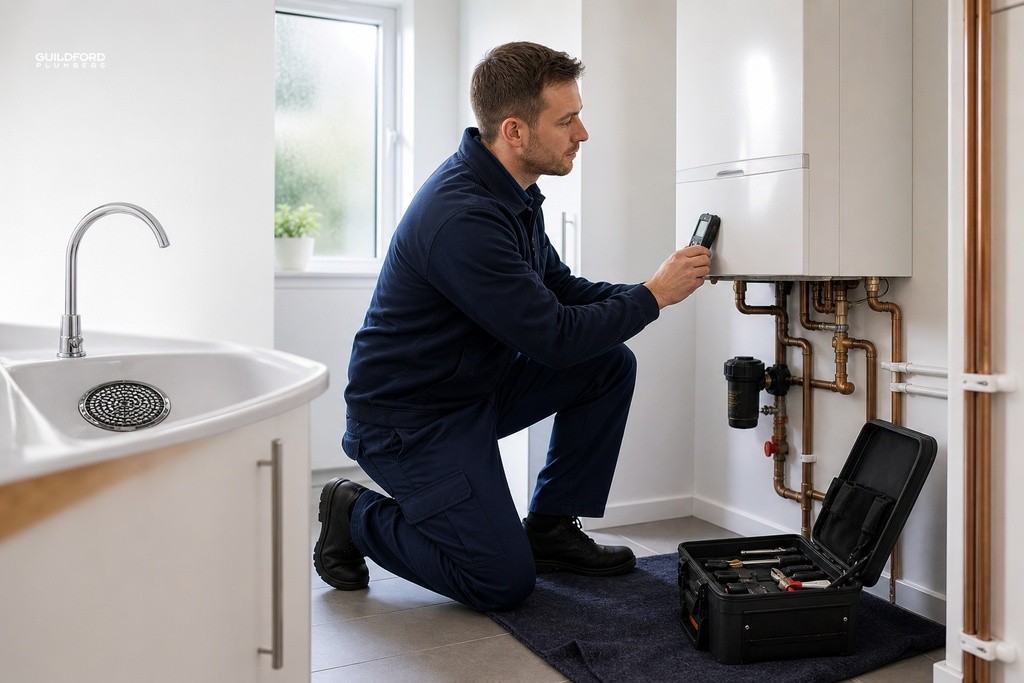
Before you hire anyone to work on your home, a few key checks are worth making. Gas Safe registration is required by law in the UK for any work involving gas, including boiler repairs or gas appliance installation; you can verify any engineer’s registration on the official Gas Safe Register website. Beyond certification, look for transparent pricing provided before work begins, verifiable reviews from real customers in the local area, clear communication about response times and availability, and a willingness to explain the fault and the repair in plain language.
Vague estimates and reluctance to provide written quotes are both red flags worth heeding. Guildford Plumbers is fully Gas Safe registered, backed by 5-star reviews from local homeowners, and committed to honest pricing on every job. With over 12 years of hands-on experience serving Guildford and the surrounding areas, our team brings the kind of local knowledge and professional reliability that makes a real difference when something goes wrong in your home.
How to Keep Your Plumbing in Good Shape Year Round
The most effective way to avoid the stress and cost of unexpected repairs is to build a few simple maintenance habits into your routine. Annual boiler servicing keeps your heating system running efficiently, catches early faults before they become failures, and is often a condition of boiler warranties. Using a drain guard to catch hair and debris, and flushing drains periodically with hot water, reduces the build-up that leads to blockages. Locating the main stopcock and any individual valves under sinks and behind toilets means you can act quickly if something does go wrong.
Treating these checks as a regular habit rather than a response to a crisis puts you firmly in control of your home’s most essential systems. A small amount of attention throughout the year consistently outperforms a reactive approach when it comes to cost, disruption, and peace of mind. If you would like a professional eye on your plumbing before a problem develops, or if something in this article has described a fault you recognise at home, get in touch with Guildford Plumbers today. We are here to help, any time of day or night, and we will always give you a straight answer and a fair price.
Frequently Asked Questions Related to Common Plumbing Problems at Home
How do I know if a dripping tap is serious enough to fix right away?
A dripping tap is worth fixing promptly. Even a slow drip wastes a surprising volume of water over weeks and months, and the constant moisture accelerates corrosion on surrounding fixtures. Replacing a worn washer or O-ring is a straightforward repair that prevents a minor annoyance from becoming a more costly fault.
What causes low water pressure in a home?
Low water pressure is most commonly caused by a blocked aerator on the tap, sediment build-up in pipes, or a fault further into the supply system. In some cases it can also point to a hidden leak reducing flow. A plumber can identify the source and advise on the right fix for your specific setup.
When should I call an emergency plumber instead of waiting?
Call an emergency plumber immediately for a burst pipe, sewage backup, or total loss of hot water in cold weather. These situations can cause rapid structural damage or pose health and safety risks that worsen with delay. Turning off your stopcock first can limit damage while you wait for help to arrive.
Can a running toilet really cause significant water waste?
A running toilet can waste a considerable amount of water continuously, even when it seems to be flushing normally. The fault is usually a worn flapper valve or a float set too high, both of which are relatively simple repairs. Addressing it promptly avoids ongoing waste and prevents the fault from worsening into a more serious cistern problem.
What are the early warning signs of a hidden water leak?
The most common signs are an unexplained rise in your water bill, water stains on walls or ceilings, and soft or discoloured patches on flooring near pipes. A musty smell in a room with no obvious moisture source can also indicate a leak inside a wall cavity. These signs warrant a professional leak detection check before the damage spreads.
Is it safe to attempt any plumbing repairs myself?
Some minor tasks, such as clearing a slow drain or turning off the stopcock, are safe for homeowners to handle. However, any work involving gas pipework, pipe joints under pressure, or areas inside walls must be left to a qualified professional. Unauthorised repairs can void home insurance and may complicate the eventual professional fix.