

Key Takeaways
Wall mounted air conditioners offer superior cooling and efficiency for UK homes but require professional installation, upfront investment, and careful planning before committing.
- Wall mounted AC units deliver quieter operation and more consistent cooling than portable alternatives because the compressor sits outdoors rather than inside the room.
- Inverter technology in fixed units reduces electricity consumption by running the compressor at variable speeds, making them more cost effective over time than portable options.
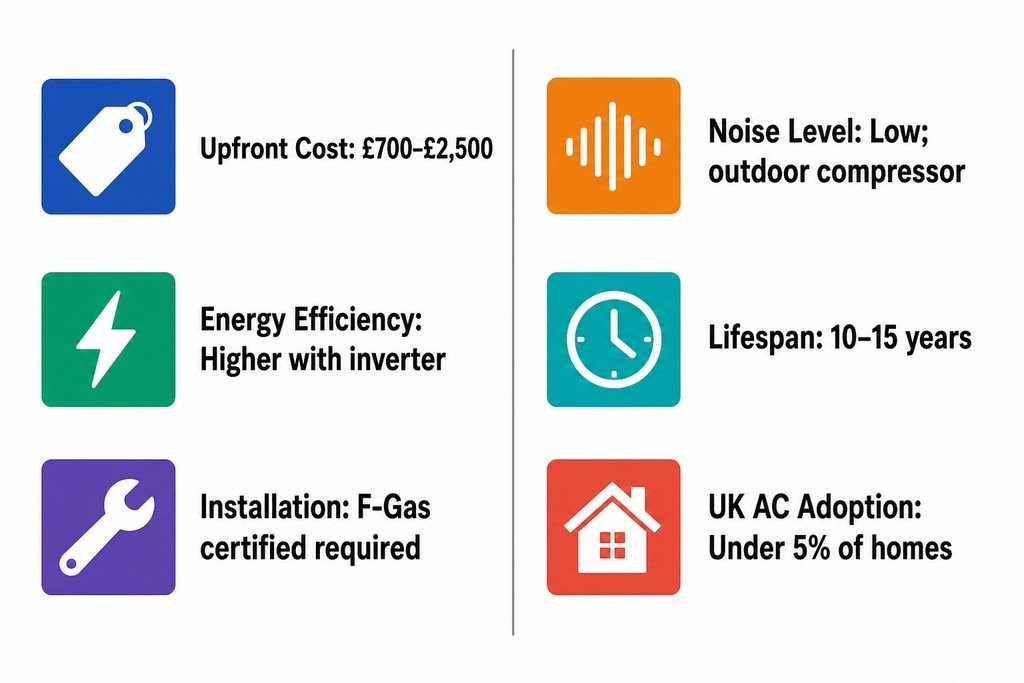
- Upfront costs for a split system range from £700 to £2,500 plus installation, and older UK properties with solid walls or listed building status may face additional requirements before work can begin.
- Refrigerant handling is a legal requirement carried out only by an F Gas certified engineer, so wall mounted AC installation is not a suitable project for a DIY approach.
- Matching unit capacity to room size is essential; an undersized or oversized unit wastes energy and shortens equipment lifespan, making a professional assessment important before purchasing.
With UK summers becoming increasingly unpredictable, more homeowners across Surrey are researching cooling options for their properties. If you have been exploring what is available, the wall mounted air conditioner pros and cons debate is one you will inevitably encounter. Fixed units promise superior performance, quieter operation, and long-term efficiency, but they also come with upfront costs and installation requirements that deserve careful thought. This wall mounted air conditioner guide is here to help you cut through the confusion and make a genuinely informed decision before spending a penny.
At Guildford Plumbers, we understand that home comfort goes hand in hand with home systems that work properly. Whether you are thinking about a new installation or simply trying to understand your options, the information below gives you an honest picture of what wall mounted AC can and cannot do for a typical home in Guildford or the wider Surrey area.
Why Guildford Homeowners Are Considering Wall Mounted AC
Interest in home cooling has grown steadily across the UK, yet fewer than 5% of properties currently have air conditioning installed, according to Absolute Climate Solutions. That figure reflects how unfamiliar most British homeowners are with AC systems and explains why so many people are starting from scratch when researching their choices. Warmer summers and the demand for better sleep and working-from-home comfort are pushing more people to look beyond a fan or open window.
In Guildford and the surrounding villages, this shift is noticeable. Properties in areas such as Merrow, Burpham, and Shalford frequently feature older construction, including Victorian and Edwardian terraces, semi-detached homes with solid brick walls, and period conversions, which can all affect how installation is approached. When homeowners begin comparing options, wall mounted units quickly stand out as a meaningful step up from portable alternatives. A fixed system is not a temporary workaround; it is a permanent addition to your home that changes how a room feels throughout the year. That permanence brings genuine benefits, but it also means the decision carries more weight than picking up a portable unit from a retailer. Setting realistic expectations early is especially important for older Surrey properties that may have solid walls, limited exterior access, or listed building restrictions.

What Are the Main Advantages of a Wall Mounted Air Conditioner?
Wall mounted air conditioners offer several clear benefits over portable alternatives. The indoor unit sits high on the wall, keeping the floor clear and allowing cooled air to circulate more effectively across the room. Fixed systems draw warm air from the entire space rather than concentrating cold air in one spot, delivering more even comfort throughout.
Because the compressor sits in the outdoor unit, wall mounted systems run far more quietly than portable alternatives, which is an important factor for bedrooms, home offices, and living rooms. Inverter technology allows the compressor to run at variable speeds rather than cycling fully on and off, reducing electricity consumption while maintaining a steady temperature. Ductless wall mounted units also avoid the energy losses associated with traditional ducted systems, where duct leaks can waste a significant portion of the energy generated. Modern designs are compact and unobtrusive, and many complement interior spaces rather than clashing with them.
How Does a Wall Mounted Unit Compare to a Portable Air Conditioner?
Portable units typically cost between £200 and £600. Wall mounted or split systems range from £700 to £2,500, according to BHBH.org.uk, a difference that reflects both the hardware and the professional installation required. However, comparing purchase price alone misses the bigger picture. Portable units are noisy, less effective in larger spaces, and usually require a window or vent for the exhaust hose, which limits flexibility. On performance, aesthetics, and long-term value, fixed systems consistently come out ahead for homeowners who want sustained, reliable comfort.
| Feature | Portable Air Conditioner | Wall Mounted Split System |
|---|---|---|
| Typical cost | £200 to £600 | £700 to £2,500 (including installation) |
| Noise level | High; compressor is indoors | Low; compressor is outdoors |
| Cooling effectiveness | Limited, especially in larger rooms | Consistent and even across the room |
| Energy efficiency | Lower, fixed-speed operation | Higher, especially with inverter technology |
| Installation required | No; plug and use | Yes; professional installation required |
| Portability | Can be moved between rooms | Fixed in place |
| Heating capability | Rarely included | Available on most modern reverse-cycle units |
| Long-term value | Lower | Higher for permanent residents |
What Are the Main Drawbacks of a Wall Mounted Air Conditioner?
No honest assessment would be complete without acknowledging the disadvantages. Professional installation adds a meaningful sum to the initial investment, which can feel steep compared to buying a portable unit outright. Installation also requires routing pipework through an exterior wall, which can create real complications in terraced houses, flats, or properties where the logical placement faces a shared boundary or conservation area.
Solid brick walls, common in Guildford’s Victorian and Edwardian housing stock, require core drilling, adding time and cost. Properties with listed building status or those within conservation areas may need planning permission before an external unit can be fitted. Once installed, the unit cannot be moved between rooms or taken with you if you relocate, making it less suitable for renters or those expecting to move soon. Annual servicing and filter changes every six months also contribute to the total cost of ownership over time.
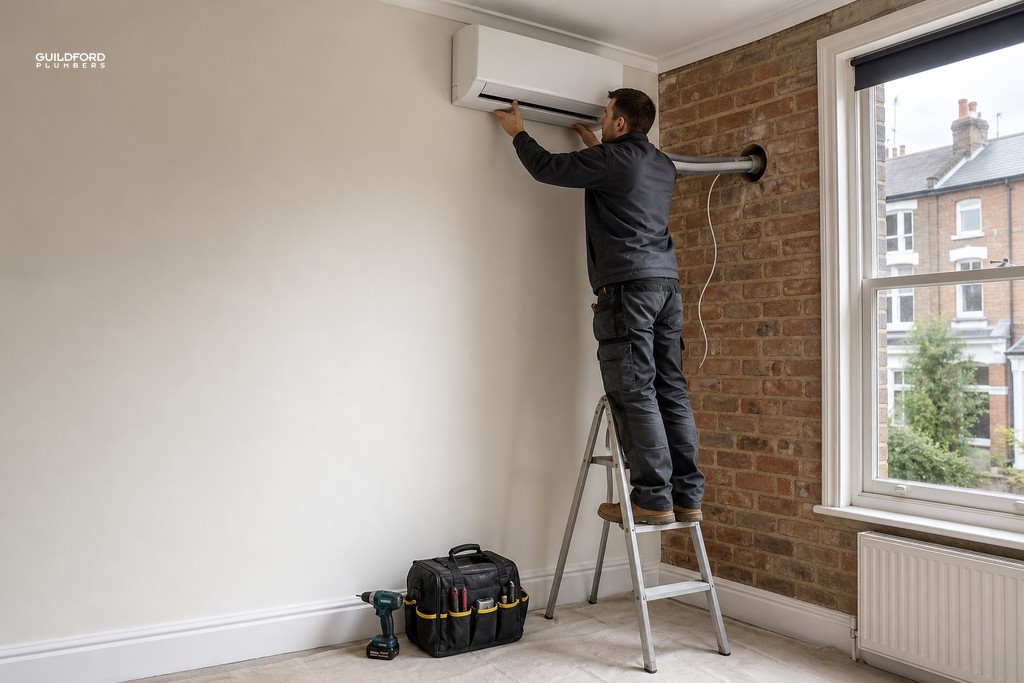
What Wall Mounted AC Installation Actually Involves
Understanding the installation process helps homeowners prepare and avoid surprises. A typical installation follows these steps:
- An indoor unit is mounted high on the interior wall of the room being cooled.
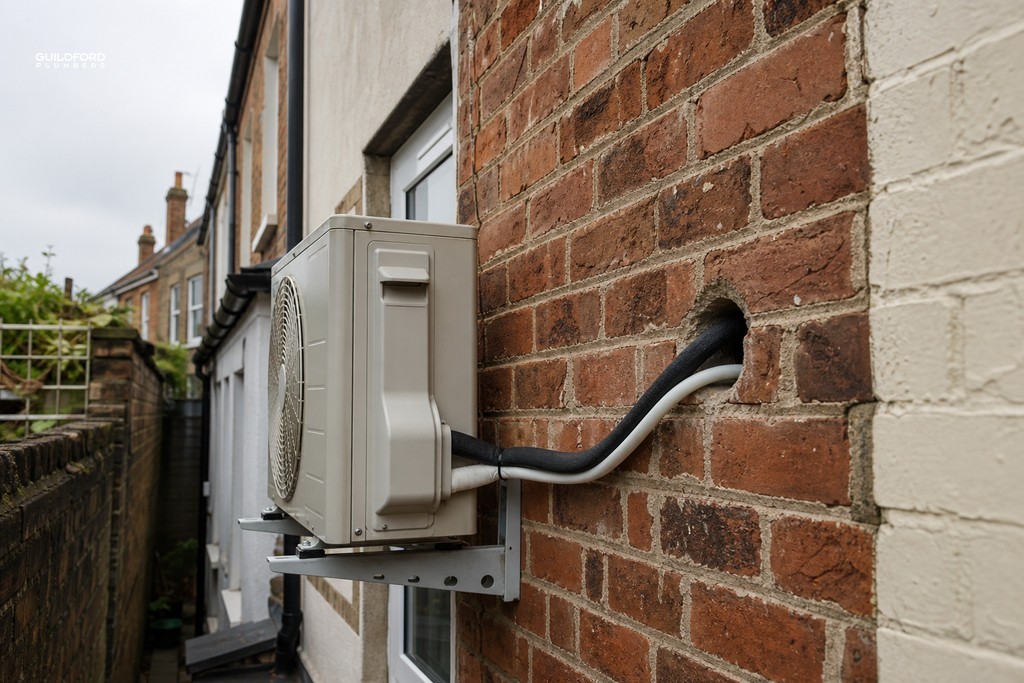
- A hole is drilled through the exterior wall to route refrigerant pipes, electrical cabling, and a condensate drain.
- An outdoor unit is fixed securely to the external wall on a bracket, with adequate airflow clearance in line with manufacturer guidelines.
- A qualified electrician adds a dedicated circuit if your existing consumer unit cannot safely support the additional load.
- An F-Gas certified engineer handles all refrigerant work, as required by UK law.
Wall mounted AC installation is not a DIY job. It combines structural penetration, electrical work, and refrigerant handling, all of which require certified competence. Attempting to cut corners creates safety risks and compliance issues that could affect your home insurance.
| Installation Stage | Who Is Responsible | Key Consideration |
|---|---|---|
| Mounting the indoor unit | Qualified installer | Must be positioned high on an exterior-facing wall |
| Drilling through the exterior wall | Qualified installer | Solid brick walls require core drilling; adds time and cost |
| Fitting and securing the outdoor unit | Qualified installer | Adequate airflow clearance required; shared boundaries may restrict placement |
| Electrical wiring and dedicated circuit | Qualified electrician | Existing consumer unit must be assessed for capacity |
| Refrigerant handling | F-Gas certified engineer | Required by UK law; cannot be carried out by uncertified individuals |
Is a Wall Mounted Air Conditioner Right for Your Guildford Home?
Applying these benefits and limitations to your specific situation requires honest reflection. An undersized unit will run continuously without reaching the desired temperature; an oversized unit will cycle too frequently. A professional assessment is the only reliable way to match unit capacity to room volume. Your electrical system also needs to support the additional load, which may require upgrades before installation can proceed.
Wall structure, shared boundaries, and planning restrictions all affect where an outdoor unit can be positioned, which is a particularly relevant consideration for properties in Guildford town centre or within Surrey Hills conservation zones. Fixed systems suit homeowners who intend to remain in the property for several years rather than those planning to move soon.
It is also worth thinking carefully about which rooms suit wall mounted air conditioning best, as priorities differ between a bedroom, living room, and home office. Targeting specific rooms rather than the whole home can reduce energy consumption in some scenarios, which makes the room-by-room nature of wall mounted systems a practical consideration worth discussing with your installer.
When to Call a Professional Before Installation
Before any installation work begins, a few checks should always be carried out by qualified professionals. Building regulations compliance and any planning permission requirements must be verified, particularly for listed properties or conservation areas. Your electrical installation should be assessed to confirm it can safely support the additional load. Any structural walls involved in routing pipework must also be evaluated to avoid compromising the building’s integrity.
At Guildford Plumbers, we bring over a decade of hands-on experience to home systems across Guildford and the surrounding Surrey area, and we are Gas Safe Registered. We understand the interplay between heating, electrics, and installation work from a safety and compliance perspective. If you are based in Guildford, Godalming, Woking, or nearby and want straightforward, honest advice about whether a wall mounted unit is right for your home, get in touch with our team today. We are here to help you make the right call before the work begins, not after.
Frequently Asked Questions About Wall Mounted Air Conditioners
Do wall mounted air conditioners work as heaters too?
Most modern wall mounted split systems are reverse-cycle units, meaning they can both cool in summer and heat in winter. This dual functionality can make them a cost-effective year-round solution for many Guildford homeowners, replacing the need for separate heating and cooling appliances in the rooms where they are fitted.
How long does a wall mounted air conditioner last?
A well-maintained wall mounted air conditioner typically lasts between 10 and 15 years. Regular servicing, including annual checks and filter cleaning every six months, plays a significant role in extending the unit’s lifespan and maintaining its efficiency over time.
Will I need planning permission to install a wall mounted AC unit in Guildford?
Most standard domestic installations fall under permitted development rights and do not require planning permission. However, properties in conservation areas, those with listed building status, or flats may face additional restrictions. Always check with Guildford Borough Council or a qualified installer before proceeding.
Can a wall mounted air conditioner be installed in a room without an exterior wall?
No. A standard split system requires an exterior wall to route the refrigerant pipework between the indoor and outdoor units. If a room lacks direct exterior wall access, a multi-split or ducted system may be an alternative, though these carry their own installation requirements and costs.
Is a wall mounted air conditioner energy-efficient?
Models with inverter technology tend to be notably more efficient, as they adjust compressor speed to match cooling demand rather than switching fully on and off. This generally results in lower running costs over time compared with portable alternatives, though actual savings will vary depending on usage and the specific unit installed.