

Key Takeaways
Guildford homeowners can keep their air conditioner running cleanly and efficiently by combining regular filter rinsing with professional deep cleans when needed.
- Clean your air conditioner filters every four to six weeks during active use by rinsing them under lukewarm water and allowing them to dry fully before refitting.
- Wipe down the outer casing and louvres monthly with a damp cloth and mild household cleaner, and check the drain tray at the start and end of each season.
- Evaporator coils collect mould and bacteria in damp conditions; if the unit smells musty or underperforms after a basic clean, a professional deep clean is the reliable fix.
- Only an F-Gas certified engineer may legally handle refrigerants in the UK, so always confirm certification before booking any full aircon service.
- Signs such as reduced airflow, visible mould, ice on the coil, or unusual noises mean a professional service is needed rather than routine homeowner cleaning.
If you have a split-system or wall-mounted air conditioning unit at home, it probably runs quietly in the background until something goes wrong. A reliable air conditioner cleaning guide helps you stay ahead of those problems, keeping your unit running efficiently, your indoor air clean, and your energy bills under control. For Guildford homeowners especially, understanding the basics of aircon hygiene makes a real difference throughout the warmer months and beyond. This guide covers routine upkeep you can handle yourself, and the point at which a job moves beyond the DIY stage, whether you are tackling maintenance independently or preparing to book a professional service.
Why Cleaning Your Air Conditioner Matters
The interior of any domestic AC unit gradually accumulates dust, moisture, and biological matter that degrades both performance and the quality of the air it circulates. Inadequate maintenance can contribute to indoor air pollution reaching concentrations considerably higher than outdoors, which is a genuine health consideration for families, particularly those with allergies or respiratory conditions.
The energy impact is equally significant. Research suggests that post-cleaning HVAC systems can deliver meaningfully more airflow compared to uncleaned counterparts, with notable reductions in energy consumption for fan and blower components following a thorough service, according to peer-reviewed studies published in Frontiers in Public Health. A dirty unit works harder to achieve the same cooling effect, which costs more every time it runs. With energy prices remaining a concern for many households across Surrey, regular cleaning is one of the most cost-effective habits you can build.

What Parts Make Up a Wall-Mounted AC Unit?
Before removing a panel or picking up a cloth, it helps to know which components you are dealing with. A standard wall-mounted unit contains four key parts:
- Air filters — sit directly in the path of all air passing through the unit
- Evaporator coil — transfers heat from room air into the refrigerant
- Drain tray (drip tray) — collects condensation from the coil
- Louvres and vents — direct airflow into the room
The outer casing and louvres are the most visible parts and the easiest to clean. Behind the front panel sit the filters. Further inside, the evaporator coil is where moisture condenses and drips into the drain tray below.
Which Parts Collect the Most Dust and Mould?
Filters and evaporator coils are the primary hygiene problem areas in any typical home unit. Filters act as the first line of defence, trapping airborne particles before they reach the coil. When they become clogged, airflow is restricted, the system overworks, and particles begin recirculating into your living space. A study published in the International Journal of Low-Carbon Technologies by Oxford Academic found that AC filters are a critical determinant of indoor air quality, and that widespread indifference to filter cleaning represents a significant public health risk in residential settings.
The evaporator coil presents a different challenge. Because it operates in a permanently damp environment, it is particularly susceptible to mould and bacterial growth. Research published in Frontiers in Public Health confirmed measurable bacterial contamination across the air outlet, filter net, cooling fin, and water sink, with contamination levels significantly affected by cleaning history and time since last service. The drain tray is another common site for standing water and mould if not cleared regularly.
What Can You Safely Clean Yourself?
Routine cleaning is entirely manageable for most homeowners without specialist tools or training. Always switch the unit off at the wall, and ideally isolate it at the fuse board, before starting any cleaning task. The parts you can safely handle yourself are:
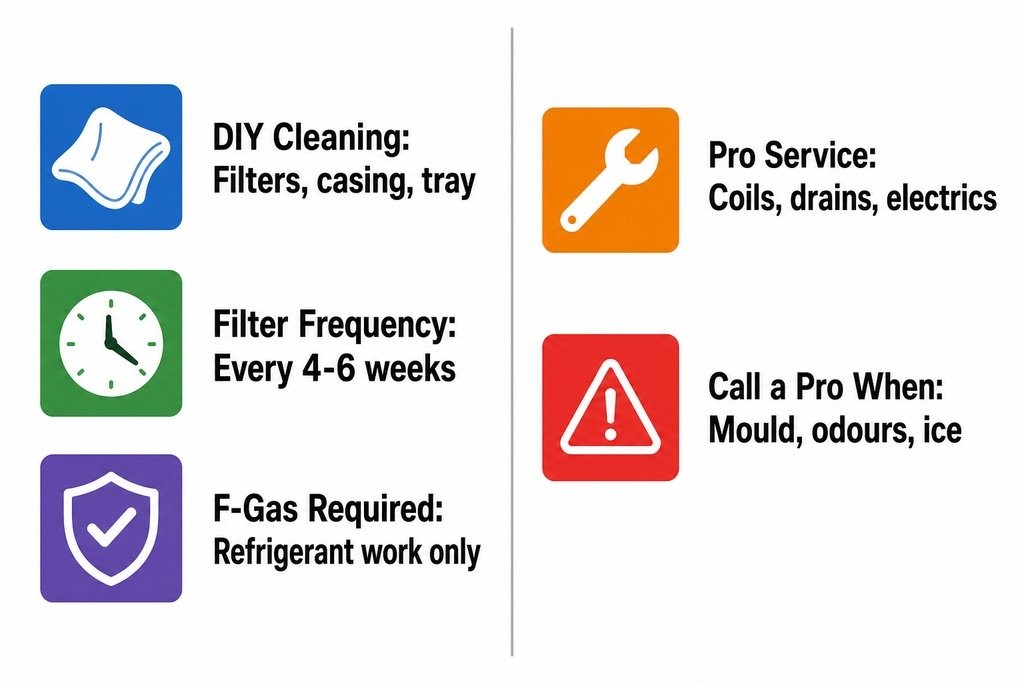
- Filters: Slide or clip them out, rinse under lukewarm water, and allow to dry fully before refitting. Avoid harsh detergents, which can damage the filter mesh or leave residues.
- Louvres and outer casing: Wipe down with a damp cloth and a mild household cleaner.
- Drain tray: Check for standing water or slime and rinse clean if accessible.
How Often Should You Clean Each Part in Guildford?
A simple seasonal schedule suits most homes in Guildford and the surrounding Surrey area. If you are building a broader air conditioner maintenance checklist for your home, these intervals provide a solid foundation:
- Filters: Every four to six weeks during regular use (typically spring and summer)
- Drain tray: Check at the start and end of each season
- Exterior casing and louvres: A quick wipe monthly when the unit is in active use
| Component | Recommended Frequency | Cleaning Method | DIY Safe? |
|---|---|---|---|
| Air filters | Every 4 to 6 weeks during active use | Rinse under lukewarm water; air dry fully | Yes |
| Louvres and outer casing | Monthly during active use | Damp cloth with mild household cleaner | Yes |
| Drain tray | Start and end of each season | Rinse and clear of standing water or slime | Yes, if accessible |
| Evaporator coil (light dust) | As needed | Soft brush or purpose-made coil spray, with care | With caution only |
| Evaporator coil (heavy soiling) | As needed | Professional deep clean required | No |
| Condensate drain line | Annually or as needed | Professional inspection and clearing | No |

How to Clean the Evaporator Coil
The evaporator coil absorbs heat from room air, allowing refrigerant to evaporate and carry that heat away. When the coil surface is coated in dust, grime, or biological matter, heat transfer becomes less efficient, the unit struggles to cool the room, and running costs rise.
A careful homeowner can use a soft brush or a purpose-made coil cleaning spray, available in most UK hardware stores, to address light surface dust on accessible coil fins. Three important limits apply:
- Coil fins are extremely delicate and bend easily
- Damaged fins cannot be straightened without specialist tools
- The wrong cleaning product or excessive pressure can cause costly damage
If the coil looks heavily soiled, if you notice ice forming on it, or if the unit is clearly underperforming despite clean filters, call a qualified engineer rather than attempt further DIY work.
When to Call a Professional for an Aircon Deep Clean
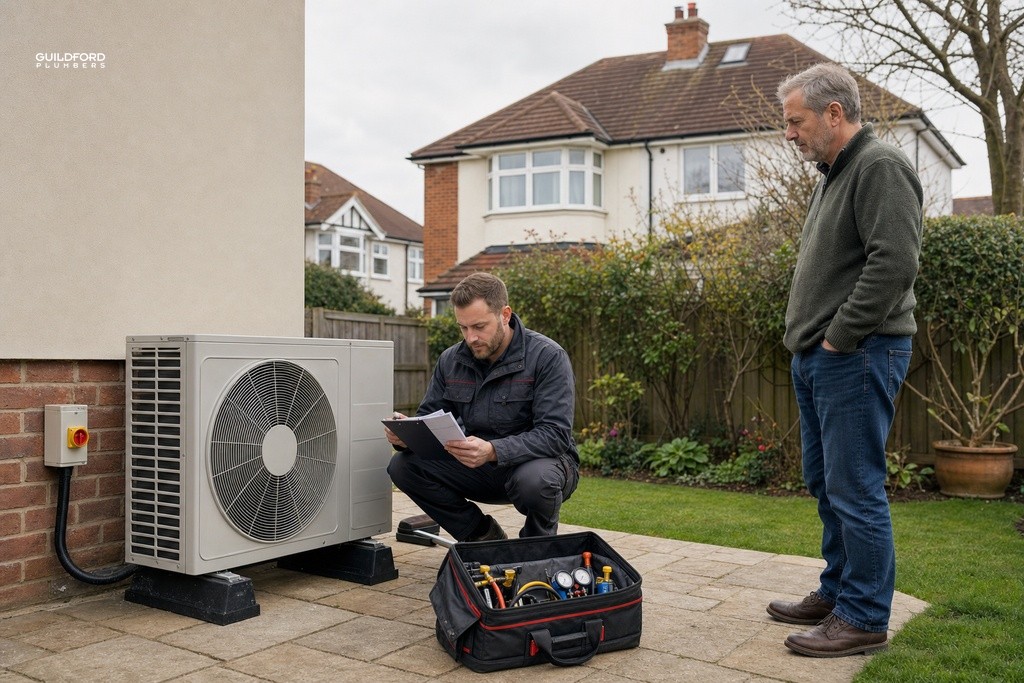
Some problems go beyond what a surface clean can resolve. The following signs indicate that professional attention is needed:
- Persistent odours that return shortly after a basic clean
- Noticeably reduced airflow from the vents
- Visible mould growth on or around the unit
- Unusual noises during operation
If you are wondering why air conditioners smell musty even after a basic clean, the answer usually lies deeper inside the unit, often on the coil or in the drain tray, where biological growth has taken hold beyond what surface cleaning can reach.
A qualified engineer should always handle refrigerant-related checks, deep internal coil cleaning, and any work involving electrical components. Refrigerant is a controlled substance in the UK, and handling it without the appropriate certification is both illegal and dangerous. Guidance on how to clean air conditioner filters is a useful starting point, but a full deep clean goes considerably further.
What a Professional Aircon Service Includes
A thorough visit from a qualified engineer typically covers:
- Deep clean of the evaporator and condenser coils
- Inspection and clearing of the condensate drain line
- Checks on refrigerant levels and pressure
- Inspection of electrical connections and capacitors
- Full operational test once the work is complete
As the authors of a field study published by Oxford Academic put it: “Occupants should be educated about the importance of regular maintenance of air conditioning filters, not only to enhance the performance of the unit but also to protect their health.” A professional service extends that principle to every component a homeowner cannot safely or practically reach alone.
How to Choose a Trustworthy Local Aircon Engineer in Guildford
Finding a reliable engineer for aircon maintenance in and around Guildford comes down to a few straightforward checks:
- F-Gas certification: A legal requirement in the UK for anyone working with refrigerants
- Written quote: Always ask for one before any work begins
- Verifiable local reviews: Look for genuine feedback from customers in your area rather than anonymous ratings on unfamiliar platforms
- Word of mouth: A recommendation from a neighbour or trusted local tradesperson is always a sound starting point
| Factor | DIY Clean | Professional Service |
|---|---|---|
| Components covered | Filters, casing, louvres, accessible drain tray | All of the above, plus coils, condensate line, electrical parts |
| Specialist equipment needed | No | Yes |
| Refrigerant handling | Not permitted — certification required by law | Covered by F-Gas certified engineer |
| Mould and odour elimination | Surface level only | Deep treatment of coil and internal components |
| Suitable for | Routine upkeep between services | Annual service, persistent issues, or reduced performance |
| Cost | Low | Varies by engineer and scope of work |
It is also worth knowing that not every problem flagged during an aircon service is strictly an aircon problem. Condensate drain lines, for example, can cause water damage, damp patches on ceilings or walls, and drainage blockages that connect directly to your home’s wider plumbing system. At Guildford Plumbers, our core expertise covers plumbing, heating, and drainage, and we regularly help local homeowners identify and resolve water-related issues that originate from a poorly maintained or leaking AC unit. If a service visit turns up damp, a drainage concern, or a water leak you cannot account for, we are happy to take a look and give you an honest assessment. Get in touch with us and we will help you work out the next step.
Frequently Asked Questions About Air Conditioner Cleaning
How often should I clean my air conditioner filter at home?
Clean your filter every four to six weeks during active use, typically spring and summer. If anyone in the household has allergies or the unit runs heavily, aim for the four-week end of that range to keep airflow and indoor air quality at their best.
Can I clean my air conditioner myself or do I need a professional?
You can safely clean the filters, outer casing, louvres, and accessible drain tray yourself. The evaporator coil, condensate drain line, refrigerant system, and electrical parts all require a qualified engineer, as attempting these without the right training risks damage and safety hazards.
Why does my air conditioner still smell after I have cleaned the filters?
Persistent odours after a filter clean usually point to mould or bacterial growth on the evaporator coil or inside the drain tray, areas a basic clean cannot reach. A professional deep clean is the most reliable way to remove the source rather than mask the symptom.
What is F-Gas certification and why does it matter?
F-Gas certification is a legal requirement in the UK for any engineer who handles refrigerants. Hiring an uncertified person for refrigerant work is illegal and potentially dangerous, so always confirm certification before booking a full aircon service.
How do I know when my air conditioner needs a professional service rather than a DIY clean?
Book a professional if you notice reduced airflow, persistent musty smells, visible mould, ice forming on the coil, or unusual noises during operation. These signs point to issues deeper inside the unit that routine homeowner cleaning cannot resolve.