

Key Takeaways
Homeowners can clean most air conditioner filters at home in under 30 minutes by following a simple vacuuming and rinsing process, preventing higher bills and poor air quality.
- Weak airflow, visible dust on vents, constant running without reaching temperature, and musty smells are the key signs your AC filter needs attention.
- Only washable mesh or foam filters are safe to rinse with water. Disposable fibreglass or pleated paper filters must be replaced rather than wetted.
- Always allow a cleaned filter to air dry completely before refitting it. Reinserting a damp filter encourages mould growth inside the unit.
- Most Guildford households should clean their AC filter every four to six weeks during regular use, or every two to three weeks if pets are present.
- If the filter is torn, mould persists after cleaning, or the unit leaks or fails to cool even with a clean filter, contact a qualified engineer rather than investigating further yourself.
Knowing how to clean air conditioner filters is one of the simplest ways a homeowner can protect both their comfort and their running costs, yet it remains one of the most overlooked tasks in routine home maintenance. A blocked or neglected filter quietly forces your unit to work harder, pushes up energy bills, and can allow mould and bacteria to circulate through the air you breathe indoors. Spotting the warning signs early and dealing with them at home requires no special skills or tools. This guide covers everything from the first signs of trouble to a clean, correctly refitted filter.
This article sits within the broader air conditioner cleaning guide topic and focuses specifically on filter care. Persistent smells from your unit are covered separately in the dedicated piece on why air conditioners smell musty. Here, the focus is the filter itself: recognising the signs, cleaning it safely, and knowing when the job exceeds a quick rinse.
What Are the Signs of a Dirty Air Conditioner Filter?
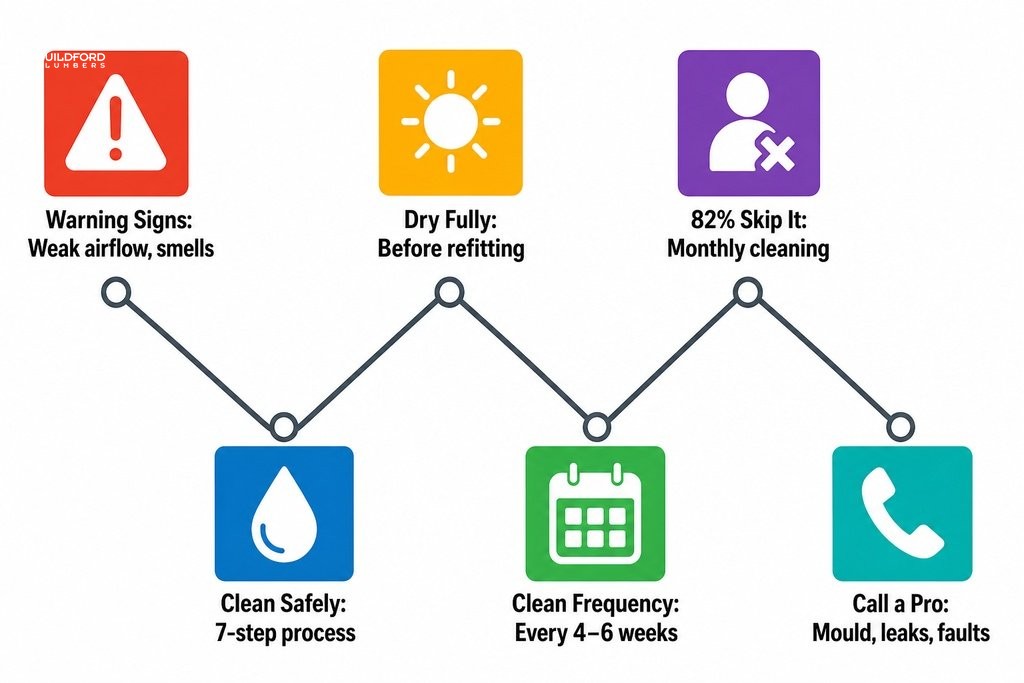
Most homeowners do not notice their filter needs attention until something goes noticeably wrong. The most common dirty air filter symptoms are weak airflow from the vents, grey or furry deposits collecting on the vent grille, and the unit running constantly without reaching the set temperature. A musty or stale smell is another reliable indicator. A peer-reviewed field study published by the International Journal of Low-Carbon Technologies, Oxford Academic found that neglected filters contribute to bacteria and mould proliferation inside AC units, with direct consequences for indoor air quality. Catching these signs early makes cleaning the filter straightforward; leaving them too long can lead to bigger problems.

Why a Blocked Filter Causes So Much Trouble
A dirty filter does not just reduce comfort — it puts genuine strain on the whole system. When airflow is restricted, the unit draws more power to compensate without delivering any extra cooling. Research published in the International Journal of Low-Carbon Technologies, Oxford Academic confirms that filter condition is a key variable in overall AC energy use. A clogged filter can also block the indoor unit’s drainage pipe, potentially causing water to leak onto walls or ceilings. This kind of damage can go unnoticed for weeks, particularly in older Surrey properties where pipework may already be under some strain. Over time, prolonged neglect speeds up deterioration of the motor and fan, bringing forward costly repairs that regular filter care would have prevented.
“More important than which filter you buy is how you use it. Priority number one: replacing or cleaning it regularly,” says Jeffrey Siegel, Professor of Civil Engineering at the University of Toronto, speaking to Time magazine. That principle applies just as much in a Guildford living room as anywhere else.
How to Clean Air Conditioner Filters Safely at Home
Cleaning AC filters at home is straightforward once you know the process. Follow the steps below and you will have a clean, correctly refitted filter in under half an hour.
- Switch the unit off completely at the wall or isolator switch. Never handle the filter while the system is running.
- Open the front panel of the indoor unit. This typically lifts or clips away without tools.
- Slide out the filter carefully and take it outside or to a sink before doing anything else, so you do not shake dust back into the room.
- Vacuum both sides using a soft brush attachment to remove loose dust and debris.
- Rinse under cool or lukewarm running water, working from the clean side through to the dirty side so you push debris out rather than deeper in. For heavily soiled filters, add a small amount of mild washing-up liquid to warm water to help lift grease and grime. Avoid hot water, strong solvents, or scrubbing brushes, as these can distort or damage the filter mesh.
- Shake off excess water gently and leave the filter to air dry completely in a well-ventilated spot, away from direct sunlight.
- Refit only once fully dry. Reinserting a damp filter can encourage mould or mildew to develop inside the unit. Slide the filter back into position, close the panel, and switch the unit back on.
Washable Filters vs Disposable Filters
Not every filter is designed to be washed. Reusable mesh or foam filters, common in most domestic split and wall-mounted units, are safe to rinse and dry as described above. Check your unit’s manual or the filter itself for a label confirming it is washable. Disposable fibreglass or pleated paper filters, found in some portable or ducted systems, must never be wetted; water destroys the filter media and can cause it to disintegrate inside the unit. If you are not certain which type your unit uses, check the manufacturer’s documentation before attempting any cleaning. When in doubt, replacing a disposable filter is always the safer choice.
Washable vs Disposable Filter: Key Differences
| Feature | Washable (Mesh/Foam) | Disposable (Fibreglass/Pleated Paper) |
|---|---|---|
| Common unit types | Domestic split and wall-mounted units | Portable or ducted systems |
| Safe to rinse with water? | Yes | No — water destroys the filter media |
| Cleaning method | Vacuum, rinse, air dry fully | Replace rather than clean |
| How to confirm type | Look for a washable label or check the manual | Check manufacturer’s documentation |
| When to replace | If torn, warped, or structurally damaged | Every time it needs attention |

How Often Should You Clean AC Filters in a Guildford Home?
For most households in Guildford and the surrounding Surrey area, cleaning the filter every four to six weeks during periods of regular use is a sensible starting point. Pets in the home shorten that interval considerably; fur and dander can clog filters in two to three weeks during heavy use. Properties near busy roads, such as those close to the A3 corridor or Guildford town centre, tend to see faster build-up when windows are left open in warmer weather. The more the unit runs, the quicker the filter fills.
A survey of 1,000 homeowners by The Zebra found that 82% fail to clean or change their air filter on a monthly basis, despite most manufacturers recommending exactly that as a minimum. Tying the task to another monthly routine you already follow makes it far easier to stay consistent. If your unit runs only occasionally, such as during summer heatwaves that Surrey does experience in warm years, a thorough clean at the start of each season and a check midway through is usually sufficient. The key is not to wait for dirty air filter symptoms to appear before you act.
Recommended Cleaning Frequency by Household Type
| Household Situation | Suggested Cleaning Interval |
|---|---|
| Standard household, moderate use | Every four to six weeks during regular use |
| Pets in the home | Every two to three weeks during heavy use |
| Near a busy road (e.g. A3 corridor) | Check more frequently; clean when visibly dusty |
| Occasional use only (e.g. summer heatwaves) | Thorough clean at season start; check midway through |
When to Call a Professional Instead
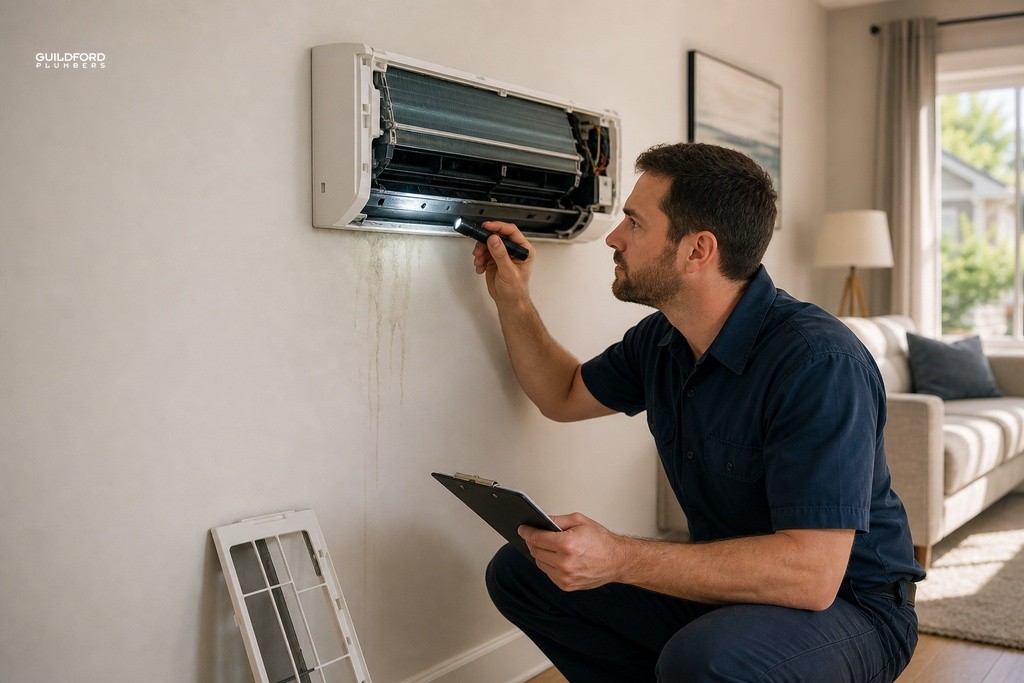
There are situations where cleaning the filter will not fully resolve the problem. A physically damaged filter with tears, holes, or a warped frame needs replacing rather than cleaning, because damage allows unfiltered air to bypass the filter media entirely. Visible mould on the filter, or a strong musty smell that persists after a thorough clean and dry, often points to mould deeper inside the unit or within the drainage system. Standing water in the drainage tray beneath the indoor unit is a common sign of a blocked drain pipe. Weak airflow even after fitting a clean filter may indicate a fault with the fan motor or a refrigerant issue. Unusual noises, water leaking onto walls or flooring, or the unit simply not cooling despite a clean filter are all clear signs that professional attention is needed.
These are not DIY fixes. Attempting to resolve refrigerant or electrical faults without proper qualifications is both unsafe and, in the UK, potentially unlawful. If any of these symptoms apply, contact a qualified engineer rather than investigating further yourself.
How Guildford Plumbers Supports Your Home’s Heating and Air Systems
At Guildford Plumbers, our work centres on keeping the essential systems in your home running reliably and safely. With over 12 years of hands-on experience in heating maintenance, boiler care, and home system repairs across Guildford and the surrounding areas, our team understands how a problem in one part of a home’s infrastructure can quickly affect everything else. Poor air conditioner filter care can mask wider faults in ventilation, drainage, or heating that go undetected until they become expensive to fix.
Whether you need a heating check ahead of winter, a drainage issue sorted after an AC leak, or a full boiler service, our team responds quickly and prices fairly. We are Gas Safe registered, available 24 hours a day, and backed by five-star reviews from local homeowners who value straightforward, honest service. We will never talk up a problem to inflate a bill. If it is something you can handle yourself, we will tell you so. And if it genuinely needs professional attention, we will get to you fast, fix it properly, and leave your home as tidy as we found it. Get in touch with Guildford Plumbers today and let us take one more worry off your plate.
Frequently Asked Questions About Cleaning Air Conditioner Filters
How often should I clean my air conditioner filter in a UK home?
For most UK households, every four to six weeks during regular use is a reasonable starting point. If you have pets, live near a busy road, or run the unit heavily, cleaning every two to three weeks may be more appropriate. Checking the filter monthly and cleaning it when it looks visibly dusty is a reliable, low-effort approach.
Can I wash all air conditioner filters with water?
No. Only washable mesh or foam filters are safe to rinse. Disposable fibreglass or pleated paper filters must be replaced rather than wetted, as water destroys the filter material. Check your unit’s manual or look for a washable label on the filter itself before applying any water.
What happens if I refit a damp filter?
A damp filter encourages mould and mildew to develop inside the unit, which can worsen indoor air quality and cause persistent musty odours. Always allow the filter to air dry completely in a ventilated spot before reinserting it.
Will cleaning the filter reduce my energy bills?
A clean filter allows air to flow freely, so the unit does not have to work as hard to cool the room. Research confirms that filter condition is a key variable in AC energy consumption, so regular cleaning can contribute to lower running costs over time.
When should I replace a filter rather than clean it?
Replace the filter if it has visible tears, holes, or a warped frame, or if it is a disposable type. A damaged filter allows unfiltered air to pass through the unit, reducing both efficiency and air quality. If you are uncertain whether your filter is reusable, check the manufacturer’s documentation.