Key Takeaways
Guildford Plumbers explains how to unclog a toilet at home using the right tools and when to call a local professional for stubborn or deep blockages.
- A flange plunger is the most effective first tool for the vast majority of blocked toilets; creating a firm seal over the outlet and using a steady push and pull rhythm is key to dislodging most clogs.
- Hot water mixed with washing up liquid can loosen softer blockages caused by toilet paper or organic waste without chemicals; always use warm water rather than boiling to avoid cracking the porcelain.
- A toilet auger is the right next step when a plunger fails; always choose a rubber coated toilet specific auger to protect the porcelain and reach clogs beyond the trap.
- Gurgling drains, slow drainage across multiple fixtures at the same time, or a totally blocked toilet that resists all home methods are clear signs that a professional plumber is needed.
- Chemical drain cleaners carry real risks for UK homes with older cast iron or clay pipework; using improvised tools can crack the pan or push blockages deeper, making the problem harder to resolve.
A blocked toilet demands immediate attention. Whether you are dealing with slow drainage, an overflow risk, or a toilet that shows no sign of clearing, knowing how to unclog a toilet quickly and safely can save you a great deal of stress. According to a Google Consumer Surveys commissioned report via PR Newswire, nearly 20% of homeowners regularly deal with a clogged toilet, making it the most commonly reported plumbing problem in residential properties. For homeowners in Guildford and across Surrey, that will come as no surprise. This guide walks you through the most effective methods, explains what you can safely do yourself, and helps you recognise when it is time to call in a professional.
Drain blockages cover a broad range of issues, from kitchen sink and dishwasher faults to more complex problems. This article focuses specifically on toilet blockages, from minor partial clogs to stubborn, deep-set obstructions that resist every basic fix.
Why Do Toilets Block?
Most toilet blockages in UK homes come down to a handful of repeat offenders. Excess toilet paper is the most frequent cause, particularly thick, multi-ply varieties that dissolve more slowly and can struggle through low-flush systems. Wet wipes are another major contributor. Even products labelled "flushable" rarely break down as advertised, remaining largely intact after 30 minutes in water, unlike standard toilet paper which dissolves within seconds. Other common causes include children's toys, hygiene products, and limescale or mineral build-up that gradually narrows the pipe bore over time. In parts of Surrey, hard water conditions can accelerate limescale accumulation, making this a more prevalent local issue than in softer-water regions.
Low-flush toilets, now standard in water-efficient UK homes, generate less hydraulic force per flush. Academic research on the clogging potential of low-flush drain systems, published on ResearchGate, found that models producing 1.28 gallons per flush and below can leave waste material close to the toilet pan, increasing the likelihood of stubborn or recurring blockages. This is worth bearing in mind if your toilet blocks more often than expected, even when nothing unusual has been flushed.
Partially Blocked vs Totally Blocked: What Is the Difference?
Before reaching for any tools, identify what kind of blockage you have. A partially blocked toilet will still drain, but slowly. The water rises higher than usual after flushing, lingers in the bowl, then eventually clears. This suggests an obstruction in the trap or upper pan section and is usually the most straightforward type to address at home.
A totally blocked toilet is a different matter. The water rises to the rim immediately after flushing and stays there, with no downward movement at all. Flushing again risks an overflow, so do not attempt it. The method and effort required differ significantly between these two situations, and setting realistic expectations before you start is important.
| Feature | Partially Blocked | Totally Blocked |
|---|---|---|
| Water drainage after flushing | Slow but eventually drains | No movement at all |
| Water level in bowl | Rises higher than normal, then drops | Rises to the rim and stays there |
| Overflow risk | Low | High — do not flush again |
| Likely location of blockage | Trap or upper pan section | Deeper in the pipe or soil stack |
| Typical DIY success rate | High with correct tools | Lower — may need professional help |
What to Have Ready Before You Start
Gather everything before you begin so you are not hunting around mid-job with wet gloves. You will need thick rubber gloves that extend past the wrist, old towels or newspaper to protect the floor, a bucket for bailing excess water if the bowl is very full, your chosen unblocking tool, and a bag for disposing of any material you extract.
One step many people overlook: if the bowl is already full to the rim, do not flush again hoping it will clear. Remove some water with the bucket first, until it sits at a manageable level. This single step prevents a messy situation from becoming significantly worse.
The Best Way to Unclog a Toilet Using a Plunger
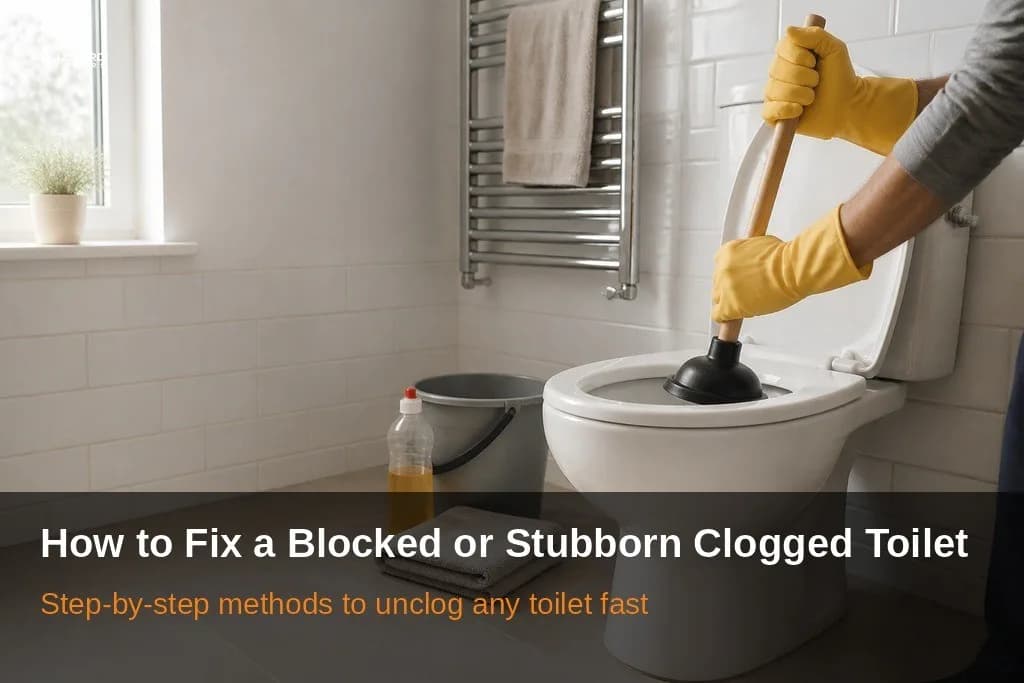
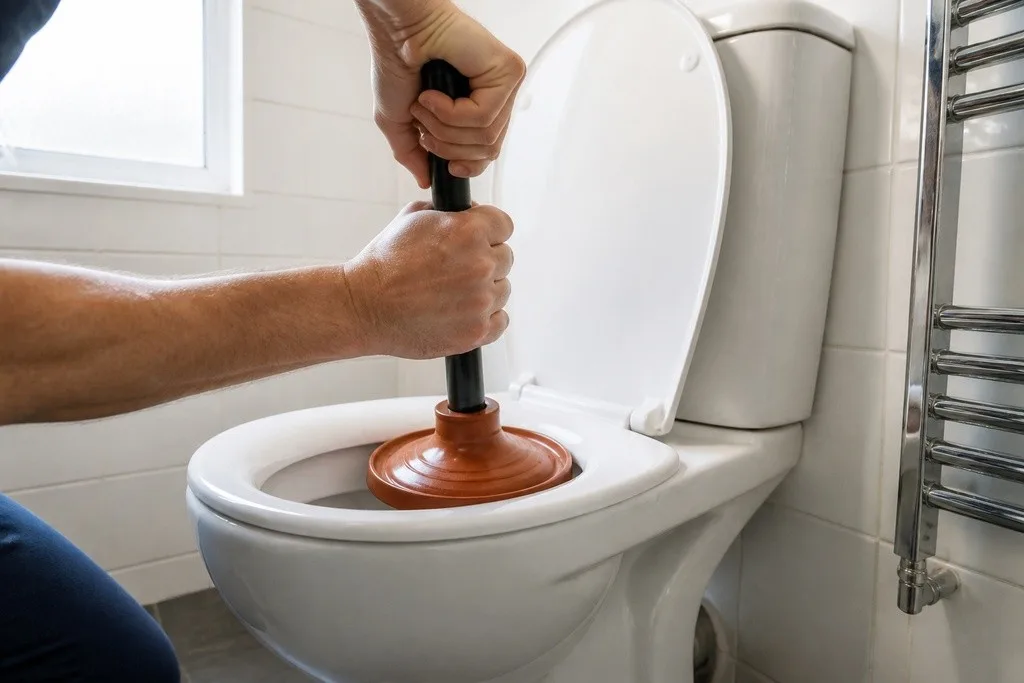
A plunger is the best first tool for the vast majority of blockages, and using one correctly makes a real difference. The key is creating an airtight seal over the toilet outlet before applying any force. A flange plunger, which has an extended rubber skirt that fits into the toilet pan outlet, is far more effective than a standard flat-cupped plunger for most UK toilet designs. If you only have a flat plunger, fold the edges inward to create a rough flange shape.
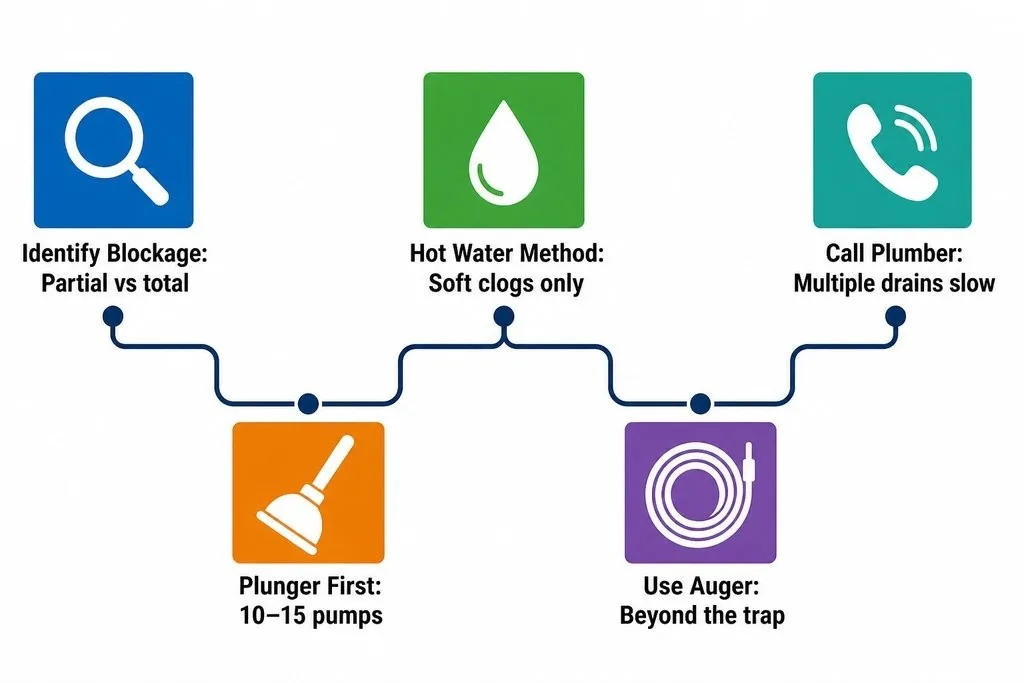
Lower the plunger into the water at an angle to avoid trapping air inside the cup, then position it firmly over the outlet. Push down slowly and steadily to expel air, then pull back sharply. This push-and-pull rhythm builds pressure on both sides of the blockage, which is what dislodges it. Repeat ten to fifteen times before lifting the plunger to check whether the water drains. If it does, give a cautious flush to confirm the clog has cleared. A stubborn clog may need several rounds before it gives way.
Hot Water and Washing-Up Liquid Method
For softer blockages caused by toilet paper or organic waste, hot water and washing-up liquid is a practical first attempt — a popular natural way to unclog toilet obstructions without introducing chemicals. Squirt a generous amount of washing-up liquid into the bowl and leave it for five to ten minutes. The liquid acts as a lubricant, helping to loosen compacted material. Then carefully pour in warm (not boiling) water from waist height; the heat and pressure working together can shift blockages that simple flushing will not. Avoid boiling water, as it can crack the porcelain, particularly on older toilets. If the water level drops after this treatment, try a gentle flush to confirm the clog has cleared.
Using a Toilet Auger or Drain Snake
When a plunger has not worked after several attempts, a toilet auger (sometimes called a closet auger or drain snake) is the next step. This tool has a flexible cable that extends through the toilet trap and into the pipe beyond, reaching deep clogs that a plunger cannot affect. Feed the cable in slowly while turning the handle; this either bores through the obstruction or hooks around it so you can pull the material back out.
Use a toilet-specific auger rather than a generic drain snake. The protective rubber coating on the cable prevents scratching the porcelain, whereas forcing a bare metal cable into the pan can cause lasting damage. If the auger clears the immediate blockage but the toilet still drains slowly, that may indicate a partial obstruction further along the pipe that warrants further investigation.
| Method | Best For | Equipment Needed | Risk to Pipework | Effectiveness on Deep Clogs |
|---|---|---|---|---|
| Flange plunger | Most standard blockages | Flange plunger | Low | Low — limited reach |
| Hot water and washing-up liquid | Soft blockages (paper, organic waste) | Washing-up liquid, warm water, bucket | Very low (avoid boiling water) | Low — surface-level only |
| Toilet auger / drain snake | Clogs beyond the trap | Toilet-specific auger | Low if rubber-coated; higher if bare metal | Medium to high |
When Basic Methods Are Not Working
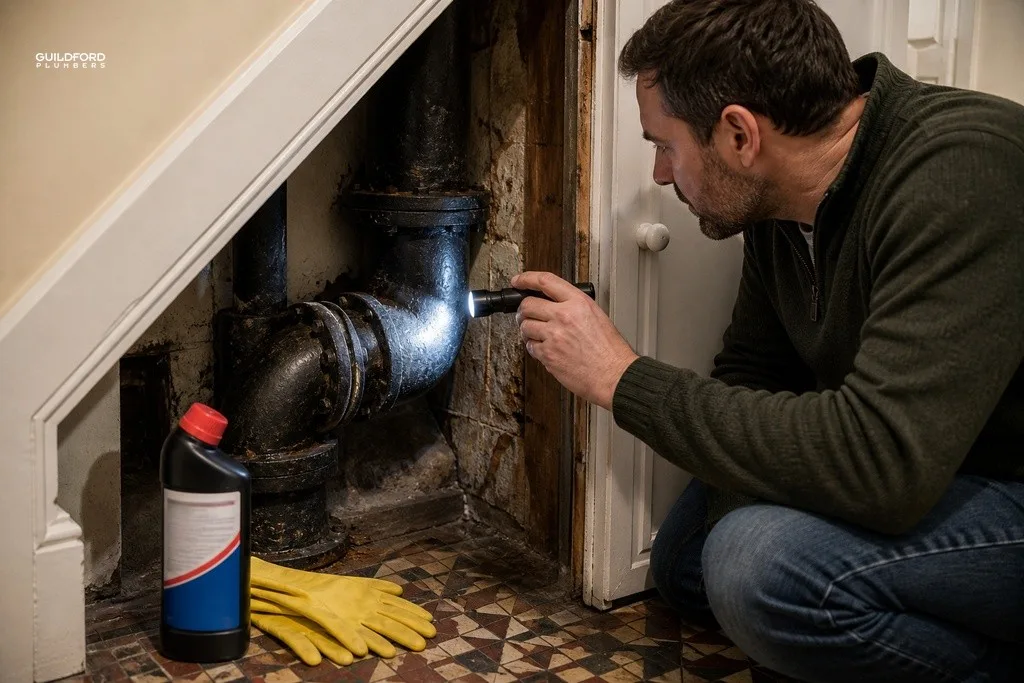
If you have tried a plunger, warm water, and an auger and the toilet still will not clear, the blockage is likely positioned deeper in the drain or within the soil stack — the main vertical pipe that carries waste away from your home. The following warning signs point to a deeper problem.
Gurgling sounds from the toilet after flushing, or from nearby drains when the toilet is used, indicate air displacement caused by a blockage in a shared section of pipework. Slow drainage in more than one fixture at the same time — noticing a toilet and tub not draining simultaneously, or both toilets blocked on different floors — points to a problem in the shared drain or sewer line rather than a single toilet. Persistent slow drainage continuing for weeks despite repeated efforts, or attempting to fix slow flushing toilet behaviour that keeps returning, may indicate a partial obstruction or root ingress that cannot be reached through the pan. These situations go beyond what a household toolkit can reliably handle.
Risks and Limits of DIY Toilet Unblocking in Guildford and Surrey
DIY unblocking is a reasonable first response for most standard blockages. Research from Google Consumer Surveys via PR Newswire suggests that nearly 46% of homeowners attempt to fix plumbing problems themselves before calling a professional, which reflects how common this instinct is. However, there are real limits to what is safe to attempt at home.
Chemical drain cleaners are one area to approach with caution. Many products contain highly caustic substances that can damage older cast iron or clay pipework, both of which are common in UK housing stock and particularly prevalent in the older terraced and semi-detached properties found throughout Guildford town centre and surrounding villages. Chemical cleaners can also react badly with other products already in the drain, leaving you with a bowl full of corrosive liquid that is difficult to handle safely if the blockage does not clear.
Improvised tools carry similar risks. Trying to clear a blocked toilet with a garden hose, a broomstick, or anything not purpose-built risks cracking the pan, dislodging the toilet seal, or pushing the blockage further along the pipe where it becomes harder to reach. Many properties across Guildford, Godalming, and the wider Surrey area have pipework that has seen decades of use and responds poorly to aggressive interference. If something is not working after a reasonable number of attempts, stopping is genuinely the safer choice.
When to Call a Local Plumber in Guildford to Unblock a Toilet
Some blockages require professional expertise, and recognising that early saves time, effort, and potential damage. Call a plumber if you have a totally blocked toilet where no DIY method has produced any movement, if the same toilet keeps blocking despite repeated clearing, if multiple fixtures are draining slowly at the same time, if foul smells are coming from your drains, or if there are any other signs of a drain or sewer issue.
A professional drainage engineer can carry out CCTV drain surveys, high-pressure water jetting, and other techniques that are simply not available to homeowners — and are often the only reliable solution for a badly blocked toilet that has resisted every home remedy.
Guildford Plumbers provides 24/7 emergency availability with no call-out fee and fast response times across Guildford, Surrey, and surrounding areas. With over 12 years of local experience and Gas Safe Registered engineers, the team can diagnose and resolve toilet blockages properly. If you have worked through the methods in this guide without success, or would simply rather have an expert handle it from the start, get in touch today for a fast, friendly, and transparent assessment.
Frequently Asked Questions About Unblocking a Toilet
What is the quickest way to unblock a toilet at home?
A flange plunger used correctly is the fastest and most effective home method for most blockages. Position it firmly over the outlet, push down slowly, then pull back sharply and repeat ten to fifteen times. If you do not have a plunger to hand, hot water combined with washing-up liquid can loosen softer blockages caused by toilet paper or organic waste.
Is it safe to use chemical drain cleaner on a blocked toilet?
Use chemical drain cleaners with caution. Many contain caustic substances that can damage older cast iron or clay pipework, which is common throughout UK homes. If the blockage does not clear, you may be left with a bowl full of corrosive liquid that is difficult to remove safely.
Why does my toilet keep blocking even when I flush normally?
Recurring blockages often point to an underlying issue rather than a one-off event. Low-flush toilets can leave waste close to the pan, while limescale build-up in hard-water areas like Surrey gradually narrows the pipe bore. A partial obstruction or root ingress deeper in the drain can also cause repeat problems.
When should I stop trying to unblock my toilet myself?
Stop and call a plumber if multiple fixtures are draining slowly at the same time, if you can hear gurgling from nearby drains, or if no DIY method has produced any movement after several attempts. These signs suggest the blockage is in the shared drain or soil stack, which requires professional equipment to clear safely.
How much does it cost to have a plumber unblock a toilet in Guildford?
Costs vary depending on the severity and location of the blockage. For an accurate, transparent quote specific to your situation, contact a local plumber directly rather than relying on general estimates, as the work required can range from a straightforward clearance to a CCTV survey and jetting.