
Key Takeaways
Homeowners in Guildford and Surrey can safely unclog a washing machine drain with simple DIY steps or call a local plumber for persistent blockages.
- Always unplug the washing machine before inspecting the drain. Start by cleaning the pump filter, which is the single most effective first step for resolving most household blockages.
- A hot maintenance wash using white vinegar and bicarbonate of soda can dissolve soap scum and light debris without harming rubber seals or voiding your appliance warranty.
- Not all chemical drain unblockers are safe for washing machines. Only use products explicitly labelled as suitable for washing machine drainage to avoid damage to seals or older Surrey pipework.
- Hard water in the Guildford and Surrey area accelerates limescale build up inside drain hoses and pipes. Running a monthly descaling wash is especially important for households in this region.
- Call a qualified plumber if DIY steps have not worked, if blockages return quickly, or if water is backing up into other fixtures such as a sink or bath. These signs point to a deeper drainage issue requiring specialist tools.
A blocked washing machine drain tends to announce itself at the worst possible moment, usually mid-cycle, with a drum full of wet laundry and water that refuses to go anywhere. Research summarised by amjeting.com suggests that washing machine drainage problems are a routine issue for a significant proportion of UK homeowners. The good news is that many blockages can be resolved with a few straightforward steps, and where they cannot, a qualified local plumber can sort the problem quickly and cleanly. This guide covers the causes, the warning signs, safe DIY options, and when it makes sense to call in a professional.
Guildford Plumbers has been helping homeowners and businesses across Guildford, Surrey and the surrounding areas, including Godalming, Woking, and Cranleigh, with exactly these kinds of drainage problems for over 12 years. Whether the issue turns out to be a simple filter clean or something deeper in the pipework, the advice below will help you understand what you are dealing with before you decide on your next step.
Why Washing Machine Drains Get Blocked
Washing machine drains block primarily because of the gradual build-up of lint, soap residue, dirt, and grease that accumulates over time. Every wash cycle pushes small amounts of fabric fibre, detergent residue, and grime through the drainage system. Over months and years, these materials collect and narrow the passage available for water to flow through.
A damaged or broken lint trap is one of the most common root causes, since it allows debris to pass freely into the drain hose and beyond. Small items that escape from pockets, such as coins, hair grips, or buttons, are another frequent culprit. These can lodge at the pump filter or inside the drain hose and create an immediate obstruction that routine maintenance would not necessarily have prevented.
Hard water is also a significant factor across Guildford, Surrey and the surrounding areas. This part of south-east England sits in a region of notably hard water, and limescale deposits can coat the inside of drain pipes over time, gradually reducing flow until a partial blockage becomes a complete one. Knowing where the blockage sits, whether at the pump filter, the standpipe connection, or further along the drainage system, helps you choose the most effective fix.
Signs Your Washing Machine Drain Is Backing Up
Spotting a drainage problem early gives you more options and reduces the risk of water damage to your flooring or cabinetry. The most common warning signs include water remaining in the drum at the end of a cycle, slow drainage that takes far longer than usual, water pooling on the floor around or beneath the machine, gurgling noises during or after the drain cycle, a musty smell developing in the utility room or kitchen, and water backing up into a nearby sink or bath. That last sign points to a blockage further along the shared drainage system rather than a localised filter issue.
If multiple fixtures in your home are draining slowly at the same time, the problem is likely not isolated to the washing machine itself. That distinction matters, because where the blockage sits will determine whether you can reasonably handle it yourself.
How to Unclog a Washing Machine Drain Safely at Home
Before you inspect or work on a blocked washing machine drain, always unplug the machine from the mains. This is a non-negotiable safety step, as skipping it risks personal injury and appliance damage. Once the machine is safely disconnected, follow these steps:
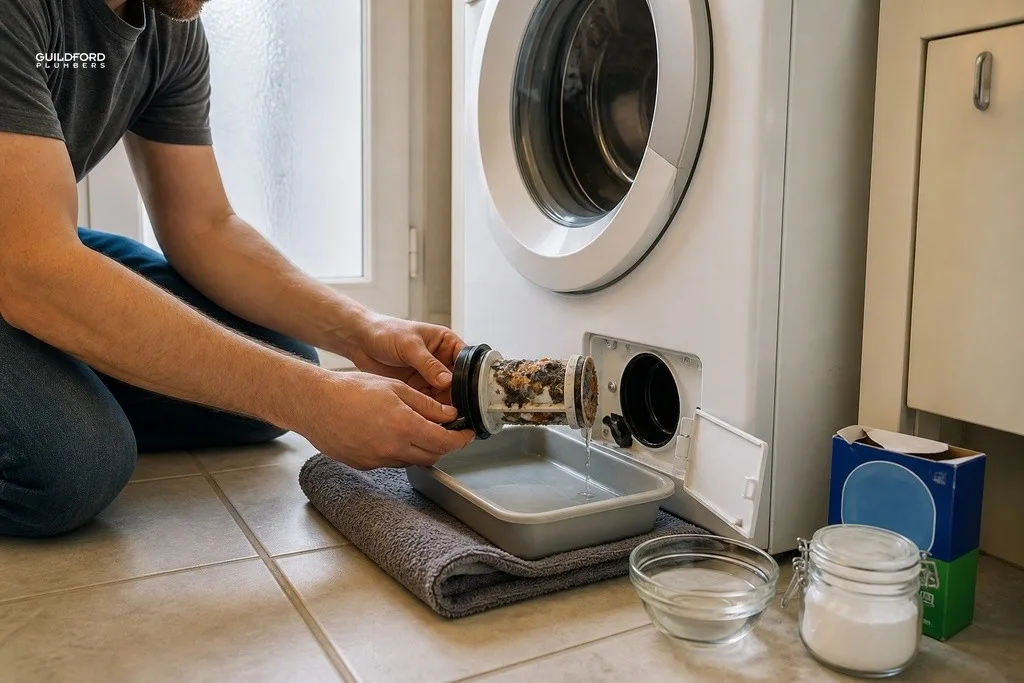
- Clean the pump filter. This is usually found behind a small access panel at the base of the machine. Place a towel and a shallow tray underneath before opening, as residual water will spill out. Remove any debris, clean the filter thoroughly, and refit it securely.
- Check the drain hose. Look for obvious kinks, sharp bends, or visible blockages near either end.
- Run a hot maintenance wash. If the hose appears clear but drainage is still sluggish, add a cup of white vinegar and a tablespoon of bicarbonate of soda directly to the drum and run a hot cycle. This low-cost remedy can dissolve soap scum and light debris without harming the machine or pipework.
Should You Use a Washing Machine Drain Unblocker?
A washing machine drain unblocker can seem like a quick fix, but it has real limitations. Chemical unblockers designed for sinks and bathroom drains are often too aggressive for the rubber components inside a washing machine drainage system, and using the wrong product can perish seals or void your appliance warranty. If you do choose a commercially available product, select one explicitly labelled as safe for washing machine use and follow the dosage instructions carefully.
For minor soap scum build-up, a specialist washing machine cleaner run through an empty hot cycle is generally a safer and more effective choice, and the better approach for routine drain maintenance. It is also worth noting that for older pipework common in many Surrey homes, harsh chemical products can accelerate corrosion. When in doubt, the gentler option is the wiser one.
| Factor | Chemical Unblocker | Natural Remedy (Vinegar & Bicarbonate of Soda) | Specialist Washing Machine Cleaner |
|---|---|---|---|
| Safe for rubber seals | Not always, depends on product | Yes | Yes, when used as directed |
| Risk to appliance warranty | May void warranty | No risk | No risk |
| Suitable for older pipework | Can accelerate corrosion | Low risk | Low risk |
| Effectiveness on limescale | Medium | Low to medium | Medium to high |
| Best used for | Severe clogs (with caution) | Routine maintenance, light build-up | Routine maintenance, soap scum |
How to Clear a Blocked Standpipe or Drain Pipe in Surrey Homes
If the filter and drain hose are both clear but the machine still will not drain, the issue may lie at the standpipe, the vertical pipe on the wall into which the drain hose feeds. Check that the hose is inserted to the correct depth (typically around 15 cm) and is not pushed in so far that it creates an airtight seal, which can prevent drainage entirely.
A drain snake or plumber's snake is the most commonly recommended tool for clearing deeper clogs that hot water alone cannot shift. You can feed it down the standpipe to break up any obstruction within reach. However, if the clog appears to sit further into the pipe or behind the wall, DIY becomes risky and professional assessment is the more sensible route, particularly in older terraced or semi-detached properties, which are common throughout Guildford and the surrounding villages.
When DIY Is Not Enough: Signs You Need a Plumber
Some situations clearly signal that the problem has moved beyond what a homeowner should attempt without specialist tools or training. Call a plumber if you have cleaned the filter, checked the hose, and run a maintenance wash but the machine still will not drain. The same applies if drainage problems keep returning within a few weeks of being cleared, which often points to a partial pipe collapse or significant build-up in the main drain. Water backing up into other fixtures such as a kitchen sink or bath is another clear sign, as is any visible water damage to flooring, swelling at the base of cabinetry, or damp patches on nearby walls.
Calling a plumber at this stage is not an overreaction. It is the decision that stops a manageable problem from becoming a costly one. Guildford Plumbers operates 24 hours a day, seven days a week, with no call-out fee, so there is no financial penalty for getting in touch early to ask for advice.
What a Professional Drain Clearance Service Involves
When a qualified plumber from Guildford Plumbers arrives to investigate a blocked washing machine drain, the process begins with a straightforward diagnosis before any work is agreed. There are no surprises and no pressure to commit to a solution before the cause has been properly identified.
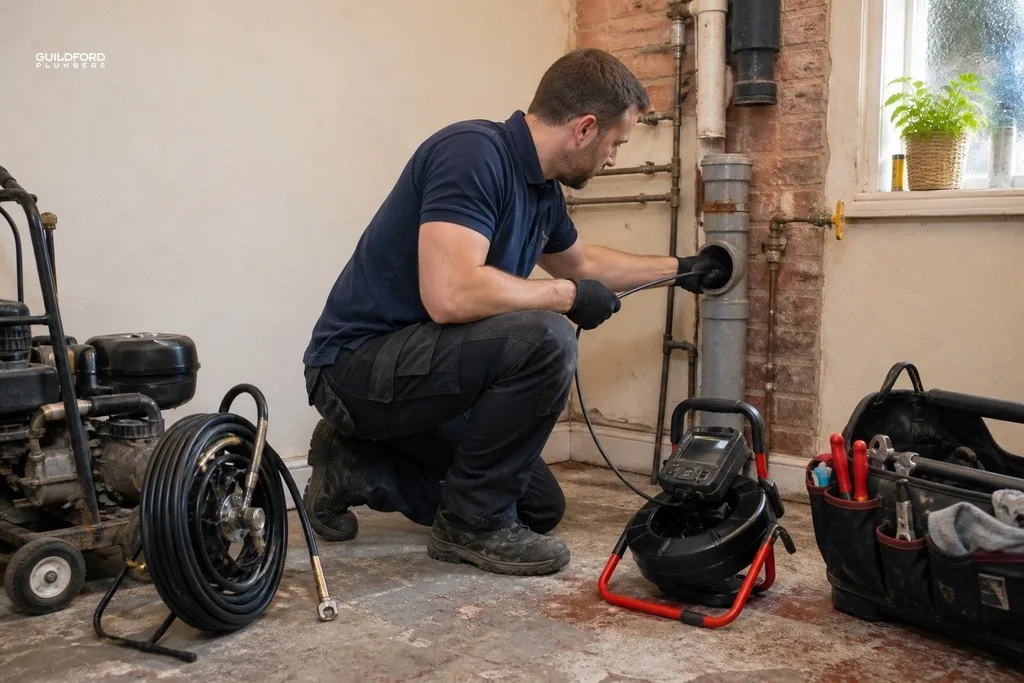
Depending on what the inspection reveals, the plumber may use a drain camera to pinpoint the exact location and nature of the blockage, which is particularly useful where it sits within concealed pipework. High-pressure water jetting is one of the most effective methods for clearing compacted debris, removing accumulated limescale, grease, and soap scum in a way that manual tools often cannot match. This approach is especially relevant in the Surrey area, where hard water means limescale is a persistent issue for many households. Where pipe damage is identified, the engineer will explain the findings clearly and outline repair options, including expected costs, before proceeding. The goal is always a durable fix rather than a temporary one.
How to Stop Your Washing Machine Drain Blocking Again
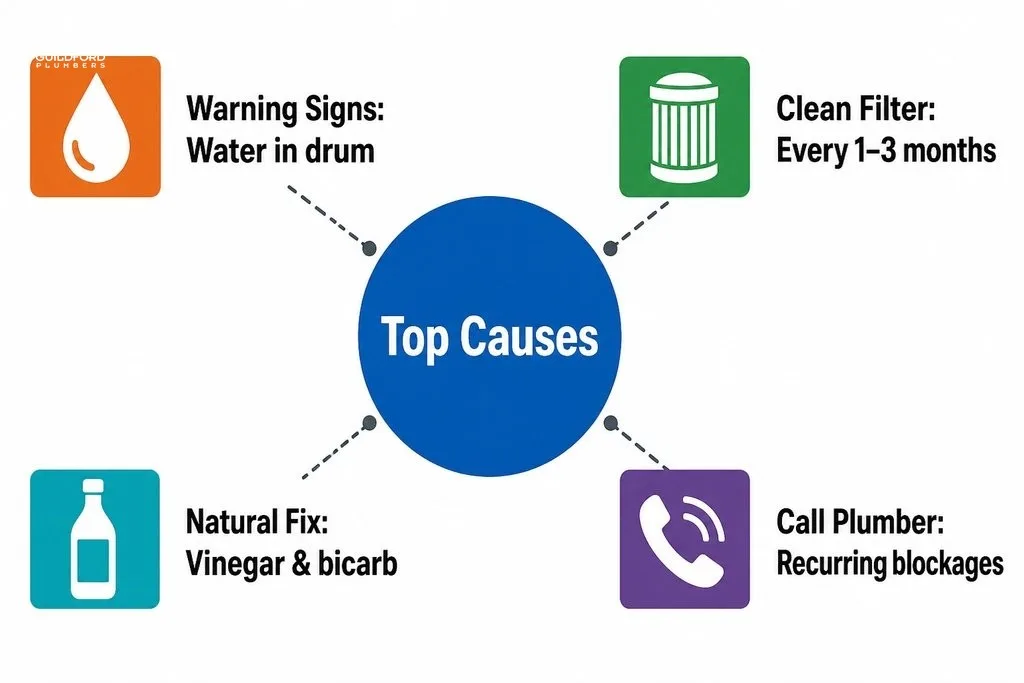
Prevention is straightforward once you understand what causes drain blockages in the first place. Clean the pump filter every one to three months, as this is the single most effective routine task and stops debris from travelling further into the drainage system. Check pockets before loading the machine, since coins, hair grips, and small items are a leading cause of sudden blockages. Use a fine mesh laundry bag for fleece garments and other items that shed large quantities of microfibre lint. Run a monthly hot maintenance wash with a descaling product or white vinegar, which is particularly worthwhile across the Guildford and Surrey area where hard water accelerates limescale build-up inside drain hoses and pipes. Inspect the drain hose periodically for signs of wear, cracking, or build-up near the connections, and replace it if it shows age-related deterioration.
| Task | Frequency | Why It Matters |
|---|---|---|
| Clean the pump filter | Every one to three months | Stops debris travelling deeper into the drainage system |
| Check pockets before loading | Every wash | Prevents coins, hair grips, and small items from causing sudden blockages |
| Use a mesh laundry bag for fleece items | Every wash (for applicable garments) | Reduces microfibre lint entering the drain |
| Run a hot maintenance wash | Monthly | Dissolves soap scum and limescale; especially important in hard water areas like Surrey |
| Inspect the drain hose | Every few months | Catches wear, cracking, or build-up before a minor issue becomes a blockage |
Some comparative research suggests that consistent use of dedicated drain cleaning formulas may help reduce the frequency of clogs over time, though results will vary depending on water hardness, usage patterns, and the age of your pipework. It is also worth knowing that a blocked washing machine drain pipe is one issue within the broader topic of home drainage. Questions such as how to unclog kitchen sink drains and how to unclog dishwasher outlets follow similar principles but involve different access points and techniques, each covered separately in our guidance.
If you would like a professional eye on your drainage system before a small issue becomes a bigger one, Guildford Plumbers offers free quotes and fast local response across Guildford, Surrey and surrounding areas including Godalming, Woking, Farnham, and Cranleigh. Get in touch today and one of our Gas Safe Registered engineers will be happy to help.
Frequently Asked Questions About Washing Machine Drain Blockages
What causes a washing machine drain to block?
The most common causes are lint, soap scum, and debris accumulating in the pump filter or drain hose over time. Small items such as coins or hair grips escaping from pockets can also create sudden obstructions. In areas like Guildford and Surrey, limescale from hard water gradually narrows pipes if left untreated.
Can I unblock a washing machine drain myself?
Yes, in many cases you can. Cleaning the pump filter, checking the drain hose for kinks, and running a hot maintenance wash with white vinegar and bicarbonate of soda will resolve a good proportion of household blockages. If these steps do not work, the clog is likely deeper in the pipework and a plumber should take a look.
Is it safe to use chemical drain unblockers on a washing machine?
Not all chemical unblockers are suitable. Products designed for bathroom or kitchen drains can damage rubber seals inside a washing machine drainage system and may void your appliance warranty. Use only products explicitly labelled as safe for washing machine use, or opt for a specialist washing machine cleaner instead.
How do I know if my standpipe is causing the drainage problem?
If the pump filter and drain hose are both clear but the machine still will not empty, the standpipe is a likely culprit. Check that the drain hose is inserted to around 15 cm and is not creating an airtight seal. A drain snake can clear accessible obstructions, but deeper blockages in the standpipe need professional attention.
When should I call a plumber for a blocked washing machine drain?
Call a plumber if DIY steps have not resolved the problem, if blockages keep returning within a few weeks, or if water is backing up into other fixtures such as a sink or bath. These signs suggest a deeper issue, such as a partial pipe collapse or significant build-up in the main drain, that requires specialist tools to diagnose and clear.
How can I prevent my washing machine drain from blocking in future?
Clean the pump filter every one to three months, check pockets before every wash, and use a fine mesh laundry bag for fleece items. Run a monthly hot maintenance wash with a descaling product or white vinegar. In hard water areas such as Guildford and Surrey, this last step is especially important for keeping limescale in check.