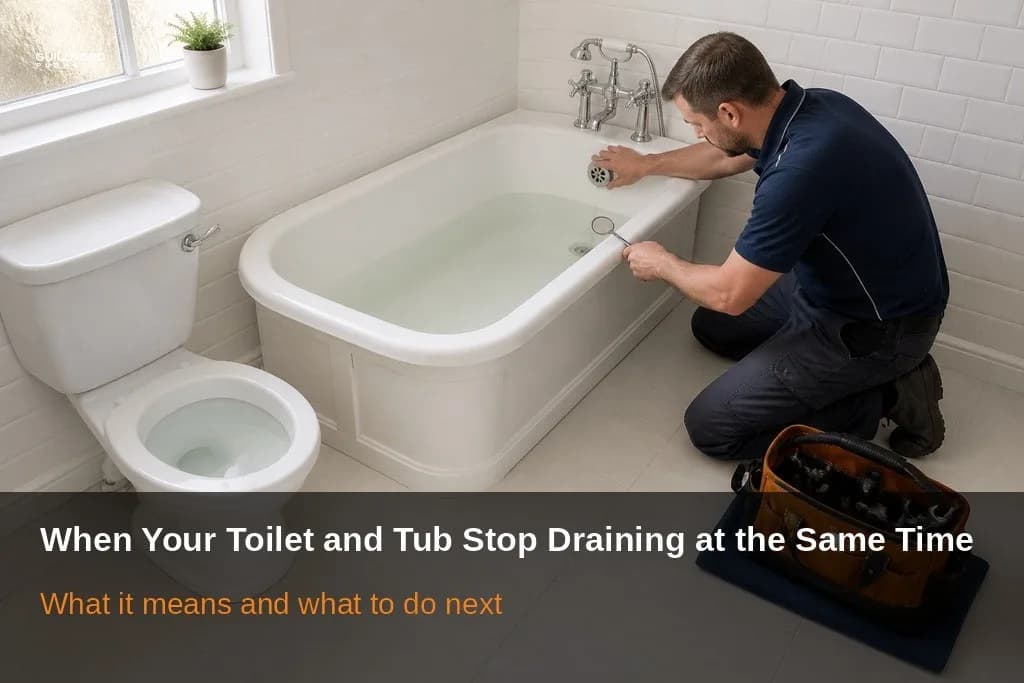
Key Takeaways
When your toilet and tub stop draining together, the cause is almost always a shared main sewer line blockage that requires professional clearance, not a DIY fix.
- If your toilet and tub are not draining at the same time, the blockage is almost certainly in your main sewer line or shared pipework rather than either individual fixture.
- Key warning signs include water backing up in the bathtub when you flush the toilet, sewage smells from any drain, gurgling sounds from shower or bath drains, and toilet water appearing in the shower drain.
- Stop using all affected fixtures immediately. Adding more water to an already overloaded system increases the risk of overflow and costly clean-up.
- Chemical drain products and repeated plunging are ineffective on main sewer blockages and can damage older pipework common in Guildford and Surrey properties. Contact a qualified drainage engineer instead.
- Guildford Plumbers offers 24 hour availability with no call-out fee, so homeowners across Guildford, Godalming, Woking, and the wider Surrey area can get a fast professional response at any hour.
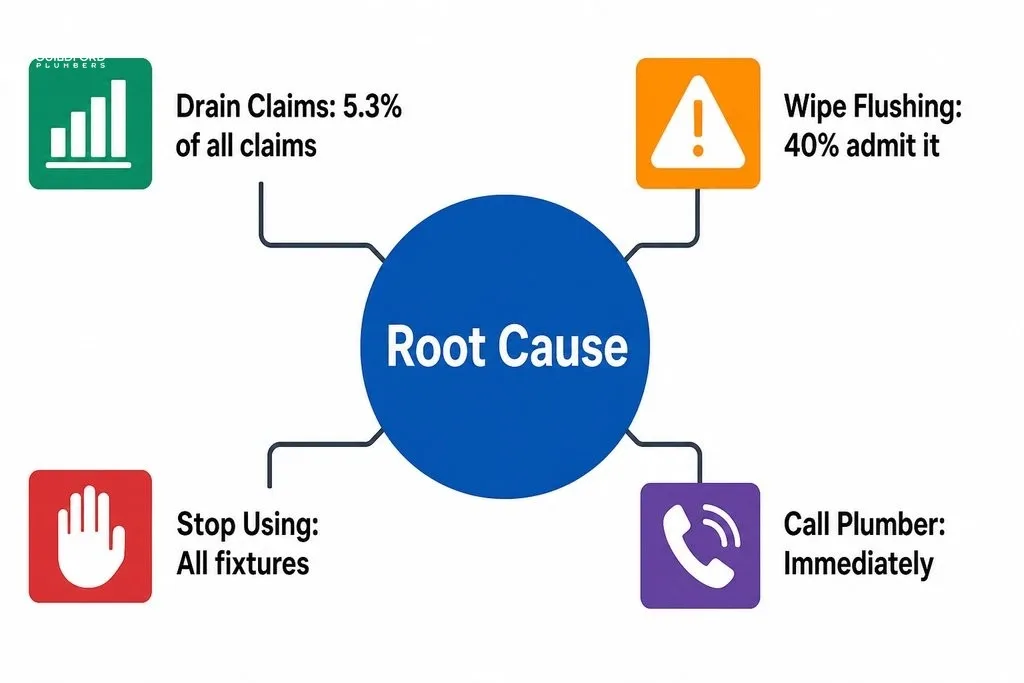
Few household situations feel quite as unsettling as walking into the bathroom and finding your toilet and tub not draining at the same time. One blocked fixture is an inconvenience; two failing together signals something more serious beneath your floors. According to HomeServe UK, blocked sinks, showers, and baths accounted for 5.3% of all plumbing and drainage claims in 2024, making drain failures one of the most frequently reported household plumbing issues in the country. When the problem affects your toilet and bathtub simultaneously, the root cause is almost always further down the drainage system than most people expect. This guide explains why it happens, what you can safely check yourself, and when to put down the plunger and pick up the phone.
Why Does the Toilet and Tub Stop Draining Together?
When your toilet and shower are backing up at the same time, the instinct is to treat each fixture as a separate problem. In reality, both your toilet and bathtub connect to the same underground drainage infrastructure, so a blockage in one shared location can interrupt drainage across multiple fixtures simultaneously.
The most common shared point of failure is the main sewer line, the pipe that carries all wastewater away from your home and into the public sewer system. When this line becomes partially or fully blocked, waste has nowhere to go. Instead of flowing freely outward, it backs up toward the fixtures it came from. This explains why you might notice water rising in the toilet bowl, or even toilet water appearing in the shower drain. Both are signs that the blockage is central rather than local.
How Your Home's Drainage System Works
Every drain in your home, whether from a sink, bath, shower, or toilet, connects to a network of pipes that gradually merge into larger ones. These pipes slope downward by design, using gravity to carry wastewater toward a single exit point. Because every fixture shares this path, anything that obstructs the main channel affects everything upstream.
Think of it like a blocked junction on the A3: the traffic behind it, in this case wastewater, has nowhere to divert and begins backing up. This is why a bathtub and toilet blocked at the same time reliably points to an obstruction in shared pipework rather than either individual fixture.
What Is the Soil Stack and Why Does It Matter?
Inside your home, the central vertical pipe connecting most drainage fixtures is called the soil stack. It runs from the ground floor up through the building and exits through the roof, where it also ventilates the drainage system. Branch pipes from your toilet, bath, and other fixtures all feed into this column at different heights.
Any blockage within the soil stack, or at the point where it meets the main sewer line, can cause drainage failure across multiple rooms at once. A blockage at roof level can also restrict airflow, triggering slow drainage and gurgling sounds from several fixtures simultaneously.
How to Recognise a Shared Drain Blockage in Your Surrey Home
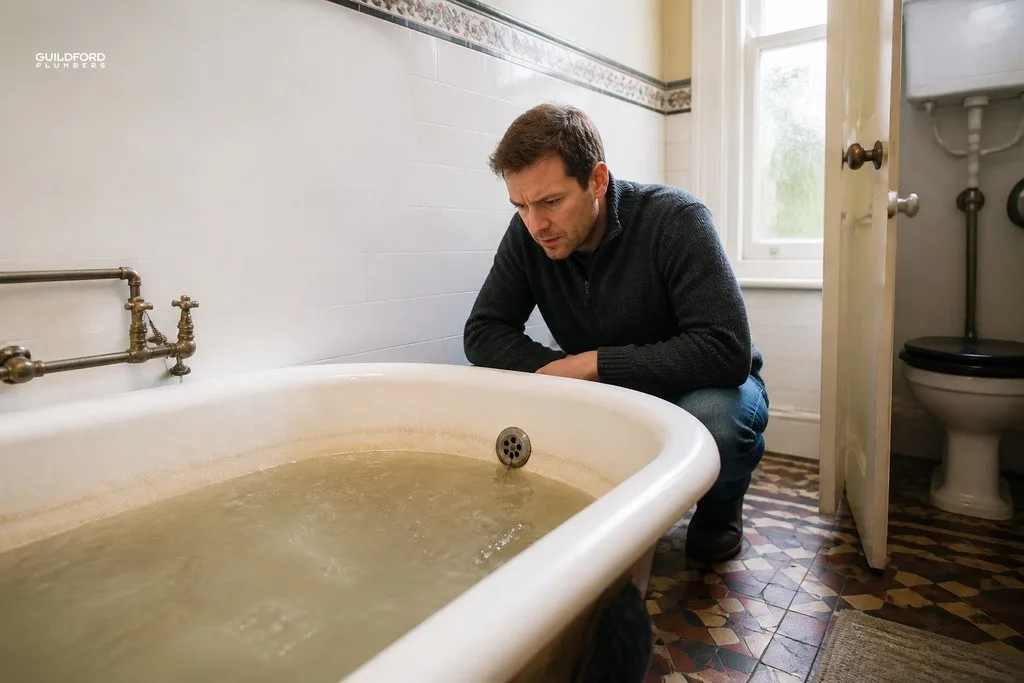
Knowing what to look and listen for makes it much easier to describe the problem when you call a plumber. The most common signs of a shared blockage include water backing up in the tub when you flush the toilet, gurgling sounds from the shower or bath drain caused by trapped air being forced back through the pipes, and slow drainage across multiple fixtures at once. You may also notice toilet water appearing in the shower drain, meaning wastewater is being redirected back into your bathroom rather than away from it, or sewage smells coming from any drain, indicating that waste is sitting in the pipes rather than moving through them.
If you are noticing any of these symptoms together, the problem is almost certainly in the main sewer line rather than the individual fixtures themselves.
| Symptom | Likely Cause | Urgency |
|---|---|---|
| One fixture drains slowly | Local blockage in that fixture's individual pipe | Low — monitor and address when convenient |
| Gurgling sounds from shower or bath drain | Trapped air in shared pipework | Medium — investigate promptly |
| Water backs up in tub when toilet is flushed | Shared drain or main sewer line obstruction | High — stop using fixtures and call a plumber |
| Toilet water appearing in shower drain | Main sewer line blocked, wastewater redirected | High — call a plumber immediately |
| Sewage smell from any drain | Waste sitting in shared pipework | High — professional clearance required |
| Multiple fixtures failing across the whole property | Main sewer line fully or severely blocked | Urgent — do not use any affected fixtures |
Signs the Problem Is Getting Worse
Some symptoms indicate the blockage has moved beyond a manageable inconvenience and needs urgent attention. Sewage smells, toilet water backing up into the shower, and slow drainage that keeps worsening are all escalating signals. Blockages tend to become more firmly embedded over time, so it is worth acting promptly rather than waiting to see whether the problem resolves itself.
What You Can Safely Check Before Calling a Plumber
Spending a few minutes gathering information before you call will help a drainage engineer assess the situation quickly. Run the taps in other rooms and note whether they drain freely. Flush the toilet and watch how water moves in both the bowl and any nearby bath or shower. Check whether the problem is limited to one bathroom or affects the whole property, and note when the symptoms started and whether anything changed beforehand.
Be realistic about what you can safely address yourself. When multiple fixtures are affected at the same time, DIY methods are unlikely to resolve the issue and may make things worse. Chemical drain products can damage older pipework, a particular concern in the many Victorian and Edwardian terraced properties found across Guildford and the surrounding Surrey villages, and are generally ineffective against deep-seated blockages in the main sewer line. Plunging a single fixture when the problem is in a shared drain line may temporarily shift the obstruction without clearing it, giving a false sense of progress.
When to Call a Plumber Immediately
Stop using the affected fixtures and contact a qualified plumber without delay if water is backing up in the bathtub when you flush the toilet, you can smell sewage anywhere in the house, multiple bathrooms or fixtures across the property are all affected, or drainage has stopped almost entirely rather than just slowing down.
Continuing to use the drainage system when the main sewer line is blocked forces more waste into an already overloaded system, increasing the risk of overflow and the associated clean-up costs. Acting quickly is generally the most cost-effective decision you can make.
The Unblocktober UK Drainage Habits Survey 2022 found that 40% of UK respondents admitted to flushing wet wipes labelled "flushable" down the toilet, and only 28% said they were actively working to reduce harmful drain disposal habits. These behaviours are a primary cause of the kind of shared sewer blockages that leave both the tub and toilet backed up, which is why professional clearance is so often needed rather than a home remedy.
How a Guildford Drainage Engineer Clears a Main Sewer Blockage
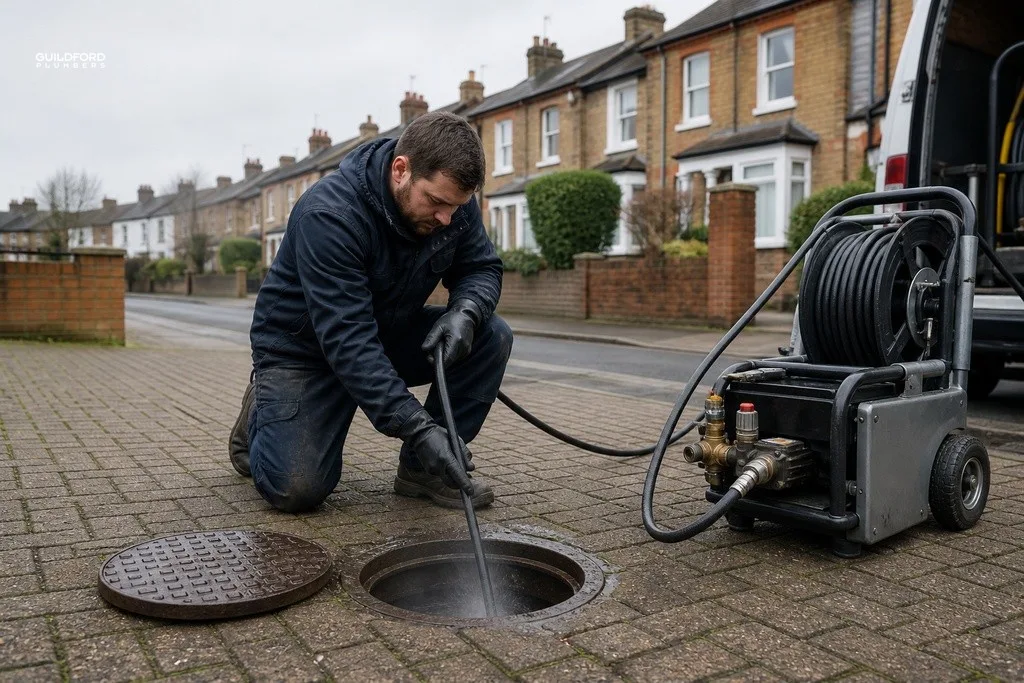
When a Guildford Plumbers engineer arrives at your property, the first step is a careful inspection of the drainage system to confirm exactly where the blockage is and how serious it has become. This typically involves checking access points such as inspection chambers and using diagnostic tools to assess the condition of the pipework.
Once the blockage is located, the engineer will use professional drainage clearance equipment, high-pressure water jetting or drain rods, depending on what the pipe condition requires. After the line has been cleared, a follow-up check confirms that water is flowing freely from all fixtures through to the main exit.
| Method | How It Works | Best Suited For | Limitations |
|---|---|---|---|
| High-pressure water jetting | Powerful water jets break up and flush away blockages | Stubborn or deep-set blockages; grease and wipe build-up in main sewer lines | Requires specialist equipment; not suitable for severely deteriorated pipework |
| Drain rods | Flexible rods are manually fed into the pipe to dislodge obstructions | Accessible blockages closer to inspection chambers or within reach of the rod length | Less effective on blockages deep in the sewer line or caused by compacted debris |
Guildford Plumbers operates with no call-out fee, fast response times, and engineers available around the clock. Whether the problem surfaces on a weekday afternoon or a Saturday evening, homeowners across Guildford, Godalming, Woking, and the broader Surrey area are not left waiting. With over 12 years of experience serving the local community, the team brings regional knowledge that helps resolve these situations efficiently and with minimal disruption.
What to Do Right Now If Your Toilet and Tub Are Backed Up
A calm, methodical response will serve you far better than reaching for a bottle of drain cleaner. Stop using the affected fixtures immediately, note when the symptoms started and which fixtures are affected, and contact a qualified plumber as soon as possible. Avoid chemical drain products, as they are ineffective on main sewer blockages and can harm your pipework. Avoid plunging repeatedly too, as this rarely resolves a shared line issue and may push the obstruction further into the system. Do not keep flushing or running taps, as this adds more water to a system with nowhere to drain it.
If you have been searching for a natural way to unclog toilet fixtures or looking natural way to unclog toilet drains yourself, those approaches work well for single-fixture blockages caused by surface-level debris. When the toilet and tub are backed up together, however, the problem is in the main line and requires specialist equipment to clear properly. If you have also noticed your toilet draining slowly before this episode, you may find it useful to fix slow flushing toilet issues at the same time, as the engineer can assess whether any underlying factor has been contributing to reduced flow over time.
If your home in Guildford or the surrounding Surrey area is experiencing this kind of shared drainage failure, the Guildford Plumbers team is ready to help. With no call-out fee, 24/7 availability, and experienced Gas Safe Registered engineers, getting in touch is the simplest and most effective step you can take right now. Contact us today for a fast, professional response and the reassurance that the problem has been properly resolved.
Frequently Asked Questions
Why are my toilet and bathtub both not draining at the same time?
When both fixtures fail together, the blockage is almost always in shared pipework, usually the main sewer line rather than either individual drain. Because every fixture in your home connects to the same drainage infrastructure, an obstruction at a central point can stop water flowing from multiple fixtures simultaneously.
Can I use a plunger to fix both the toilet and tub not draining?
Plunging is unlikely to help when the blockage is in the main sewer line. It may temporarily shift the obstruction without clearing it, giving a false sense of progress. A drainage engineer with high-pressure jetting equipment is needed to clear a deep shared blockage properly.
Is it safe to keep using the bathroom while both the toilet and tub are blocked?
No. Continuing to flush or run taps forces more waste into an already overloaded system, increasing the risk of overflow and sewage backing up into the bathroom. Stop using the affected fixtures and call a plumber as soon as possible.
How quickly can a Guildford plumber respond to a shared drain blockage?
Guildford Plumbers offers 24/7 availability with no call-out fee, so engineers can respond at any hour, including weekends. Response times vary by location within the Guildford and Surrey area, but urgent drainage issues are prioritised to minimise disruption to your home.
What causes the main sewer line to become blocked?
The most common causes include flushing wet wipes (even those labelled "flushable"), along with accumulated grease, hair, and soap residue in shared pipework. In older properties, common across Guildford and Surrey, ageing or partially collapsed pipes can also restrict flow and make blockages more likely.