Key Takeaways
A slow flushing toilet in Surrey is usually caused by limescale, a worn flapper valve, or a blockage, and many cases can be resolved at home before calling a plumber.
- Surrey homes are particularly prone to limescale buildup inside rim jets and siphon jets due to the hard water supply, which gradually weakens flush performance without any obvious blockage.
- Checking the cistern water level and inspecting the flapper valve are the first practical steps; both are straightforward to address at home with basic tools or inexpensive replacement parts.
- Pouring white vinegar into the overflow tube inside the cistern and leaving it overnight is an effective and natural method for descaling rim jets and restoring proper flush power.
- If gurgling sounds come from other fixtures when the toilet is flushed, or if multiple drains in the home are running slowly at the same time, the problem lies further along the shared drainage system and a professional inspection is needed.
- Descaling cistern components once or twice a year and avoiding flushing non flushable items such as wet wipes and cotton pads are the most reliable ways to prevent slow flush problems from returning.
A toilet that drains sluggishly is easy to put off but hard to ignore for long. Whether the bowl is slow to clear after every flush or the water swirls without making progress, the need to fix a slow flushing toilet is completely understandable. The good news is that many causes are straightforward once you know what to look for, and some can be resolved without calling anyone at all. This guide walks through the most likely reasons, what you can try at home, and when it makes sense to bring in a professional before a minor issue becomes a costly one.
According to the U.S. Environmental Protection Agency, toilets account for nearly 30% of all indoor water use in an average household, making a poorly functioning flush more than just an annoyance. Every weak or incomplete flush represents wasted water and a signal that something in the system needs attention. Catching the problem early almost always saves time, effort, and money further down the line.
What a Slow Flushing Toilet Is Telling You
There is an important difference between a toilet that flushes weakly and one that drains slowly after flushing. A weak flush means water leaves the cistern with insufficient force, usually pointing to a mechanical or water supply issue inside the toilet itself. A slow draining toilet means water eventually clears but takes longer than it should, typically indicating a restriction in the trap, the soil pipe, or further along the drainage system. Understanding which you are dealing with narrows down the cause considerably and helps you avoid wasting time on the wrong fix.
It is also worth knowing that a slow flushing toilet does not always mean there is a blockage. The cistern may not be filling fully, the rim jets may be partially blocked with mineral deposits, or the flapper valve may have degraded over time. Knowing this before you start investigating means you are less likely to reach for a plunger when the real problem is sitting quietly inside the cistern lid.
The Most Common Reasons a Toilet Drains Slowly
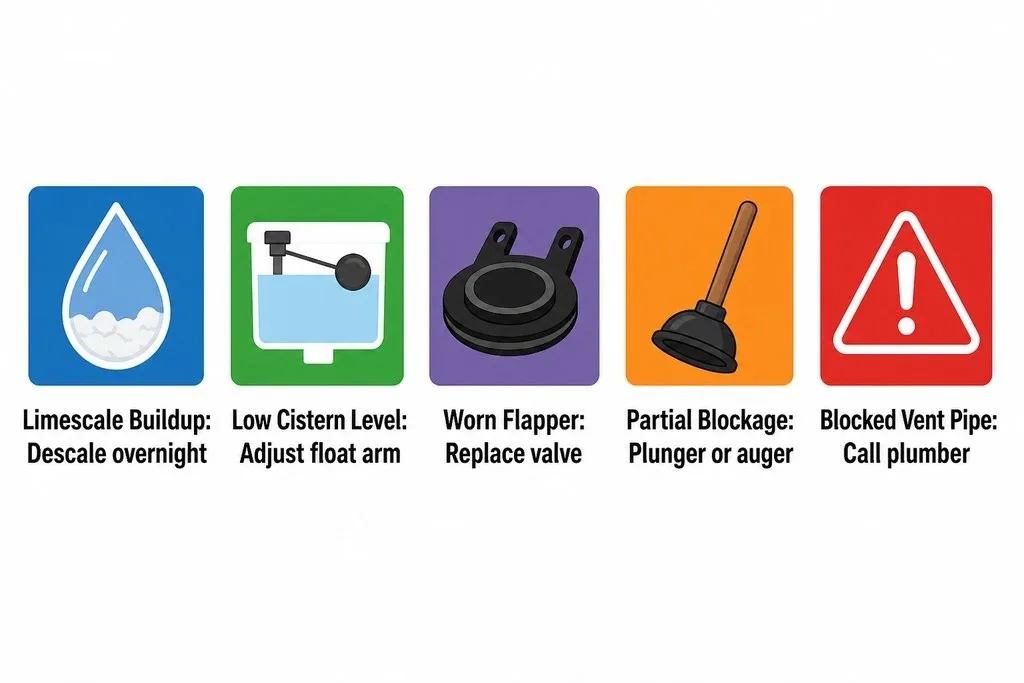
Most cases trace back to a handful of well-established causes: a partial blockage in the trapway; low water volume in the cistern; a worn flapper valve leaking water before the next flush; scaled-up rim jets restricting flow around the bowl; or a blocked vent pipe reducing siphon action in the drain. Matching your symptoms to the most likely cause before you start is the most efficient approach.
| Cause | Typical Symptom | DIY Fix Possible? |
|---|---|---|
| Limescale in rim jets or siphon jet | Flush weakens gradually over time | Yes — descale with white vinegar |
| Low cistern water level | Consistently weak flush volume | Yes — adjust float arm or fill valve |
| Worn or degraded flapper valve | Cistern never fully refills before next flush | Yes — replace flapper |
| Partial blockage in trapway | Bowl slow to clear after flushing | Yes — plunger or toilet auger |
| Blocked vent pipe | Gurgling sounds; slow drainage recurring | No — requires professional access |
| Blockage in soil stack or shared drain | Multiple fixtures draining slowly | No — professional inspection needed |
Hard Water and Limescale Buildup in Guildford and Surrey Homes
Surrey sits in one of the hardest water areas in England, and properties across Guildford and the surrounding towns feel the effects on their plumbing over time. Limescale builds up gradually inside the rim jets around the top of the bowl and inside the siphon jet at the base, quietly restricting the flow of water with each flush. Because the process is so gradual, many homeowners do not connect the slowly worsening flush to the local water supply.
This is one of the most common reasons for a slow flushing toilet with no obvious blockage in Surrey homes. The obstruction is not a physical mass in the drain but a mineral crust that has narrowed the waterways inside the toilet itself. If your toilet has never been descaled and you have lived in the area for a few years, this is a very likely contributor.
Cistern and Flapper Problems
The cistern stores and releases the volume of water needed for a complete flush. If the fill valve is not bringing the water level up to the correct mark, the flush will be weak regardless of how well the rest of the toilet is functioning. A degraded flapper valve compounds this: when the rubber seal deteriorates, water leaks slowly from the cistern into the bowl, so the tank never reaches its intended level before the next flush. The result is a consistently underwhelming flush that can easily be mistaken for a draining problem when the root cause is actually mechanical.
How to Fix a Slow Flushing Toilet Yourself
Before calling anyone, there are several safe and practical steps worth trying at home.
Step 1: Check the Cistern Water Level
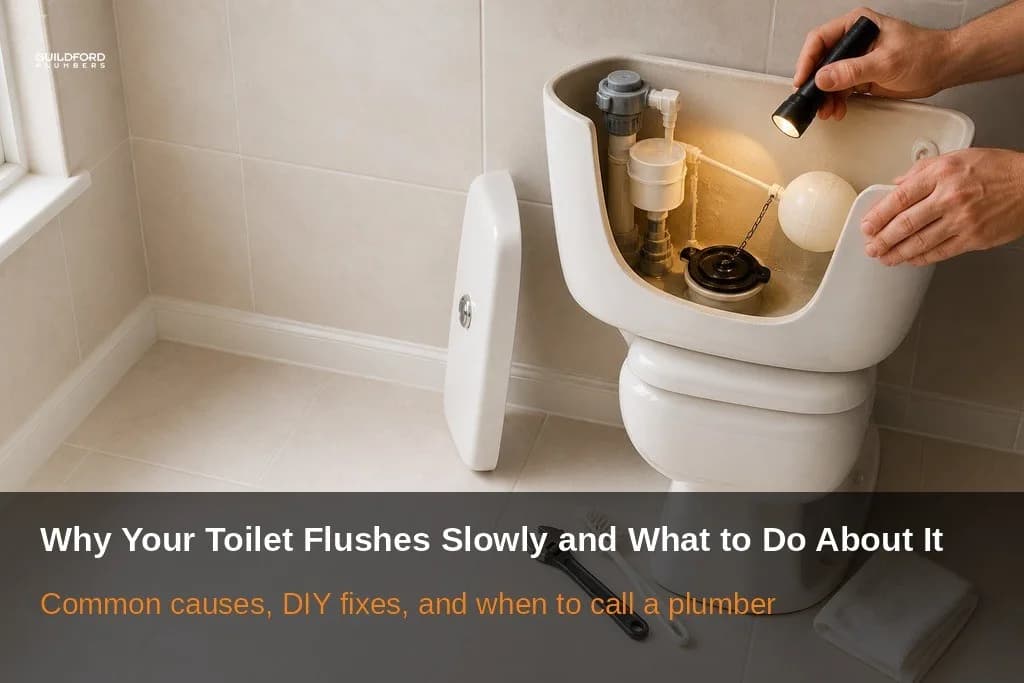
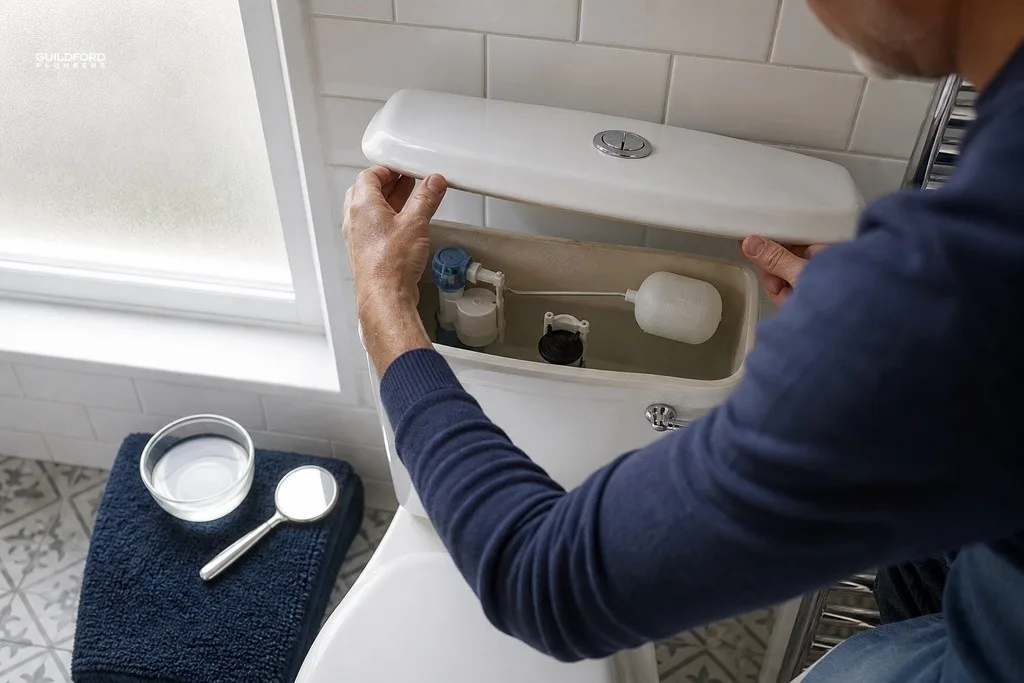
Lift the cistern lid and check the water level. It should sit roughly 25mm below the top of the overflow tube. If it is lower, adjusting the float arm or fill valve may restore proper flush volume.
Step 2: Inspect the Flapper Valve
Look for visible warping, cracks, or discolouration on the flapper. These are reliable signs it needs replacing, and a new flapper is an inexpensive part available from most hardware shops or plumbers' merchants.
Step 3: Clear a Partial Blockage
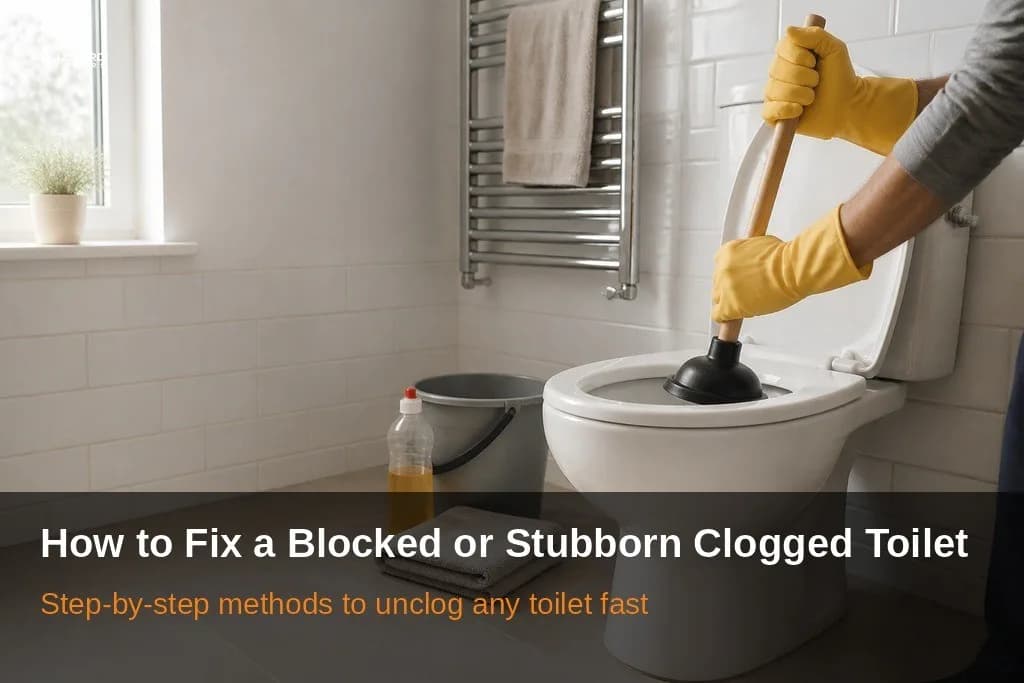
If the cistern looks fine, attention shifts to the bowl. A plunger or a toilet auger can address a partial blockage in the trap. A toilet auger is the recommended tool for blockages within the bowl, as a standard drain snake can scratch or damage the porcelain.
Descaling Rim Jets to Restore Flush Power
Clearing limescale from the rim jets is often highly effective for homes in hard water areas such as Guildford and the wider Surrey region. If you are looking for a natural way to unclog toilet channels and restore proper flush power without reaching for harsh chemicals, white vinegar is a practical and widely recommended first step.
Pour white vinegar or a proprietary descaling solution into the overflow tube inside the cistern, allow it to sit for several hours or overnight, then flush repeatedly to clear the loosened deposits. A small mirror and a toothpick or piece of wire can help you check which jets are blocked and remove any remaining residue.
Adjusting the Fill Valve and Float
If the water level in your cistern is too low, adjusting the float arm or fill valve is straightforward in most modern toilets. For older ball-float cisterns, bend the arm slightly upward to raise the shutoff point and allow the tank to fill higher. For newer fill valves, turn the adjustment screw or clip to raise the water level to the correct mark. Once adjusted, flush several times and check that the water refills consistently to the right level without running over.
| Step | What to Do | When to Call a Plumber Instead |
|---|---|---|
| Check cistern water level | Adjust float arm or fill valve to reach correct mark | If valve is damaged or water still fails to reach correct level |
| Inspect flapper valve | Replace if warped, cracked, or discoloured | If problem persists after replacement |
| Clear partial blockage | Use a plunger or toilet auger on the trap | If blockage keeps returning or auger cannot reach it |
| Descale rim jets | Overnight white vinegar soak via overflow tube | If jets remain blocked after repeated treatment |
| Adjust fill valve or float | Raise shutoff point so cistern fills to correct level | If valve mechanism is faulty or worn |
When DIY Has Not Worked and the Toilet Will Not Drain
There are situations where a toilet bowl is not draining despite reasonable effort, and the cause lies beyond what home remedies can reach. If you have cleared the trap, checked the cistern, and descaled the rim jets but the toilet still drains slowly or not at all, the blockage may be sitting further along the soil stack rather than inside the toilet itself.
Venting issues are another possibility. A blocked vent pipe reduces the siphon action the drain depends on, and clearing one typically requires roof access. Slow drainage that keeps returning after you clear it is also a sign that something is accumulating at a point you cannot reach with household tools. Left unaddressed, partial blockages can develop into complete ones and, in some cases, result in sewage backing up into the property, which is significantly more disruptive and expensive to put right.
Signs You Need a Local Plumber Rather Than Another DIY Attempt
Some symptoms are reliable indicators that the problem has moved beyond what a plunger or a bottle of descaler can address:
- Gurgling sounds from nearby fixtures such as a basin or bath when the toilet is flushed, pointing to a shared drainage or venting issue
- A situation where the toilet and tub not draining properly at the same time, which is a clear signal the problem is further down the shared drain rather than isolated to the toilet
- A persistent foul smell despite the toilet appearing clear
- Slow drainage affecting more than one fixture in the house, suggesting a blockage or structural issue in the main soil stack or drainage run
These situations carry a real risk of making things worse if the wrong tool is used in the wrong place. A professional with the right equipment can identify exactly where the restriction is and clear it without causing additional damage.
How Guildford Plumbers Diagnose and Fix Toilet Problems
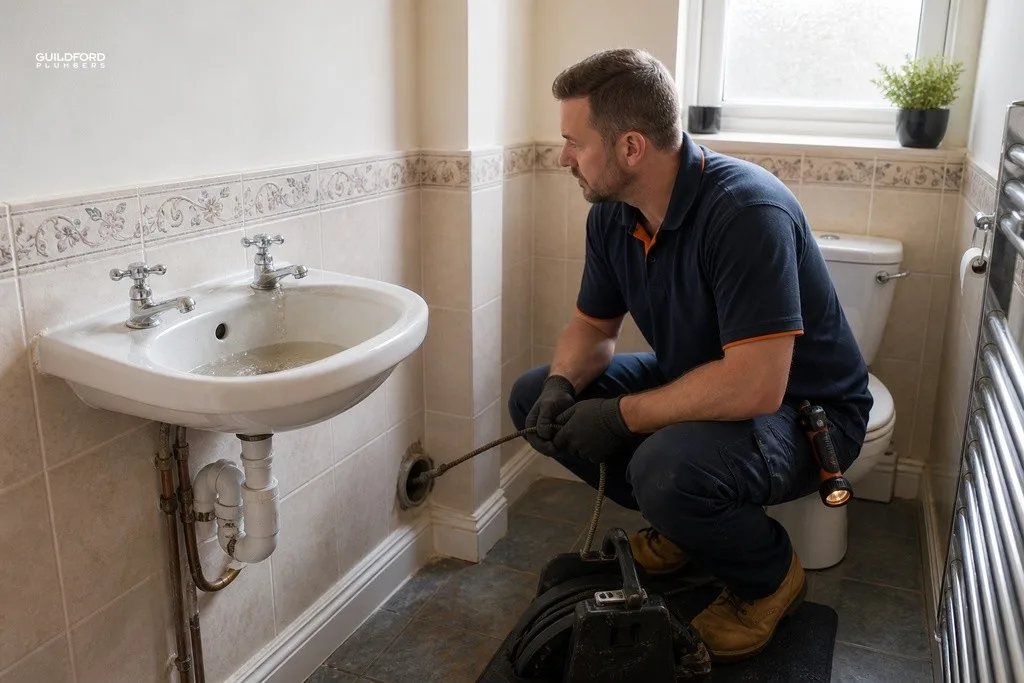
When a slow draining toilet fix goes beyond what a homeowner can safely attempt, the team at Guildford Plumbers takes a methodical approach to finding the real cause. The first step is always to determine whether the issue is confined to the toilet itself, the trap, or the shared drainage further along the system, because the correct solution is different in each case and treating the wrong part of the system wastes time and money.
With over 12 years of experience serving homes across Guildford, Godalming, Woking, and the surrounding Surrey area, the team has encountered and resolved the full range of drainage and toilet faults that properties in this part of the county are prone to, including the limescale and hard water issues that are particularly common here. Guildford Plumbers offers a fast local response with no call-out fee, meaning you can get an accurate assessment without any upfront commitment. If you have been searching for guidance on how natural way to unclog toilet problems that keep coming back, having a properly trained plumber assess the drainage rather than masking the symptom is the most reliable long-term solution.
Preventing Slow Flush Problems Before They Return
Most slow flushing toilet issues are preventable with a few consistent habits. In a hard water area like Surrey, descaling the rim jets and cistern components once or twice a year helps keep mineral build-up from reaching the point where it noticeably affects flush performance. Being strict about what goes into the toilet matters equally: flushing non-flushable items such as wet wipes, cotton pads, and sanitary products is one of the leading causes of partial blockages that gradually slow drainage over time, even when items appear to flush away without issue. For older properties or those with a history of drainage problems, both of which are common across Guildford and the surrounding villages, an annual plumbing check can catch early signs of scale build-up, flapper wear, or slow-developing blockages before they become urgent.
If you would like advice specific to your home or would prefer to have the toilet assessed by someone who knows the local drainage conditions well, the team at Guildford Plumbers is happy to help. Get in touch for a free quote and a fast, friendly response from a team your neighbours in Guildford already trust.
Frequently Asked Questions
What causes a toilet to flush slowly?
The most common causes are limescale blocking the rim jets, a low cistern water level, a worn flapper valve, a partial blockage in the trapway, or a blocked vent pipe. In hard water areas like Surrey, mineral build-up inside the bowl's waterways is particularly frequent and often goes unnoticed until the flush noticeably weakens.
Can I fix a slow flushing toilet myself?
Yes, in many cases. Checking the cistern water level, replacing a worn flapper valve, descaling the rim jets with white vinegar, and using a plunger or toilet auger on a partial blockage are all practical DIY steps. If none of these resolves the problem, the cause is likely further along the drainage system and a professional will be needed.
How do I descale the rim jets on my toilet?
Pour white vinegar or a proprietary descaling solution into the overflow tube inside the cistern and leave it overnight. Flush repeatedly the following morning to clear loosened deposits. A small mirror and a toothpick or piece of wire can help you identify and clear any remaining residue from individual jets.
When should I call a plumber for a slow flushing toilet?
Call a plumber if the toilet still drains slowly after DIY attempts, if gurgling sounds come from other fixtures when you flush, if more than one drain in the house is running slowly, or if a foul smell persists despite the toilet appearing clear. These are signs of a shared drainage or vent pipe issue.
Why does my toilet keep flushing slowly even after I clear it?
Recurring slow drainage usually means a partial blockage is reforming further along the soil stack, beyond the reach of a plunger. It can also point to a structural issue in the drain. A professional drain inspection will identify the exact location and cause so the problem can be resolved properly rather than repeatedly managed.