
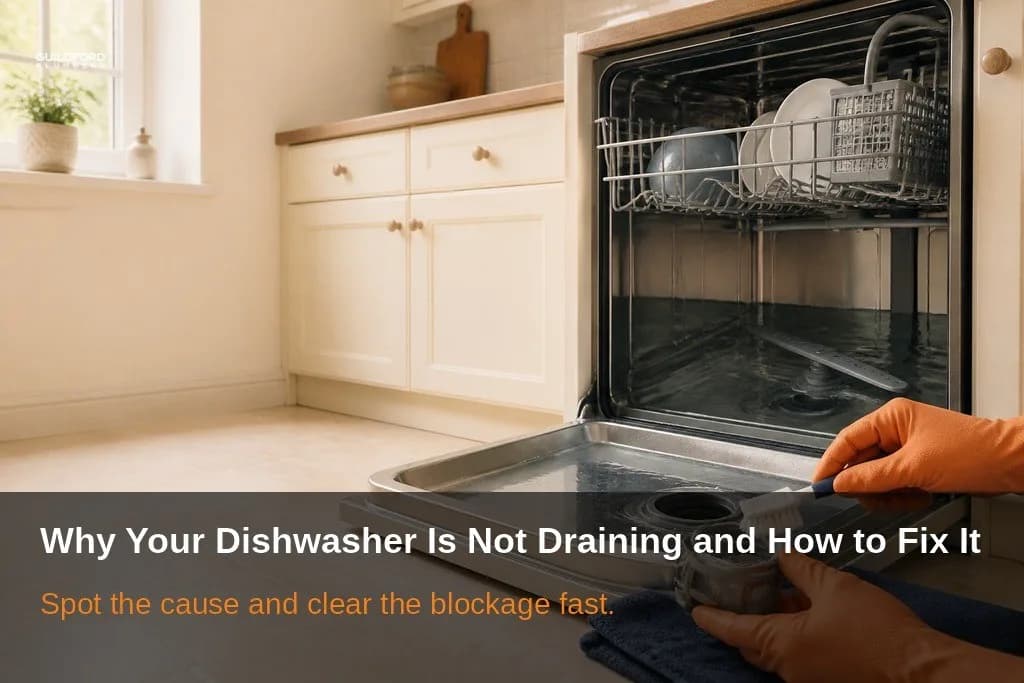
A dishwasher that will not drain is one of those household problems that demands attention quickly. Standing water at the bottom of the drum is unpleasant to deal with and can become a hygiene concern if left unresolved. Whether it happened after a single cycle or has been getting progressively worse over a number of weeks, knowing how to unclog a dishwasher can save you time and unnecessary stress. This guide covers how the drain system works, what typically causes blockages, and when it makes more sense to call a professional plumber than to keep trying yourself.
Dishwashers are genuinely efficient appliances when they are working properly. Research published in the International Journal of Consumer Studies found that households with a dishwasher used on average 50% less water and 28% less energy per cleaned item compared with households without one. That efficiency depends entirely on the machine working as intended, and a blocked drain is one of the most common reasons it stops doing so.
How a Dishwasher Drain System Works
Understanding the drainage path makes troubleshooting much easier. When a wash cycle finishes, a small drain pump pushes dirty water out of the tub and through a drain hose. That hose connects either to the underside of your kitchen sink or directly into the household waste pipe behind the worktop. A filter at the base of the drum catches food particles before they can reach the hose or pump. Every part of this chain needs to be clear and correctly fitted for the water to leave efficiently.
Blockages tend to form at predictable points: the filter basket, the drain hose connection, or the waste pipe junction under the sink. When any one of these is obstructed, water backs up into the drum rather than clearing away.
Common Causes of a Clogged Dishwasher Drain
Most blockages trace back to a small number of causes. Food debris is the most frequent culprit, particularly when dishes are loaded without scraping off excess food first. Grease and detergent residue coat the inside of the drain hose over time and gradually reduce its flow capacity. A kinked drain hose is easy to overlook but just as effective at blocking drainage as a physical obstruction. If the shared kitchen waste pipe is blocked, the dishwasher cannot drain even if the appliance itself is in perfect working order.
Consumer habits play a meaningful role too. The same research notes that in 20% of dishwasher cycles, baskets were only slightly filled, which reduces efficiency and can increase the likelihood of residue build-up. Double-dosing detergent and inconsistent loading patterns also contribute to the debris that accumulates inside the drain system, which explains why blockages often develop gradually rather than appearing suddenly.
| Cause | Location in System | How It Develops |
|---|---|---|
| Food debris | Filter basket | Builds up when dishes are loaded without scraping first |
| Grease and detergent residue | Drain hose | Coats the interior gradually, reducing flow capacity |
| Kinked drain hose | Drain hose | Caused by compression from surrounding cupboard furniture or poor routing |
| Blocked kitchen waste pipe | Shared waste pipe under sink | Affects dishwasher and sink simultaneously; unrelated to the appliance itself |
Signs Your Dishwasher Drain Is Blocked
Standing water in the drum after the cycle ends is the clearest indicator. Gurgling sounds during or after a cycle suggest air is being displaced as water struggles to exit through a partial blockage. Slow drainage (where water eventually clears but takes far longer than usual) and unpleasant smells from the drum or drain area are also reliable warning signs, often pointing to food debris or stagnant water trapped in the filter or hose.
How to Unclog a Dishwasher Drain Yourself
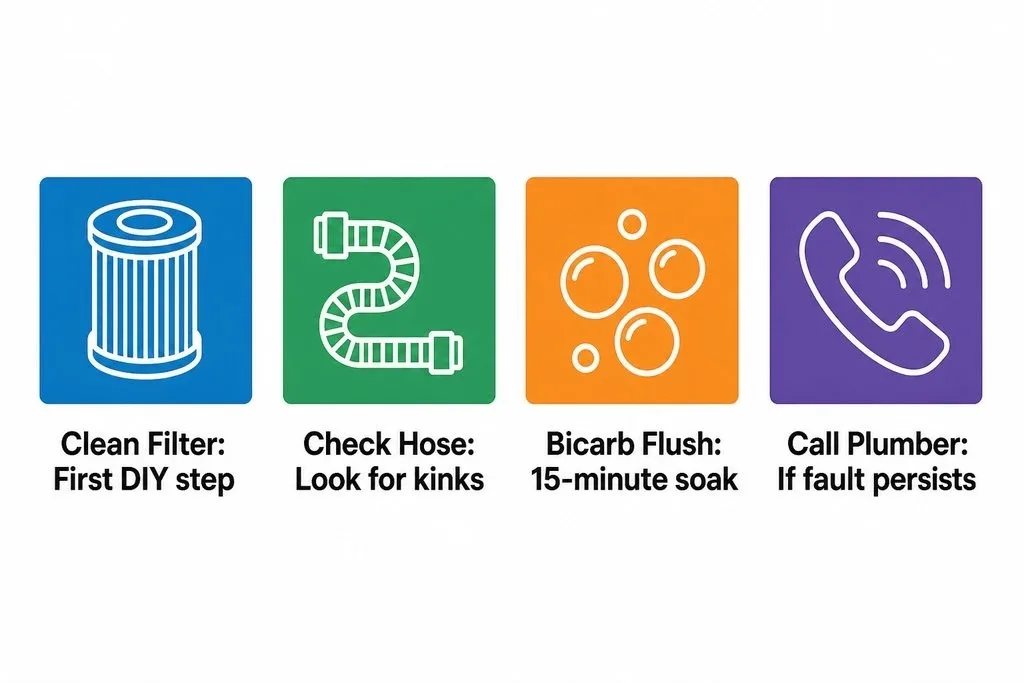
Before calling anyone, try these steps at home. Switch off the dishwasher at the mains and remove any standing water from the drum using a cup or towel. This gives you clear access to the filter and drain basket. Do not run the dishwasher again until you have identified and resolved the cause, as repeated cycling can push debris further into the system.
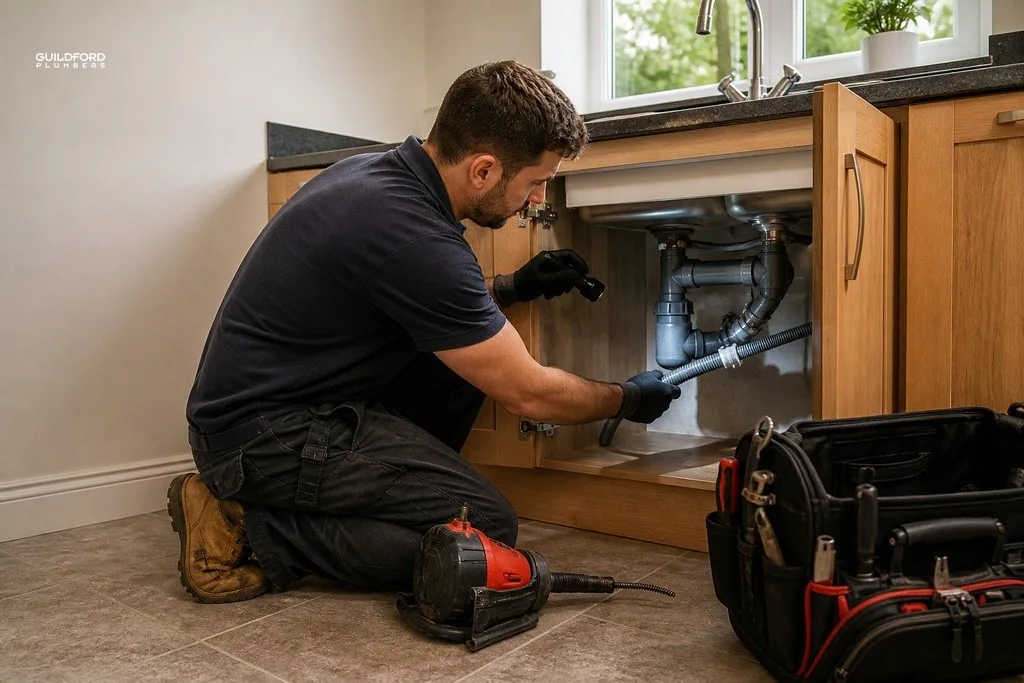
Next, check the drain hose. Pull the dishwasher slightly forward if possible and inspect the hose running from the back of the appliance to the waste connection under the sink. Look for kinks, compression from surrounding cupboard furniture, or visible debris at the connection points. A hose that dips too low or is improperly looped can trap water and mimic a blockage.
How to Clean the Dishwasher Filter and Drain
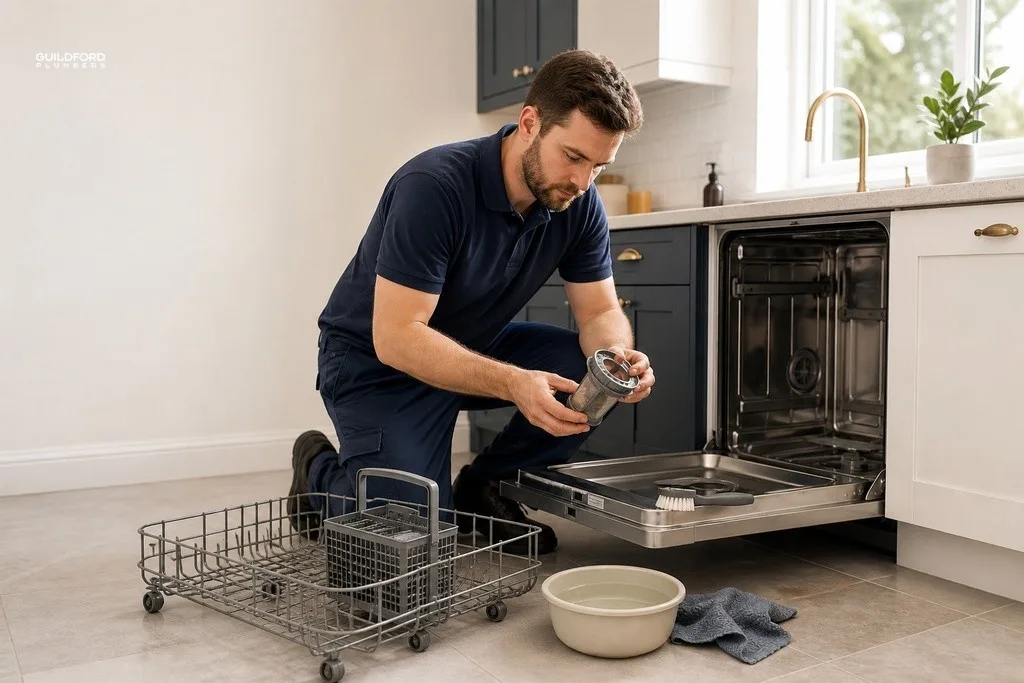
Cleaning the filter is the most straightforward starting point. Follow these steps:
- Lift out the lower basket and locate the cylindrical filter at the base of the drum.
- Twist it anticlockwise to release it, as most models work this way.
- Rinse it thoroughly under warm running water, using a soft brush to remove compacted food debris or grease.
- While the filter is out, wipe the drain basket area beneath it with a cloth or sponge.
- Refit the filter firmly before running a test cycle, as a loosely seated filter allows debris to bypass it entirely.
Using a Dishwasher Drain Cleaner Safely
If cleaning the filter does not resolve the problem, a natural flush can help shift grease and residue further into the system. Pour a cup of bicarbonate of soda into the base of the drum, follow it with a cup of white vinegar, leave the mixture to work for around fifteen minutes, then run a hot cycle to flush it through. This method is gentle on seals and pipework.
If you choose a shop-bought dishwasher drain cleaner, look for products specifically labelled as safe for dishwashers. Avoid strong caustic drain cleaners designed for sinks or shower drains, as these can damage rubber seals, the pump, and plastic components inside the appliance.
When a DIY Fix Is Not Enough
Some situations call for professional help. Stop and call a plumber if the filter is clean, the hose is clear, and the natural flush has made no difference. If other outlets such as the kitchen sink are also draining slowly, this points to a blockage in the main household waste pipe rather than the appliance itself. A blockage that keeps returning within days of being cleared suggests an underlying issue rather than a simple build-up. If the drain pump has seized or failed mechanically, no amount of cleaning will restore drainage.
Attempting to dismantle the pump yourself or using improvised tools to probe deeper pipework risks causing further damage and could affect any remaining manufacturer warranty. Knowing when to stop is genuinely cost-effective.
| Situation | Recommended Action |
|---|---|
| Filter is clogged with food debris or grease | DIY: clean the filter and run a test cycle |
| Drain hose is kinked or poorly routed | DIY: reposition the hose and check connections |
| Residue build-up in the drain line | DIY: use a bicarbonate of soda and vinegar flush |
| Filter clean, hose clear, flush made no difference | Call a plumber |
| Kitchen sink also draining slowly | Call a plumber, as a shared waste pipe blockage is likely |
| Blockage returns within days of clearing | Call a plumber, as an underlying fault is suspected |
| Drain pump has seized or failed mechanically | Call a plumber for mechanical repair |
What a Local Guildford Plumber Can Do That You Cannot
A professional plumber brings diagnostic tools and techniques that are not practical for home use. Drain blockages deeper in the waste system can be located and cleared using specialist equipment, and a plumber can assess whether the drain line needs replacing or re-routing. Where the fault involves the pump or a mechanical component, a tradesperson can identify it quickly and advise on the most cost-effective route forward.
Dishwasher drainage problems are often connected to wider issues in the kitchen waste system. The same blocked pipe preventing your dishwasher from draining may also be causing your sink to drain slowly. This is distinct from needing to unclog kitchen sink or unclog washing machine drain faults, which each have their own causes and solutions, but all of these drainage issues can be assessed and resolved in a single visit when you have a reliable local plumber on hand.
What to Check Before Calling a Plumber in Surrey
A few quick checks before booking a visit can save time and help you give accurate information when you make contact. Confirm whether the dishwasher is still under manufacturer warranty, as certain repairs may be covered. Establish whether the blockage is affecting only the dishwasher or other outlets such as the kitchen sink as well. Check that the drain hose is securely connected at both ends and free from visible kinks, and consider whether the filter has been cleaned recently or neglected for an extended period.
Having clear answers to these questions means a plumber can attend with the right tools and a realistic idea of what they will find. It also helps determine whether the problem sits with the appliance itself or within the broader household drainage system.
Unclog Your Dishwasher with Help from Guildford Plumbers
At Guildford Plumbers, our team handles dishwasher drainage problems as part of a wider range of drain blockages and plumbing faults across Guildford, Surrey and the surrounding areas. With over 12 years of local experience, we understand how household drainage systems in this part of Surrey are typically configured, which helps us locate and clear blockages efficiently without unnecessary disruption to your home. Whether it is a straightforward blocked dishwasher pipe or a more involved fault within the main waste system, we have the tools and knowledge to resolve it properly.
We offer free quotes and operate with no call-out fee, so you will always know where you stand before any work begins. Our 24/7 emergency availability means that if your dishwasher is not draining and you need an urgent fix, you do not have to wait until the next working day. Get in touch with Guildford Plumbers today and let us sort the problem quickly, professionally, and at a fair price.
Frequently Asked Questions About Unclogging a Dishwasher Drain
Why is there standing water at the bottom of my dishwasher?
Standing water usually means the drain is blocked. The most common cause is a clogged filter, though a kinked drain hose or a blocked kitchen waste pipe can produce the same result. Check and clean the filter first, as it is the quickest and easiest component to inspect.
How often should I clean my dishwasher filter?
Once a month is a practical target for most households. If you run the machine frequently or load dishes without scraping food off first, you may need to clean it more often. Regular maintenance is the most reliable way to prevent drainage problems from developing.
Is bicarbonate of soda and vinegar safe to use in a dishwasher?
Yes, this combination is safe for most dishwashers and gentle on rubber seals and internal pipework. Pour bicarbonate of soda into the drum, add white vinegar, leave it for fifteen minutes, then run a hot cycle. Avoid caustic drain cleaners designed for sinks, as these can damage the pump and seals.
When should I call a plumber rather than fixing the dishwasher myself?
Call a plumber if cleaning the filter and flushing the drain has not worked, if the blockage keeps coming back, or if your kitchen sink is also draining slowly. Recurring or widespread drainage problems often point to a blocked household waste pipe or a mechanical fault that requires professional tools to diagnose.
Could a blocked dishwasher drain affect my kitchen sink?
Yes, because the dishwasher and kitchen sink often share the same waste pipe. A blockage in that shared pipe can cause both to drain poorly at the same time. If your sink slows down alongside your dishwasher, the fault is likely in the waste pipe rather than in either appliance individually.
Do Guildford Plumbers charge a call-out fee for dishwasher drain problems?
No. Guildford Plumbers operate with no call-out fee and provide free quotes before any work begins. With 24/7 emergency availability, you are not limited to standard working hours if you need an urgent fix.