Key Takeaways
A slow draining bathroom sink is usually caused by hidden buildup in the pop up stopper, P trap, or vent pipe rather than a visible surface clog.
- The pop up stopper is the most overlooked cause of a slow draining bathroom sink. Hair and soap scum collect around the pivot rod beneath the stopper, restricting flow even when the drain looks clear from above.
- Cleaning the pop up stopper and rinsing out the P trap are safe, practical first steps that require no specialist tools and resolve the issue in many cases.
- A gurgling sound alongside slow drainage often points to a blocked vent pipe on the roof rather than a clog in the drain itself, and this requires a professional to assess.
- Hard water mineral deposits common in areas like Surrey can gradually narrow the inside of pipes over time, producing a slow drain with no visible blockage.
- If drainage remains slow after completing all DIY steps, or if multiple fixtures are draining slowly at once, contact a qualified plumber as the problem likely involves shared pipework or the main drainage line.
A slow draining bathroom sink is easy to dismiss at first. The water clears eventually, so you carry on. But when the problem lingers for weeks without resolving, it starts to feel like something more serious is lurking beneath the surface. The confusing part is that when you look down the drain, nothing obvious is blocking it. No hair, no visible debris, just a drain that refuses to do its job properly.
This situation is more common than most homeowners realise, and the causes are rarely what they expect. Understanding why a bathroom sink drains slowly requires looking past the drain opening and into the hidden parts of your plumbing system. This article walks through the most likely culprits, explains what you can safely investigate on your own, and helps you recognise when the problem calls for a professional.
Why a Bathroom Sink Drains Slowly With No Obvious Clog
When there is no visible blockage at the surface, the most likely explanation is a partial buildup inside the pipe. This narrows the pipe diameter enough to restrict water flow, producing symptoms that feel identical to a complete obstruction, but the problem is hidden further along the waste system where a quick visual check cannot reach.
Buildup tends to accumulate deeper in the system, well past the drain opening. Standard DIY advice focuses on clearing what is visible at the surface, which works when hair or debris sits near the top. But factors like drain venting, partial pipe narrowing, and the pop-up stopper mechanism are frequently overlooked. Getting to the actual cause requires a methodical approach, starting with the component most people forget is even there.
The Pop-Up Stopper Is Often the Real Culprit
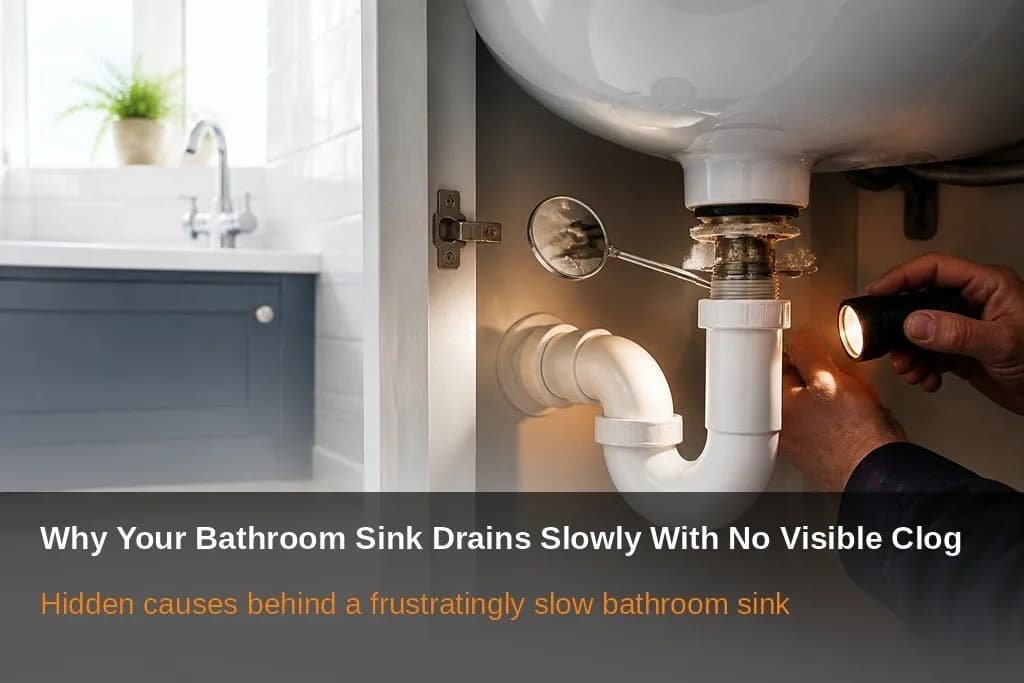
Most bathroom sinks are fitted with a pop-up stopper, the small plug mechanism controlled by the rod or lever near the back of the tap. It is a convenient feature, but it is also one of the most effective grime traps in your entire bathroom. Pop-up stoppers accumulate buildup around the pivot rod and underneath the stopper itself, causing slow drainage even when the drain appears clear from above. Because the grime sits below the visible surface, it goes unnoticed until drainage has slowed considerably.
Hair wraps around the pivot rod, soap scum binds it together, and a layer of biofilm develops across the underside of the stopper assembly over time. The result is a partial restriction that narrows the drain opening without fully closing it. Water still drains, just far more slowly than it should. This is why the pop-up stopper is almost always the right first place to check before investigating anything further down the pipe.
How to Clean a Bathroom Sink Pop-Up Stopper
Removing and cleaning the pop-up stopper requires no special tools. Most stoppers lift straight out by rotating them slightly and pulling upward. If yours does not lift freely, reach under the sink, locate the horizontal pivot rod connected to the drain pipe, squeeze the clip holding it in place, and slide the rod back just enough to release the stopper from above. Once the stopper is out, follow these steps:
- Remove any hair or debris wrapped around the stopper and pivot rod by hand or with an old toothbrush.
- Soak the stopper in warm water with a small amount of dish soap to loosen soap scum and biofilm.
- Scrub all surfaces thoroughly, paying close attention to the underside and the groove where the pivot rod passes through.
- Clean the inside of the drain opening with a flexible drain brush or a folded cloth.
- Reinsert the stopper, reconnect the pivot rod if removed, and test drainage with running water.
Partial Obstructions Further Down the Drain
If cleaning the stopper does not resolve the issue, the restriction is likely sitting further along the waste pipe. Toothpaste residue, soap, and general bathroom grease do not flush cleanly through the system every time. Over weeks and months, they cling to the inside walls of the pipe and gradually narrow the flow path, which is why a slow draining sink with no visible clog can persist for a long time before anyone thinks to investigate.
This gradual buildup is easy to miss during a basic visual check because the drain opening may look perfectly clear. The restriction typically sits around a bend or a short distance along the horizontal section of waste pipe, well out of sight. Running hot water down the drain occasionally can help loosen light buildup, but it rarely clears a well-established partial obstruction on its own.
What the P-Trap Can Tell You
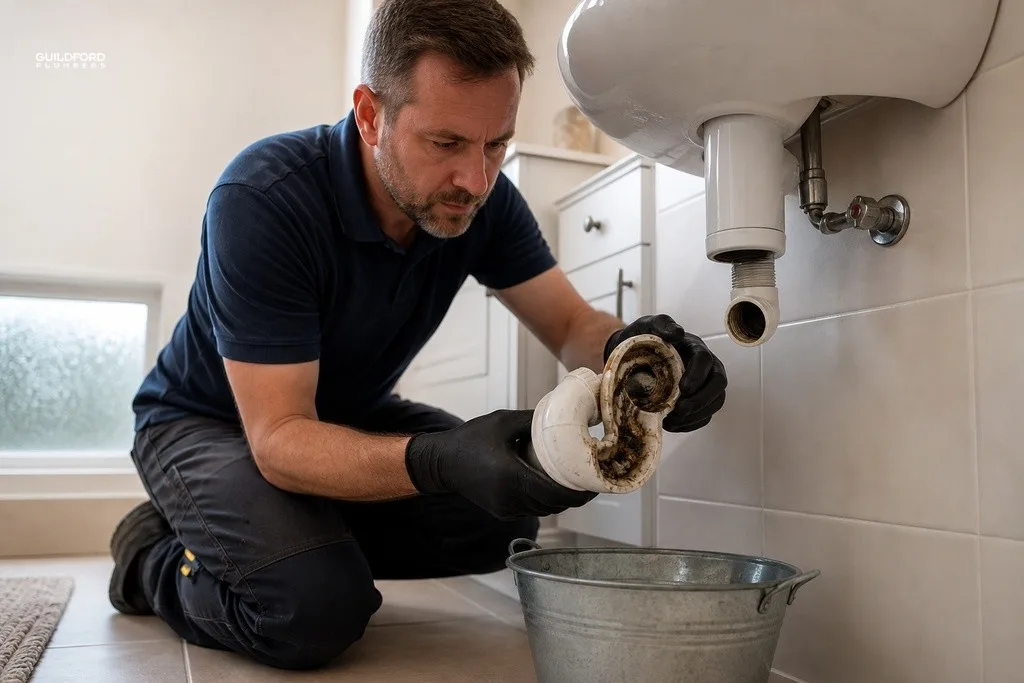
The P-trap is the curved section of pipe directly beneath the sink, shaped to hold a small amount of water at all times. That standing water acts as a seal against sewer gases, but the trap itself is also a natural collection point for debris. Hair and soap scum often bind together inside the P-trap where the curve slows water flow, making it one of the most common causes of a slow draining bathroom sink.
You can safely check the P-trap by placing a bucket beneath it, unscrewing the two slip nuts by hand, and carefully lowering the trap away from the pipe connections. The inside of the trap will usually tell you right away whether buildup is the issue. A thorough rinse and reinstallation can restore good drainage if the trap is the source of the problem. If the trap is clear, the blockage lies further into the waste pipe and may require a drain snake to dislodge.
Could a Blocked Vent Be Causing the Slow Drainage?
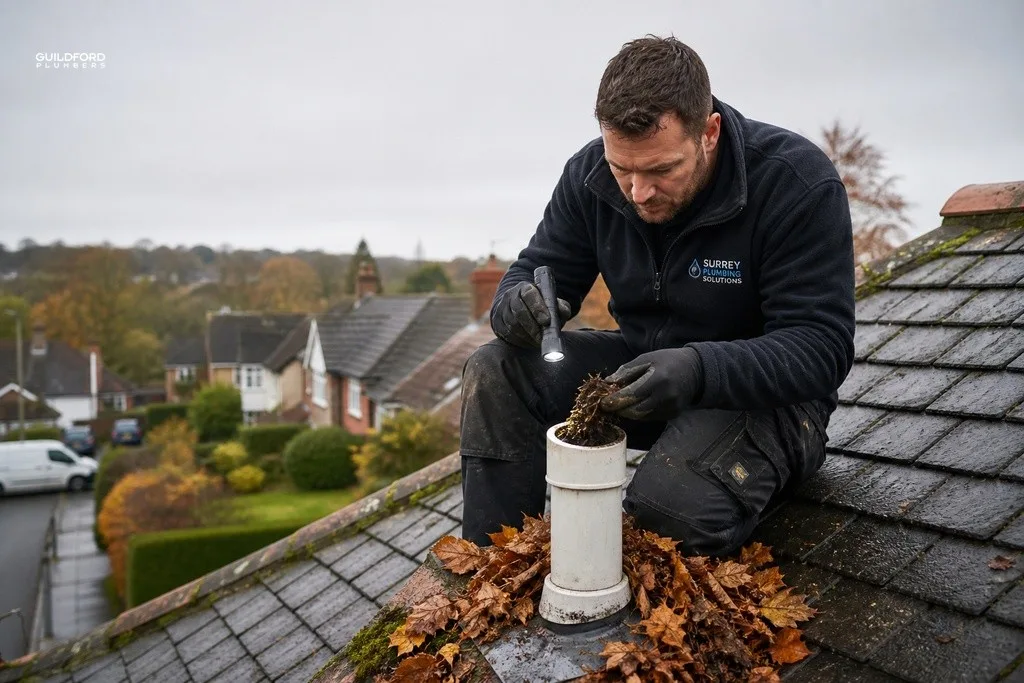
One of the least obvious reasons a bathroom sink drains slowly with no clog involves the plumbing vent system rather than the drain pipes themselves. Every drain in your home is connected to a vent pipe that runs up through the roof, allowing air into the system so that water can flow freely. When that vent becomes blocked by a bird's nest, leaf debris, or ice in winter, the resulting pressure imbalance slows drainage throughout the connected fixtures.
A slow, gurgling drain that is otherwise clear may point to a blocked vent on the roof rather than a clog in the pipe. Venting problems are rarely visible from inside the home, and because the symptoms closely mimic those of a standard blockage, they are frequently misdiagnosed. If you have already cleaned the stopper and checked the P-trap without improvement, and you are also noticing a gurgling sound as the sink drains, a blocked or poorly designed vent pipe should be on your list of possibilities. This is not something most homeowners can diagnose or resolve without professional help.
Other Hidden Causes Worth Ruling Out
Beyond the pop-up stopper, the P-trap, and the vent system, a few additional factors can produce the same slow-drain symptom.
Hard water mineral buildup is a factor in areas like Surrey, where calcium and magnesium deposits can accumulate inside pipes over time, according to Drain 365. This progressive narrowing is invisible from the outside but gradually reduces the available flow path. Older properties in Guildford with ageing pipework are particularly susceptible.
A partially closed supply valve beneath the sink that has been accidentally turned can reduce water pressure and create the impression of a drainage issue, so it is worth a quick check before investigating further.
Multiple slow drains at once suggest the problem is likely in a shared section of waste pipe or the main drainage line rather than the individual sink. When this is accompanied by a sewage smell, it signals a deeper issue that goes well beyond basic home maintenance.
| Cause | Where It Sits | Key Symptom | DIY Accessible? |
|---|---|---|---|
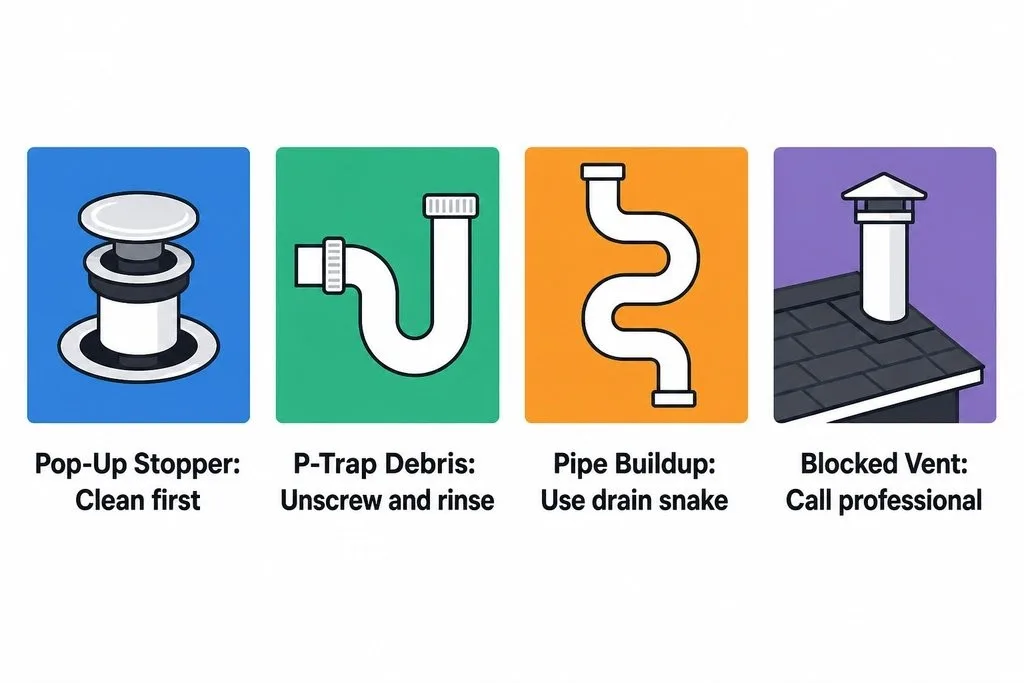
| Pop-up stopper buildup | At the drain opening | Slow drain, drain looks clear from above | Yes — lift out and clean |
| P-trap debris | Directly beneath the sink | Slow drain, possible odour | Yes — unscrew and rinse |
| Pipe wall buildup | Along the horizontal waste pipe | Gradual slowing over weeks or months | Partially — drain snake may help |
| Blocked vent pipe | Roof-level vent stack | Slow drain with gurgling sound | No — requires professional |
| Hard water mineral deposits | Inside pipe walls | Progressively narrowing flow, no visible clog | No — requires professional |
| Shared drain or main line blockage | Deeper waste or main line | Multiple fixtures draining slowly, sewage odour | No — requires professional |
What You Can Safely Try at Home First
Before calling a plumber, work through these steps in order:
- Clean the pop-up stopper — this resolves the issue in a surprisingly high proportion of cases.
- Flush with very hot water — this can soften soap or grease buildup sitting just beyond the stopper.
- Check and clean the P-trap — place a bucket underneath, unscrew the slip nuts, rinse the trap thoroughly, and reinstall.
- Try a drain snake — use it through the upper section of the waste pipe to dislodge debris sitting just beyond the trap.
These steps carry very little risk and require no specialist equipment. That said, they will not resolve a venting problem, clear mineral deposits from deep within the pipework, or reach an obstruction in a shared drain or main line. Chemical drain cleaners, used regularly, can corrode pipework over time, particularly in older homes, as Checkatrade points out, so they are best treated as a last resort rather than a routine fix. If these steps do not produce a clear improvement, the cause likely requires a professional diagnosis.
| Step | What It Targets | Tools Needed | Likely to Resolve Issue? |
|---|---|---|---|
| Clean the pop-up stopper | Hair, soap scum, and biofilm at the drain opening | Toothbrush, dish soap | High — very common cause |
| Flush with very hot water | Light soap or grease buildup just past the stopper | None | Low to medium — helpful for minor buildup |
| Check and clean the P-trap | Debris collected at the pipe curve beneath the sink | Bucket, adjustable pliers | Medium to high — common secondary cause |
| Use a drain snake | Debris further along the waste pipe past the trap | Drain snake | Medium — depends on blockage location |
When to Call a Local Plumber in Guildford, Surrey
Some signs mean it is time to stop troubleshooting and contact a qualified plumber. Drainage that remains slow after working through all the DIY steps, gurgling sounds from the drain or nearby fixtures, a sewage odour around the sink, and multiple fixtures draining slowly at the same time are all indicators that the problem runs deeper than a surface-level obstruction. Attempting to unclog bathroom sink issues that originate in the vent system or main drainage line without the right equipment can make the situation worse and potentially cause water damage.
Guildford Plumbers has been serving homeowners and businesses across Guildford, Surrey and the surrounding areas for over 12 years. Their Gas Safe Registered engineers are experienced in diagnosing drainage problems that go beyond the obvious, from partial pipe buildup and P-trap obstructions to vent blockages and ageing pipework that has gradually narrowed over time. There is no call-out fee, response times are fast, and free quotes are available, so getting professional clarity on the issue carries no financial risk. If your bathroom sink is still draining slowly after trying the steps above, reach out to the team at Guildford Plumbers for an honest assessment and a lasting solution.
Frequently Asked Questions About a Slow Draining Bathroom Sink
Why is my bathroom sink draining slowly when there is no visible clog?
A slow drain with no visible clog usually means buildup is accumulating inside the pipe, out of sight. Soap scum, biofilm, and hair often collect around the pop-up stopper or inside the P-trap, narrowing the flow path without forming a complete blockage at the surface.
Can I fix a slow draining bathroom sink myself?
Yes, in many cases. Cleaning the pop-up stopper, flushing with hot water, and clearing the P-trap can resolve the problem without specialist tools. If those steps do not help, the cause may involve the vent system or deeper pipework, which generally requires a plumber.
What is a pop-up stopper and why does it affect drainage?
A pop-up stopper is the small plug in your sink drain controlled by a lever near the tap. Hair wraps around its pivot rod and soap scum builds up beneath it over time, creating a partial restriction that slows drainage even though the drain looks clear from above.
How do I know if a blocked vent pipe is causing my slow drain?
A blocked vent often produces a gurgling sound as the sink drains, alongside sluggish water flow. If cleaning the stopper and P-trap does not improve drainage and you hear gurgling, a blocked roof vent is a possible cause and is worth a professional assessment.
Is it safe to use chemical drain cleaners on a slow draining sink?
Chemical drain cleaners can offer a short-term fix, but regular use can corrode pipework over time, particularly in older homes. They are best treated as a last resort, and mechanical methods like cleaning the stopper or using a drain snake are safer first steps.
When should I call a plumber for a slow draining bathroom sink?
Call a plumber if the drain remains slow after trying all DIY steps, if you notice gurgling sounds or a sewage odour, or if multiple fixtures in your home are draining slowly at the same time. These signs point to a deeper issue in the shared pipework or main drainage line.