
Key Takeaways
Guildford homeowners can choose the right air conditioning unit by calculating BTU accurately using room size, insulation, and local housing conditions.
- BTU measures how much heat an air conditioning unit removes per hour, so matching this figure to your room size is more important than choosing the highest rated unit available.
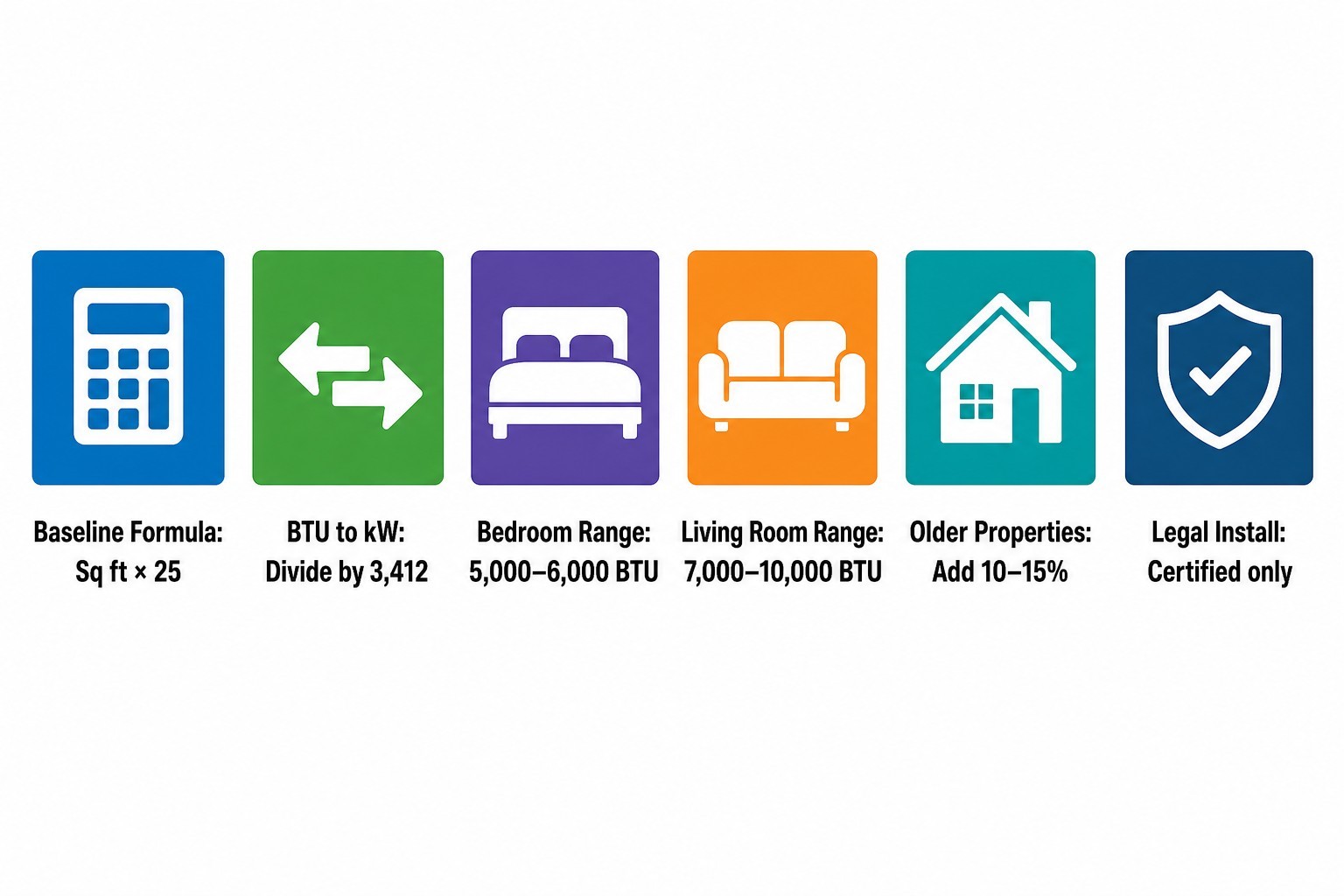
- Start your aircon BTU calculation by multiplying room length by width in feet, then multiply by 25 for a baseline figure, and adjust upward for older properties, south facing rooms, or poor insulation.
- To convert BTU to kW for air conditioning comparisons, divide the BTU figure by 3,412, so 9,000 BTU equals roughly 2.6 kW of cooling capacity.
- Kitchens, conservatories, and loft conversions need considerably higher BTU ratings than floor area alone suggests, due to appliance heat and direct roof exposure.
- Professional installation is legally required for refrigerant systems in the UK, and a qualified installer can assess your home accurately where online tools fall short.
If you have ever stood in a sweltering living room wondering why your air conditioning unit is struggling to cope, the answer often comes down to one number: BTU. Getting that number right is the single most important step in choosing a system that actually works for your home. This guide helps Guildford homeowners understand what the figures mean and make a confident decision before spending a penny on installation.
Whether you are cooling a compact bedroom in a Victorian terrace or an open-plan kitchen extension, the same principle applies: size matters. An undersized unit runs constantly and still leaves you uncomfortable. An oversized one short-cycles, fails to remove enough moisture from the air, and leaves the room feeling damp and clammy. The goal is a unit matched precisely to your space.
What Is BTU in Air Conditioning?
BTU stands for British Thermal Unit. In air conditioning, it measures the amount of heat a unit can remove from a room per hour, not the coldness it pushes in. Think of it as a removal rate rather than a temperature dial. The higher the BTU rating, the more heat the system can extract within a given timeframe.
A common misconception is that a higher BTU always means better performance. In practice, a unit that is too powerful for a room cools the air too quickly, switches off before completing a full cycle, and leaves excess humidity behind. BTU is about matching capacity to the actual heat load of the space, not raw power.

How to Calculate BTU for Air Conditioning
The core calculation starts with floor area. Follow these three steps to find your baseline figure:
- Measure the room length and width in feet
- Multiply length by width to get square footage
- Multiply square footage by 25 to get your baseline BTU figure
For example, a room measuring 12 feet by 15 feet gives you 180 square feet, which translates to an approximate starting point of 4,500 BTU per hour. This baseline is then adjusted depending on the additional factors covered below.
How to Convert BTU to kW
When shopping for units in the UK, specifications are often listed in kilowatts rather than BTU. The conversion is straightforward: divide the BTU figure by 3,412 to get kilowatts. So 9,000 BTU is roughly equivalent to 2.6 kW of cooling capacity. This matters because some manufacturers list only one unit of measurement while retailers may use the other.
Why Guildford Homes Need a Different Approach
Standard BTU formulas are built around modern, well-insulated properties. Guildford and the surrounding areas, including Merrow, Burpham, Shalford, and the older streets closer to the town centre, have a significant proportion of older housing stock. Victorian and Edwardian terraces, sash windows with draughty frames, and solid brick walls that lack cavity insulation are common throughout the borough. These features mean heat enters and escapes more readily, so standard calculations can underestimate real demand.
Solid walls absorb heat during the day and release it slowly through the evening. Poorly fitted sash windows allow warm air in during peak afternoon heat. If your property has these characteristics, adding a buffer of at least 10 to 15 per cent on top of your baseline BTU figure will bring your estimate closer to the actual demand on a warm Surrey summer day.
How Many BTU Does Each Room Need?
Working out how many BTU a room needs means thinking about each space individually. Typical starting points are:
- Small double bedroom (around 100 sq ft): 5,000 to 6,000 BTU
- Medium living room (150 to 250 sq ft): 7,000 to 10,000 BTU
- Large open-plan kitchen and dining area: Base figure plus approximately 6,000 BTU for appliance heat
- Home office with multiple screens or server equipment: Bedroom range as a starting point, adjusted upward for sustained heat-generating devices
Several variables shift these figures in either direction. South-facing rooms receive more solar gain throughout the day, raising the effective heat load. Each additional occupant beyond two contributes approximately 600 BTU per hour of extra heat. Large single-glazed windows or skylights absorb more heat and require upward adjustments to any standard estimate, based on industry calculation references used by tools such as OmniCalculator.
| Room Type | Typical Size | Baseline BTU Range | Common Adjustment Factors |
|---|---|---|---|
| Small double bedroom | Around 100 sq ft | 5,000 to 6,000 BTU | South-facing, loft conversion, poor insulation |
| Medium living room | 150 to 250 sq ft | 7,000 to 10,000 BTU | Large windows, extra occupants, solar gain |
| Large open-plan kitchen/dining | Varies | Base figure plus approx. 6,000 BTU | Appliance heat, skylights, multiple occupants |
| Home office with equipment | Bedroom range | Adjusted upward | Screens, servers, sustained heat-generating devices |
Rooms That Need Special Consideration
Conservatories, loft conversions, and south-facing rooms are the spaces where standard estimates most frequently fall short.
A conservatory with a polycarbonate or glass roof can reach temperatures well above the rest of the house on a sunny Surrey afternoon. A loft conversion sits directly beneath the roof, absorbing radiant heat with very little insulation buffer between the tiles and the living space. Both room types typically require considerably higher BTU ratings than their floor area alone would suggest, whether you are in a detached house in Worplesdon or a semi in Onslow Village.
When a unit is undersized for these environments, it does not simply cool less effectively. It runs continuously at full capacity, accelerating wear and increasing running costs. According to the Energy Saving Trust, incorrectly sized air conditioners can use noticeably more energy than properly matched units, though the exact figure will vary depending on the property and system involved.

How to Use an Air Conditioner BTU Calculator Accurately
Online calculators are a helpful starting point, but they are only as accurate as the information you put into them. To get meaningful results from any air conditioner size guide tool, take proper measurements before you begin and resist the temptation to estimate.
Before entering any data, gather the following:
- Room dimensions: length, width, and ceiling height in feet or metres
- Window area and glazing type, including whether they face south
- Room use and typical number of occupants
- Heat-generating appliances such as ovens, computers, or gym equipment
- Insulation quality and wall construction type, particularly in older properties
Ceiling height deserves particular attention. The standard base calculation assumes a ceiling height of around 8 feet. For rooms with higher ceilings, such as period properties with original cornicing common in parts of central Guildford, adding approximately 1,000 BTU per hour for each extra foot above that baseline is a widely used rule of thumb. Entering accurate ceiling height data rather than accepting calculator defaults can meaningfully change the output.
What to Check Before Buying or Installing a Unit
Once you have a reliable BTU figure, the next decision is which type of system suits your home. The three main options are:
- Single-split systems serve one room with one indoor and one outdoor unit, ideal for bedrooms or home offices
- Multi-split systems connect several indoor units to a single outdoor condenser, suitable for homes where multiple rooms need cooling without multiple external installations
- Inverter technology allows the compressor to vary its speed rather than switching fully on and off, delivering more consistent temperatures and lower energy consumption over time
| System Type | Best For | External Units Required | Energy Efficiency |
|---|---|---|---|
| Single-split | Single room (bedroom, home office) | One per indoor unit | Good |
| Multi-split | Multiple rooms, minimal external fittings | One shared condenser | Good |
| Inverter technology | Consistent temperature control, lower running costs | Varies by system | High |
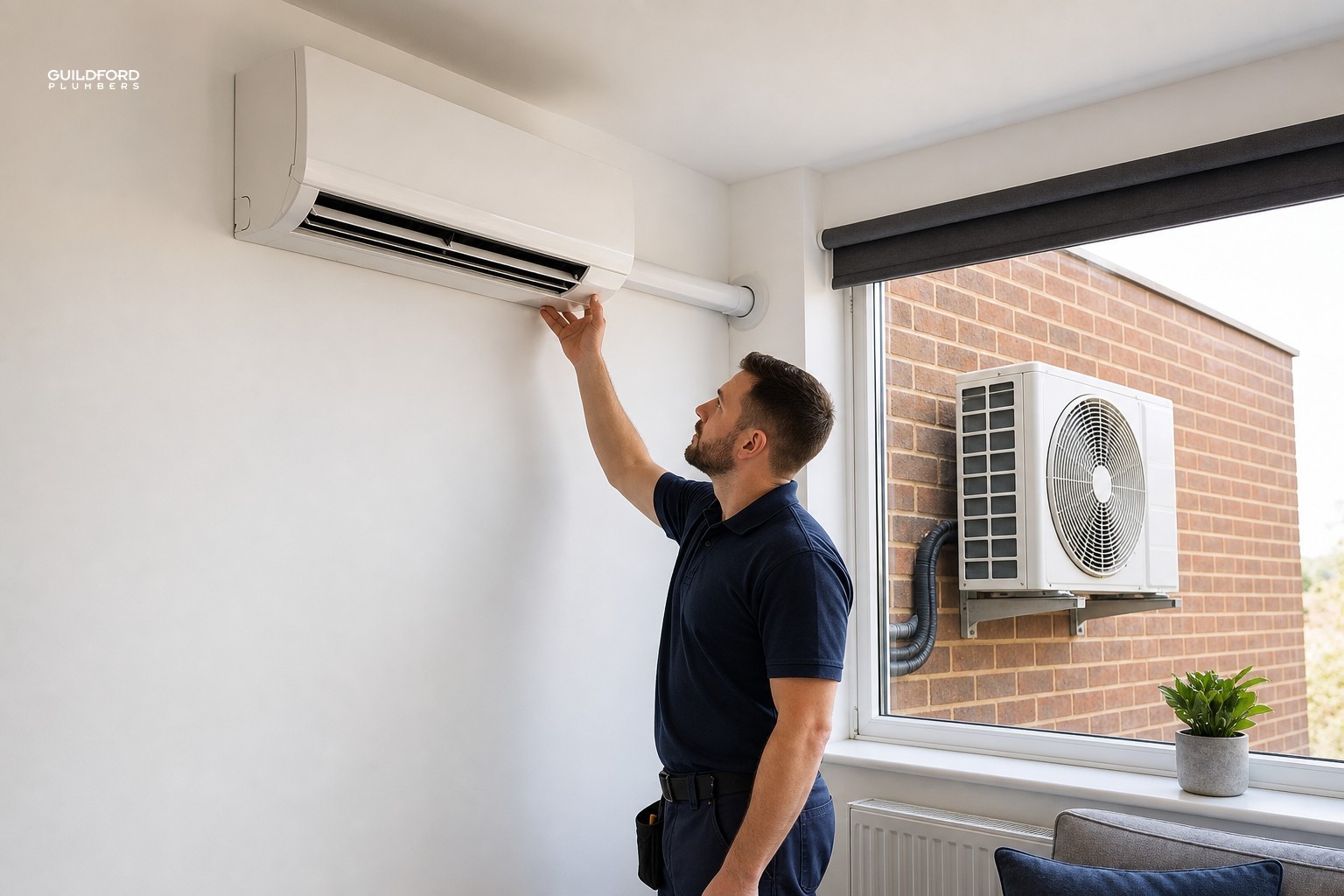
Indoor unit placement also affects performance. Positioning a unit above a door or on an internal wall away from direct sunlight gives it the best chance of distributing cool air evenly. The outdoor condenser should be installed on the shadiest side of the building where possible, typically north or east-facing in the UK, which improves efficiency and extends the unit’s working life.
Professional installation is not optional for refrigerant systems in the UK. Handling refrigerant gases is regulated, and electrical connections must comply with Part P of the Building Regulations. A qualified installer ensures the job is done legally and safely from the outset.
When to Call a Guildford Professional Instead of Sizing It Yourself
This guide and the online tools available will take most homeowners a long way toward the right answer. However, some situations genuinely require a professional assessment:
- Multi-room installations with linked systems
- Properties with existing underfloor heating or mechanical ventilation
- Unusual floor plans with open staircases or mezzanine levels
These scenarios introduce variables that no online calculator is built to handle. Attempting to size these setups without expert input often results in costly adjustments after installation.
A qualified installer can visit your property, assess the actual heat load across all spaces, and account for the specific characteristics of your building in a way no digital tool can replicate. Getting the sizing right from the start can make a real difference to long-term running costs, and the question of what size air conditioner do I need becomes much easier to answer when someone with hands-on experience in properties like yours is involved.
At Guildford Plumbers, we work in homes across this area every day, from newer builds on the outskirts to older terraces closer to the town centre. If you are planning to install air conditioning and want to be certain the sizing is right before you commit, get in touch with our team. We are happy to talk through your options and point you in the right direction, with the same straightforward, neighbourly service we bring to every job.
Frequently Asked Questions
What BTU do I need for a standard UK bedroom?
For a small double bedroom of around 100 square feet, a unit rated between 5,000 and 6,000 BTU is typically sufficient. Increase this if the room faces south, has poor insulation, or sits in a loft conversion where roof heat gain is significant.
Is it better to oversize or undersize an air conditioning unit?
Neither is ideal. An oversized unit short-cycles: it cools the air too fast, shuts off early, and leaves humidity in the room, making the space feel clammy and increasing long-term wear on the system. An undersized unit runs constantly without ever reaching a comfortable temperature. Accurate sizing consistently delivers better results than either extreme.
How do I convert BTU to kW for UK product listings?
Divide the BTU figure by 3,412 to get the kilowatt equivalent. For example, 9,000 BTU equals approximately 2.6 kW. This conversion is useful because UK retailers and manufacturers do not always use the same unit of measurement in their product specifications.
Do older Guildford properties need a higher BTU rating?
Generally, yes. Older properties with solid brick walls, single-glazed sash windows, or limited insulation lose and gain heat more readily than modern builds. A buffer of 10 to 15 per cent above the standard BTU estimate is a reasonable starting adjustment, though a professional assessment will give a more accurate result for your specific property.
Can I install an air conditioning unit myself in the UK?
Not legally if the system uses refrigerant gases. Handling refrigerants in the UK requires certification, and electrical work must comply with Part P of the Building Regulations. A qualified installer is required by law for most split-system air conditioning units.
How accurate are online BTU calculators?
Online calculators provide a useful starting estimate, but accuracy depends entirely on the data you enter. Ceiling height, wall construction, glazing type, and room orientation are easy to overlook. For complex layouts or older properties, a professional on-site assessment will always be more reliable.