Key Takeaways
Guildford homeowners can choose the right cooling system by comparing portable and split air conditioners across noise, cost, efficiency, and installation needs.
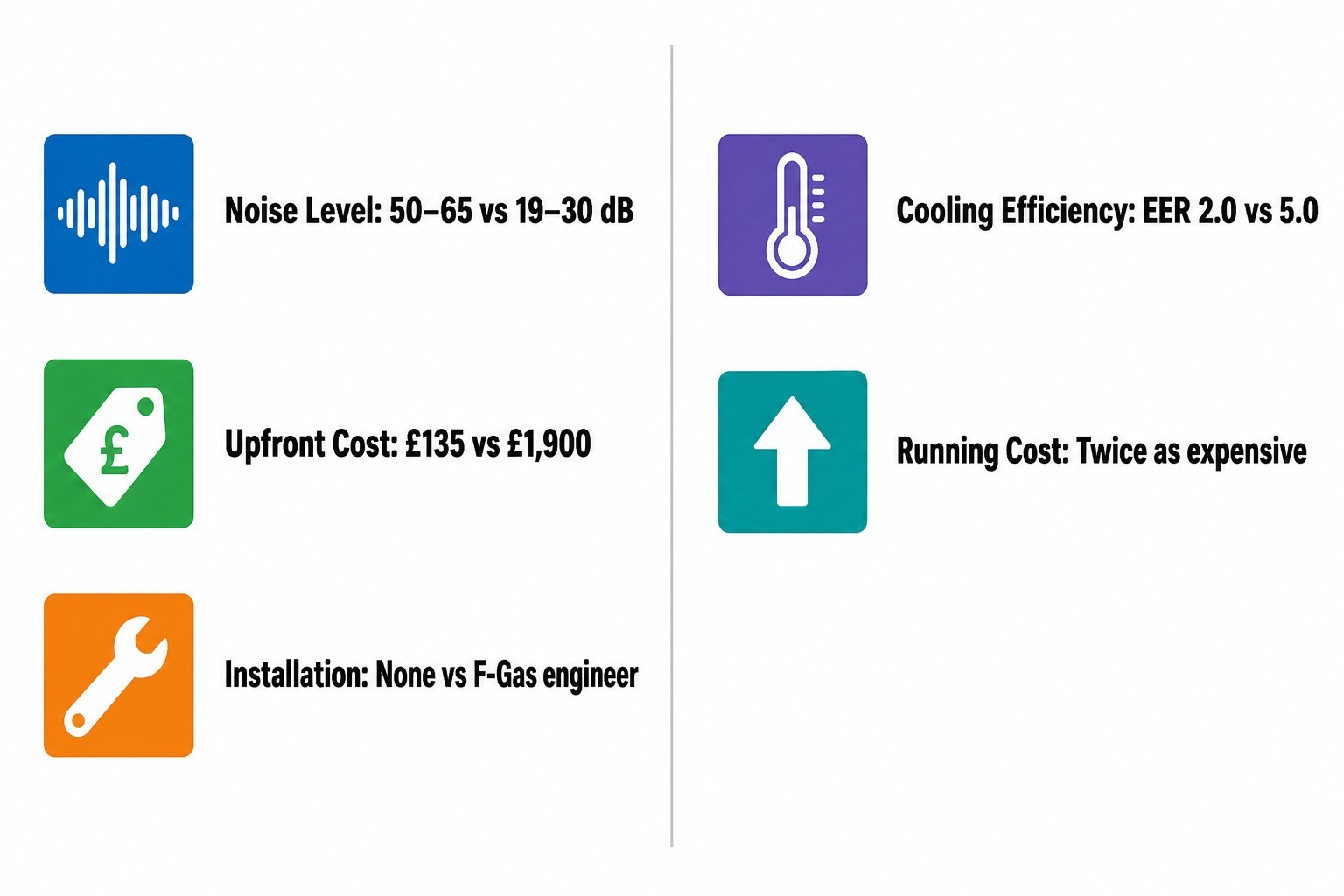
- Portable air conditioners suit renters or those needing temporary cooling in rooms up to 20 square metres, but they deliver only 50 to 65 percent of their rated cooling capacity and generate significant background noise of 50 to 65 dB.
- Split air conditioners operate nearly silently at 19 to 30 dB indoors, cost roughly half as much to run per unit of actual cooling delivered, and are far better suited to larger or permanent spaces.
- Upfront cost differs significantly: portable units start from around £135, while a professionally installed split system averages around £1,900 in 2025, though the long term running cost savings can offset this for homeowners.
- UK regulations require all refrigerant work on split systems to be carried out by an F Gas certified engineer; attempting this without proper qualifications is illegal and dangerous.
- Renters should check their tenancy agreement before considering a split system, as permanent structural changes typically require explicit landlord permission under UK rules.
When summer temperatures climb in Guildford and the surrounding areas, including Godalming, Woking, and the villages across the Surrey Hills, choosing the right cooling system becomes genuinely pressing. Both portable and split air conditioners have a place in the right home, but they serve very different needs. Picking the wrong one can mean poor cooling, higher bills, or a unit that simply cannot be installed in your property. This guide sits within the broader air conditioner buying guide and focuses on helping you match the right system to your actual home setup.
We will walk through how each system works, where each one genuinely excels, and which practical factors should shape your decision. The goal is simple: clear, honest information so you can choose with confidence.
Why the Right AC Type Matters More Than Price
It is tempting to shop on upfront cost alone, but purchase price is only part of the picture. The wrong type of unit for your room size, window configuration, or tenancy agreement can result in a system that never truly cools the space, runs expensively, or cannot legally be installed at all. A portable unit that looks affordable on the shelf may cost more to run than a properly installed split system over a single summer.
Getting the type right first means everything else, including comfort, cost, and convenience, falls into place more easily. This is especially relevant for homeowners in Guildford and across Surrey, where air conditioning is increasingly being considered a long-term household investment rather than an occasional luxury.

What Is the Difference Between a Portable and Split Air Conditioner?
At the most basic level, both systems cool a room but through very different means. One is a standalone appliance you can move around; the other is a fixed system built into your walls. Understanding how each works makes it immediately clearer which one suits your circumstances.
How Portable AC Units Work
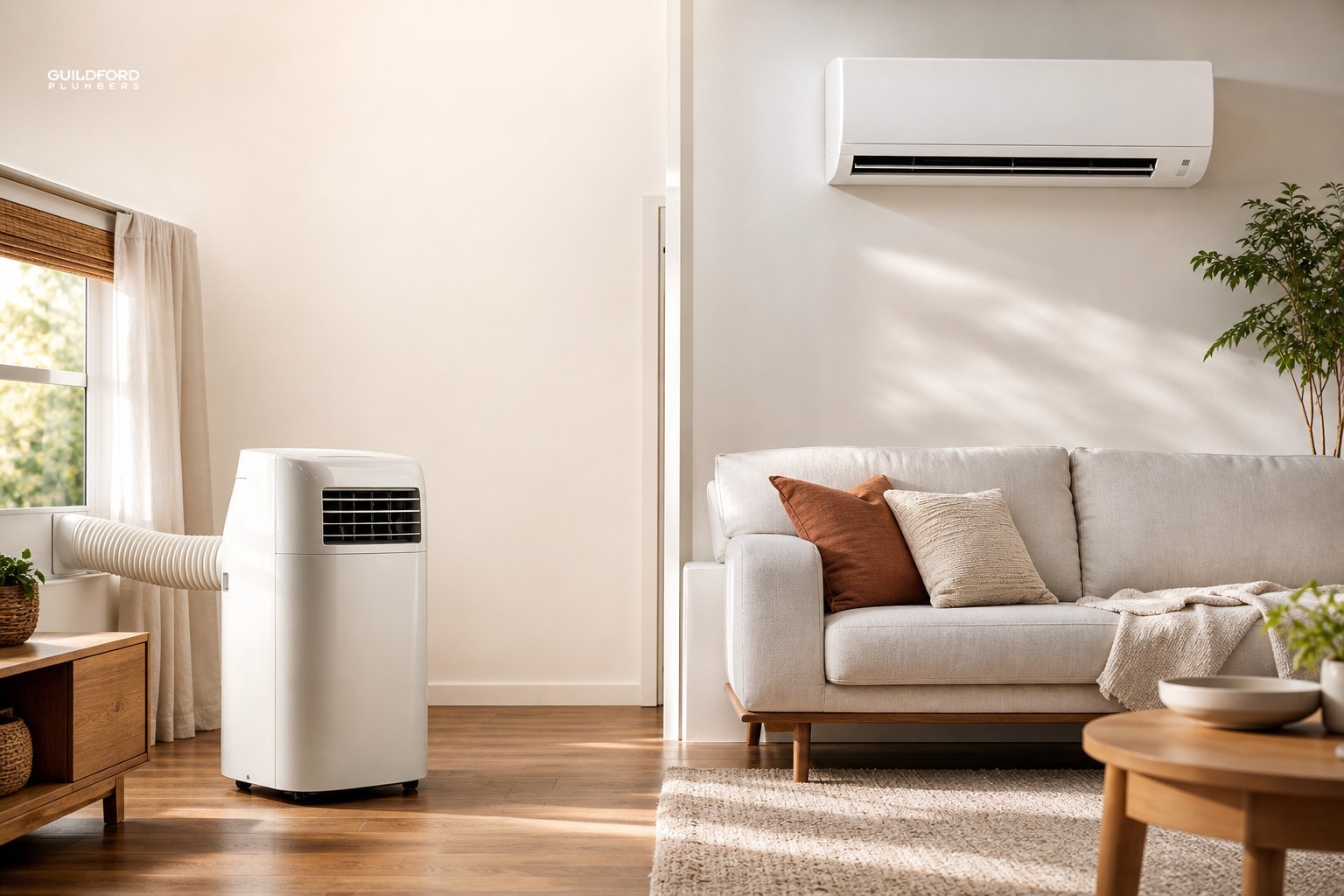
A portable air conditioner is a self-contained unit that sits on the floor and vents hot air outside through a flexible duct fed through a window or wall gap. There is no permanent installation required, which makes setup quick and straightforward.
The trade-off is that the compressor, the noisiest part of the system, sits inside the room with you. According to Be Cool Refrigeration, portable units generate 50 to 65 dB of noise during operation, roughly equivalent to a loud conversation or busy office. For bedrooms or home offices, that background noise is worth factoring in carefully.
Single-duct portable units also create a negative pressure effect. Because they exhaust air outward, warm replacement air is drawn in through gaps around doors and windows, directly undermining the net cooling effect. Independent testing has found that single-duct models consistently deliver only 50 to 65 percent of their manufacturer-rated cooling capacity under typical home conditions, a significant shortfall the BTU figures on the packaging will not reveal.
How Split Air Conditioners Work
A split air conditioner has two parts: an indoor wall-mounted head and an outdoor condenser, connected by refrigerant pipework. Because the compressor sits outside, split systems operate at just 19 to 30 dB indoors, close to whisper-quiet by comparison.
Professional installation is required to fit the pipework, make electrical connections, and handle refrigerant safely. In the UK, all refrigerant work must be carried out by an F-Gas-certified engineer. Once installed, a split system delivers consistent, efficient, near-silent cooling with no floor space taken up and no window duct to manage every time you use it.
| Feature | Portable AC | Split AC |
|---|---|---|
| Compressor location | Inside the room | Outside the building |
| Noise level indoors | 50 to 65 dB | 19 to 30 dB |
| Installation required | No, plug and use | Yes, F-Gas-certified engineer |
| Effective cooling capacity | 50 to 65% of rated BTU in practice | Consistent with rated output |
| Floor space used | Yes, freestanding unit | No, wall-mounted indoors |
Which Type Is Right for Your Guildford Home?
The choice between portable and fixed cooling often comes down to a handful of practical factors rather than personal preference. Here is what to consider.
Room Size
Portable units are generally suited to cooling spaces of around 20 square metres. Split systems can handle significantly larger rooms or multiple zones depending on the capacity chosen. If your living room or open-plan kitchen exceeds that threshold, a portable unit is unlikely to keep up on a hot day. Many homes in Guildford, particularly Victorian and Edwardian terraces in areas such as Onslow Village or Merrow, have larger reception rooms that portable units may struggle to cool adequately.
Window and Wall Access
Portable units need a window or gap to vent their exhaust duct. Casement or skylight windows often make this awkward or ineffective. Split systems require an external wall for pipework routing, which is achievable in most standard Surrey properties but does require a professional assessment beforehand.
Renting vs Owning
Because split systems involve permanent structural modifications, most rental agreements require explicit landlord permission. UK permitted development rules and some lease terms can also restrict external condenser units, something worth checking if your property sits within a conservation area, of which Guildford has several. For tenants in these situations, a portable unit may be the only realistic option. For homeowners in standard residential streets, those restrictions typically do not apply, and the long-term performance benefits of a fixed split system become much harder to ignore.
Where a Portable Air Conditioner Makes Sense
There are genuine scenarios where a portable unit is the right answer. It suits renters who cannot make structural changes, anyone needing temporary cooling during a short heatwave, and households where moving the unit between rooms adds real practical value. Portable units retail between around £135 and close to £800 in the UK, according to The Telegraph, making them accessible when upfront budget is limited.
That said, portable air conditioner limitations are real and worth naming honestly. Dual-duct models manage the negative pressure problem better than single-duct versions, but remain less efficient than split systems overall. Many portable units also collect moisture in an internal tank that needs regular emptying. The background noise, reduced effective cooling capacity, and higher running costs per unit of actual cooling delivered are all everyday drawbacks worth weighing up before you buy.
When a Split System Is Worth the Investment
For homeowners who want reliable, consistent cooling across a larger space, the case for a split system is strong. Split systems offer a notably better energy efficiency ratio (EER), typically in the range of 3.5 to 5.0 compared to around 2.0 to 2.5 for portable units, based on available consumer and manufacturer testing. In practical terms, running a portable unit can cost considerably more than a split system for less actual cooling output.
A 12,000 BTU wall-mounted split system including F-Gas-qualified installation averages around £1,900 in 2025, according to Be Cool Refrigeration, with multi-room or concealed ducted systems starting from £3,000 or more. That is a meaningful upfront commitment. When weighed against quieter operation, greater cooling coverage, and lower running costs, many homeowners in Guildford and across Surrey find the investment worthwhile over several seasons. The full case is explored in the dedicated split air conditioner benefits article in this series.

Portable vs Split Air Conditioner: Side-by-Side Comparison
Here is a direct comparison across the factors that matter most for UK households:
| Factor | Portable AC | Split AC |
|---|---|---|
| Installation | No installation needed | Qualified engineer required; half to full day |
| Cooling power | Best for rooms up to around 20 m² | Handles larger rooms and multiple zones |
| Noise level | 50 to 65 dB indoors | 19 to 30 dB indoors |
| Running costs | Higher per unit of cooling delivered | Roughly half the running cost |
| Flexibility | Moveable between rooms | Fixed in place |
| Upfront cost | From around £135 | From around £1,900 installed |
The right choice depends on whether you own or rent, the size of the space you need to cool, and how much weight you give to long-term running costs versus short-term outlay. Renters or those needing temporary cooling will generally find a portable unit the only practical option. Homeowners across Guildford and the wider Surrey area planning for reliable summer comfort across a larger room or whole floor will typically get far better value from a properly installed split system.
Installation, Safety, and When to Call a Professional in Guildford
If you decide a split system is right for your home, installation is not something to approach casually. Fitting one involves making electrical connections, drilling through external walls for pipework, and handling refrigerant gases. Under UK regulations, refrigerant work must be carried out by an engineer holding an F-Gas certification. Attempting this without the proper qualifications is both illegal and genuinely dangerous.
A qualified professional will also assess your home’s existing electrical supply, confirm that the indoor head location allows adequate airflow, and check that condensate drainage routes away from the building correctly. Before any system is fitted, it is worth confirming that the planned outdoor unit location meets any permitted development or lease conditions relevant to your property, particularly if you are in one of Guildford’s conservation areas or a listed building.
Even for portable units, correct window venting and condensate management matter for both performance and your home’s condition. At Guildford Plumbers, our experienced local team handles appliance installations, pipework, and drainage connections across Guildford and the surrounding Surrey area. If you are ready to move forward with cooling your home this summer, get in touch and we will make sure everything is fitted safely, correctly, and built to last.
Frequently Asked Questions
Can a portable air conditioner cool a whole house?
No. Portable units are designed for single rooms up to around 20 square metres. They lack the capacity, efficiency, and airflow distribution to cool multiple rooms or larger open-plan spaces. For whole-house cooling, a multi-zone split system or ducted system is the appropriate choice.
Do I need planning permission to install a split air conditioner in Guildford?
Most domestic split system installations fall under permitted development rights, so planning permission is not normally required. Properties in conservation areas, listed buildings, or those with restrictive lease terms may face additional requirements. It is always worth checking with Guildford Borough Council before installation begins.
How much does it cost to run a portable air conditioner compared to a split system?
Portable units typically cost roughly twice as much to run per unit of cooling delivered, due to their lower energy efficiency ratio. Over a full summer, the difference can be significant and may go some way towards offsetting the higher upfront cost of a split system over several seasons.
Is a split air conditioner suitable for a rented property?
You will normally need explicit written permission from your landlord before installing a split system, as it involves structural modifications and an external condenser unit. Some tenancy agreements or conservation area rules may prohibit it entirely. Always review your lease and seek landlord approval before proceeding.
Why is my portable air conditioner not cooling the room effectively?
The most common cause is the negative pressure effect in single-duct models, which draws warm outside air back into the room as they exhaust. Poor window sealing around the duct, a room larger than the unit’s rated capacity, or a full condensate tank can also reduce performance noticeably.
How long does a split air conditioner installation take in Guildford?
A standard single-zone installation typically takes between half a day and a full day, depending on wall thickness, pipework routing, and electrical supply requirements. A qualified F-Gas-certified engineer will assess your property beforehand to give a more accurate timeframe.