Key Takeaways
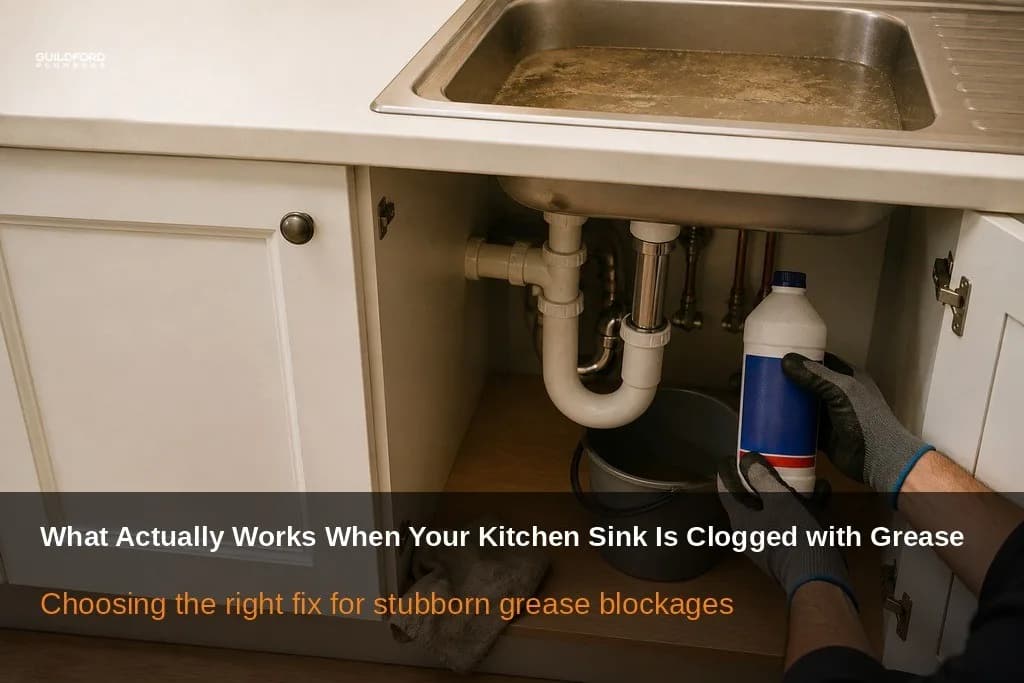
Enzymatic cleaners work best on kitchen sink grease over time, but compacted blockages in Guildford homes often need professional drainage clearance to restore flow properly.
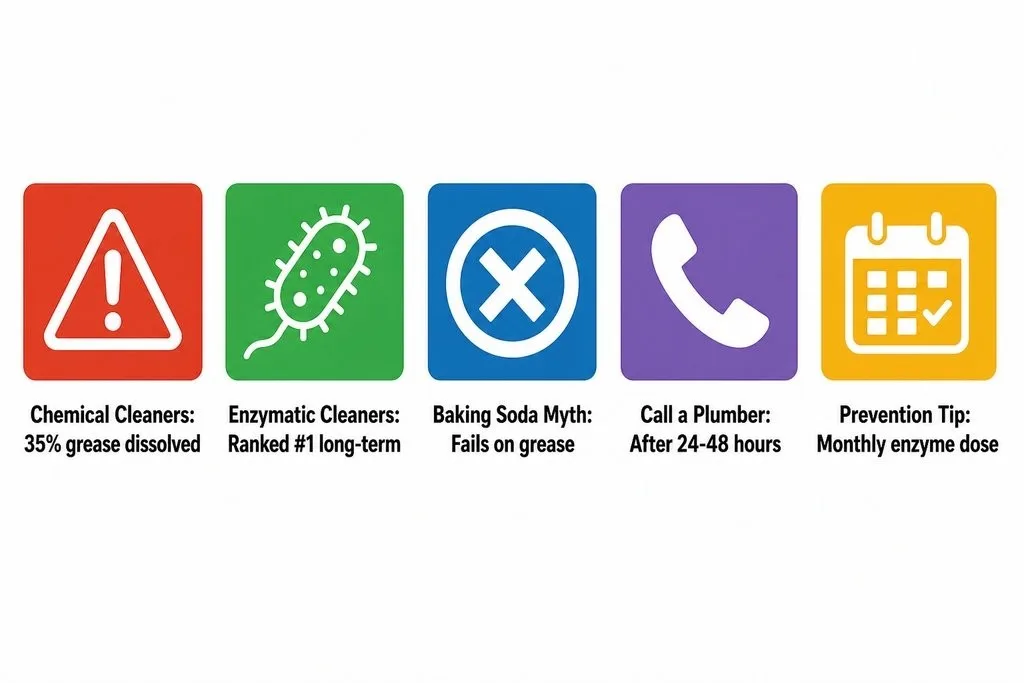
- Enzymatic (biological) drain cleaners outperform caustic chemical products on kitchen sink grease over time, as live bacteria digest fat and oil rather than simply softening it temporarily.
- Chemical caustic cleaners act faster but dissolve only a portion of grease and can degrade older pipework with repeated use, which is a real concern in Guildford's Victorian and Edwardian properties.
- Boiling water and a plunger are sensible first steps for a mildly slow drain, but baking soda and vinegar lack the chemical action needed to break down solidified grease reliably.
- If your sink is still not draining after 24 to 48 hours of treatment, or water is backing up from nearby fixtures, the blockage has likely compacted beyond what shop bought products can reach and a professional plumber should be called.
- Preventing grease build up is straightforward: scrape pans into the bin before rinsing, dispose of cooled cooking fat in general waste, fit a sink strainer, and apply an enzymatic cleaner monthly.
A greasy kitchen sink blockage starts quietly. Water drains a little slower than usual, and then one morning you are standing in front of a full basin that simply will not shift. If you are searching for the best drain cleaner for kitchen sink grease, the honest answer is that the right solution depends on how advanced the build-up is. This guide covers how grease behaves inside your pipes, which products work and which do not, and when to call in a professional, so you can make a confident decision without wasting time or money.
Guildford Plumbers has handled countless blocked kitchen drains across Guildford, Surrey and the surrounding areas. What follows reflects both the practical reality of grease blockages and the straightforward advice we give to homeowners before, during, and after a call-out.
Why Grease Builds Up in Kitchen Drains
Grease behaves very differently from most things that go down your kitchen drain. Water and food debris tend to flush through with reasonable ease. Grease, however, is liquid when hot and solidifies as it cools, so instead of passing through, it clings to the pipe walls and sets like a thin coat of wax with every wash. Over weeks and months, those layers accumulate until the pipe narrows enough to cause a blockage.
Several everyday habits accelerate this. Washing a greasy roasting tin directly under the tap, tipping leftover cooking oil down the sink, or rinsing plates without scraping them first all push fat into the drain in quantities the water flow cannot carry away. Many people assume hot water keeps grease moving, but once it reaches a cooler section of pipe, particularly common in older properties throughout Surrey, it solidifies regardless.
How to Tell If Grease Is Causing Your Blocked Sink
Not every slow-draining kitchen sink is caused by grease. Food debris, soap scum, limescale, or a problem further along the drainage system can all produce similar symptoms. That said, grease blockages have some telling signs: the sink drains slowly at first and then stops clearing altogether; there is a faint stale or rancid smell from the drain; you notice water coming back up kitchen sink after running the dishwasher or using a nearby basin, suggesting the blockage is further into the shared drainage run; gurgling sounds come from the drain or a nearby fixture such as the washing machine outlet; and a plunger temporarily restores flow, but the problem returns within a day or two.
That recurring pattern, clearing briefly and then blocking again, points strongly to grease rather than a one-off piece of food debris. Grease does not dislodge the way a solid object does, which is why mechanical plunging alone rarely solves the problem for long.
Which Drain Cleaner Works Best on Kitchen Sink Grease
Walk into any supermarket or hardware shop across Guildford and the wider Surrey area and you will find several categories of drain cleaner. Each works differently, and each has genuine limitations when it comes to grease. Setting realistic expectations before you buy will save you from multiple wasted applications.
Caustic and Chemical Drain Cleaners
Caustic soda-based products are the most widely available drain cleaners in the UK and tend to be the first thing people reach for. They work by generating heat through a chemical reaction, which softens and partially dissolves organic matter. Against hair and general food residue they can be reasonably effective. Against kitchen sink grease, however, their performance is far more limited than most product labels suggest. Laboratory testing published by CNET found that even the best-performing chemical drain cleaner dissolved only 35% of grease in controlled conditions. Repeated use of caustic products in older pipework, the sort found throughout much of Guildford's Victorian and Edwardian housing stock, also carries a risk of damage over time.
Enzymatic and Biological Drain Cleaners
Enzymatic and bacterial drain cleaners take a different approach. Rather than attacking the blockage with heat or a corrosive reaction, they introduce live bacteria that digest fat, oil, and grease over time. They are gentler on pipes and, according to a 60-day comparative study overseen by seven licensed master plumbers, bacterial and enzyme drain cleaner products ranked above all chemical drain cleaner products in both overall effectiveness and duration of clear pipes, as reported by Mother Modern Plumbing. The trade-off is time. These products work over hours or days rather than minutes, making them well suited to maintenance and prevention rather than emergency clearance. If your sink has stopped draining entirely, a biological cleaner is unlikely to resolve the situation quickly enough on its own.
Chemical vs Enzymatic Cleaners at a Glance
Chemical (caustic) cleaners are fast-acting and widely available, but offer limited effectiveness on grease and carry a risk of pipe damage with repeated use. Enzymatic (biological) cleaners are slow-acting and gentle on pipes, more effective over time, and best used for ongoing maintenance rather than emergency clearance.
| Feature | Chemical (Caustic) Cleaners | Enzymatic (Biological) Cleaners |
|---|---|---|
| How they work | Heat-generating chemical reaction softens organic matter | Live bacteria digest fat, oil, and grease over time |
| Speed of action | Fast (minutes) | Slow (hours to days) |
| Effectiveness on grease | Limited — dissolves only a portion of grease | Higher over time, ranked above chemical products in comparative testing (Mother Modern Plumbing) |
| Pipe safety | Risk of damage with repeated use, especially in older pipework | Gentle on all standard pipe types |
| Best use case | Fast-acting partial clearance in an emergency | Ongoing maintenance and prevention |
| Suitable for compacted grease blockages? | Unlikely to clear fully on its own | Not suitable for emergency clearance |
Safe DIY Methods Worth Trying First
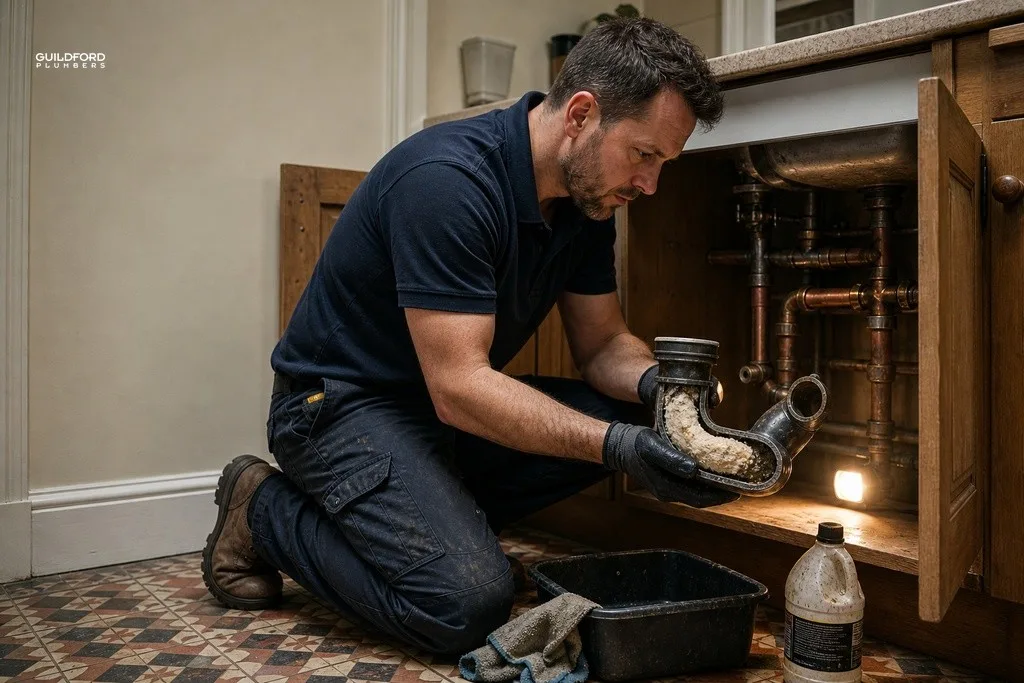
Before buying any product, a few simple home methods are worth trying on a mildly slow drain. Pouring a full kettle of boiling water slowly down the plughole can soften fresh grease that has not yet fully hardened. This is safe for most standard copper and plastic pipework found in UK homes. A manual plunger used with firm, consistent strokes, a good seal over the plughole, and a damp cloth blocking the overflow outlet can also restore flow temporarily.
The idea of using clean kitchen drain with baking soda and white vinegar is widely shared online, but the evidence does not support it for grease blockages. Real-home testing conducted by Which? found that a baking soda, salt, and vinegar mixture failed to clear greasy food blockages after two attempts and a 10-minute wait, requiring extensive manual plunging to dislodge the clog. The fizzing reaction feels satisfying but does not generate enough force or chemical action to break down solidified grease. This method may help with light odours or a very minor slow drain, but it is not a reliable fix for a kitchen sink blocked with grease.
When a Drain Cleaner Is No Longer Enough
There is a point at which repeated DIY attempts stop being productive and start signalling a more serious problem. If you have tried a plunger, applied a drain cleaner, and the sink is still not draining properly after 24 to 48 hours, the blockage has likely compacted beyond what off-the-shelf products can reach.
Grease hardens inside drain pipes in a similar way to candle wax, and once it has built up over months or years it forms a solid restriction that no liquid treatment can fully dissolve in a single application. A deeper blockage may also sit further along the drainage run than your immediate pipework. This is why some homeowners across Guildford and the surrounding Surrey villages see water backing up into the sink even after treating what appears to be a localised clog. You may also notice a kitchen disposal clogged alongside slow drainage from nearby fixtures, suggesting the problem extends beyond a single appliance or outlet. Attempting to force a severe blockage with excessive chemical treatments risks damaging your pipes and may complicate the professional job that will ultimately be needed.
What Happens During a Professional Drainage Clearance in Guildford
When a blocked kitchen drain needs professional attention, a qualified plumber will begin with a proper diagnosis rather than simply applying force. In many cases, a CCTV drain inspection lets the engineer see exactly where the grease has accumulated and whether any underlying pipe damage has been trapping debris. This prevents unnecessary work and ensures the right method is used from the outset.
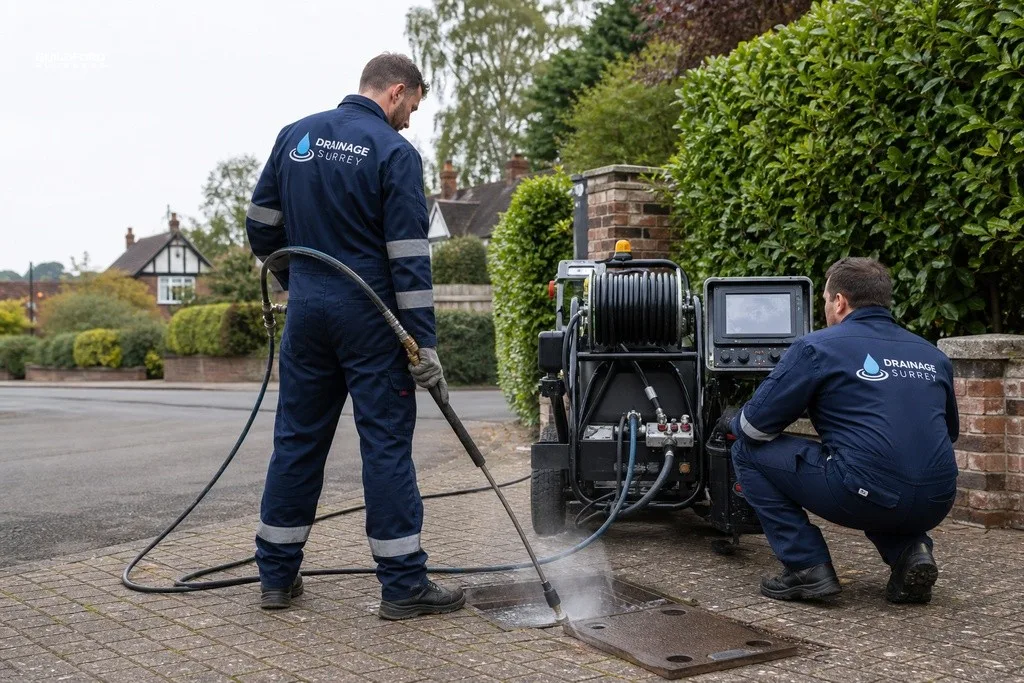
For most grease blockages, high-pressure water jetting is the most effective clearance method. It scours the pipe walls rather than simply pushing the blockage further along, and restores the pipe close to its original internal diameter. Mechanical rodding may be used instead for blockages that are more localised or where jetting is not suitable for the pipe configuration. If you are looking for a plumber in Guildford, Godalming, Woking, or anywhere across the Surrey area, a trustworthy service will give you a clear explanation of what they have found, a transparent price before starting work, and no pressure to book additional services you have not asked about. At Guildford Plumbers, our engineers carry out drainage clearance with exactly that approach, backed by over 12 years of local experience and no call-out fee on any visit.
| Method | How It Works | Best Suited For |
|---|---|---|
| CCTV drain inspection | Camera fed into the pipe to locate grease build-up and identify any pipe damage | Diagnosis before treatment; unclear or recurring blockages |
| High-pressure water jetting | Pressurised water scours pipe walls and restores internal diameter | Most grease blockages; compacted or widespread build-up |
| Mechanical rodding | Rods manually break up and dislodge the blockage | Localised blockages or pipes where jetting is not suitable |
How to Keep Your Kitchen Drain Clear Going Forward
Once your drain is clear, consistent habits will prevent the problem from returning. The most effective change most households can make is simply stopping cooking fat from entering the drain in the first place.
- Scrape plates and pans into the bin before rinsing under the tap.
- Allow fat and oil to cool in the pan, then pour it into an old container and dispose of it in your general waste bin.
- Fit a stainless steel sink strainer over the plughole and clean it weekly.
- Flush the drain with a full kettle of hot water once a week after washing up.
- Apply an enzymatic drain cleaner monthly as a preventative measure. This is far more effective than waiting for a blockage to develop and then reaching for a caustic product.
If you would like to unclog kitchen sink issues properly or simply want advice on the right maintenance approach for your property, Guildford Plumbers is always happy to help. Whether you need a fast response to an emergency blockage in Guildford or a straightforward chat about keeping your drains in good shape, get in touch with our team and we will give you an honest answer with no pressure and no hidden costs.
Frequently Asked Questions
What is the most effective drain cleaner for kitchen sink grease?
Enzymatic (biological) drain cleaners tend to be the most effective option for grease over time, as they use live bacteria to digest fat and oil rather than simply softening it. For an emergency where the sink has stopped draining entirely, a caustic chemical cleaner may act faster, but it is unlikely to clear a compacted grease blockage fully on its own.
Can boiling water clear a grease blockage in a kitchen sink?
Boiling water can help with fresh, lightly built-up grease that has not yet fully hardened. It is safe for most standard UK copper and plastic pipework and is a sensible first step for a mildly slow drain, but it will not dissolve an established, compacted blockage on its own.
How often should I use an enzymatic drain cleaner to prevent grease build-up?
Once a month is a practical frequency for most households. Regular use keeps bacterial activity working continuously against fat and grease deposits before they have a chance to accumulate into a blockage.
When should I call a professional plumber for a blocked kitchen drain?
Call a professional if the sink is still not draining properly after 24 to 48 hours of DIY treatment, or if water is backing up from nearby fixtures. These signs suggest the blockage has compacted or sits further along the shared drainage run, beyond what off-the-shelf products can reliably reach.
Is it safe to use caustic drain cleaners in older pipework?
Use caustic drain cleaners with caution in older properties. Repeated applications can degrade ageing pipework over time. If your home has Victorian or Edwardian plumbing, which is common throughout Guildford and much of Surrey, enzymatic cleaners or professional clearance are generally the safer long-term choices.